Switzerland eSIM Guide 2026
Switzerland has some of the best mobile infrastructure in the world, with excellent 5G across its cities and remarkably good coverage reaching deep into its Alpine valleys. For a traveler, the connectivity is superb where people are: Zurich, Geneva, Bern, Basel, Lucerne, the lakeside towns, and the valley resorts all have fast, reliable data, and even many high mountain areas and famous viewpoints are covered better than you might expect in such dramatic terrain. The valleys keep you well connected; only the highest peaks, glaciers, and the most remote back-country reliably outrun the network.
There is one point about Switzerland that overrides everything else for visitors, and it catches many out: Switzerland is not in the European Union. This means EU residents do not get carrier coverage here the way they do across the EU, and EU-focused regional eSIMs do not always include Switzerland. So unlike almost everywhere else in Western Europe, even EU travelers usually need a Switzerland eSIM or a plan that explicitly covers Switzerland. Combined with notoriously expensive Swiss local rates and roaming, this makes a Switzerland eSIM the smart choice for nearly every foreign visitor.
I have spent real time in Switzerland, from the cities to the high Alpine resorts and valleys, and I have tested eSIMs on the networks. This hub is the practical map: the crucial non-EU carrier terms point, how much data you actually need, where coverage is excellent and where the high mountains thin it, which operators run the networks, how an eSIM compares with a local SIM and with roaming, and the Switzerland-specific points, the non-EU status, the Alpine coverage, and the easy but border-conscious links to France, Germany, Italy, and Austria. Every figure here is ground truth.
The Switzerland connectivity picture in one minute
Switzerland has three main mobile network operators: Swisscom, the historic incumbent and consistently rated the best network with the widest coverage including the mountains, Sunrise, and Salt. There are also budget brands and virtual operators like Yallo, Lebara, and others that ride these networks. All three main networks are strong in the cities and valleys, with Swisscom generally having the best reach into the high Alpine areas.
The headline for a traveler has two parts. First, Switzerland's coverage is excellent, among the best in the world, strong in the cities and reaching impressively into the Alpine valleys, with only the highest and most remote terrain thinning. Second, and crucially, Switzerland is not in the EU, so EU residents do not use their home plan here and EU-focused regional eSIMs may not include it; nearly every foreign visitor, EU or not, benefits from a Switzerland eSIM or a plan that explicitly covers Switzerland. Get a proper Swiss-covering eSIM and you will enjoy superb connectivity at a fraction of Switzerland's famously high local and roaming costs.
5G and 4G coverage: world-class, with the Alpine factor
Switzerland has world-class mobile infrastructure, with extensive 5G across its cities and impressively good coverage reaching into the Alpine valleys. All three operators run commercial 5G, with Swisscom rated the best for coverage and reliability. In Zurich, Geneva, Bern, Basel, Lausanne, Lucerne, and the other cities you will see genuine fast 5G with excellent download speeds. The lakeside towns, the valley resorts, and the populated areas are very well covered.
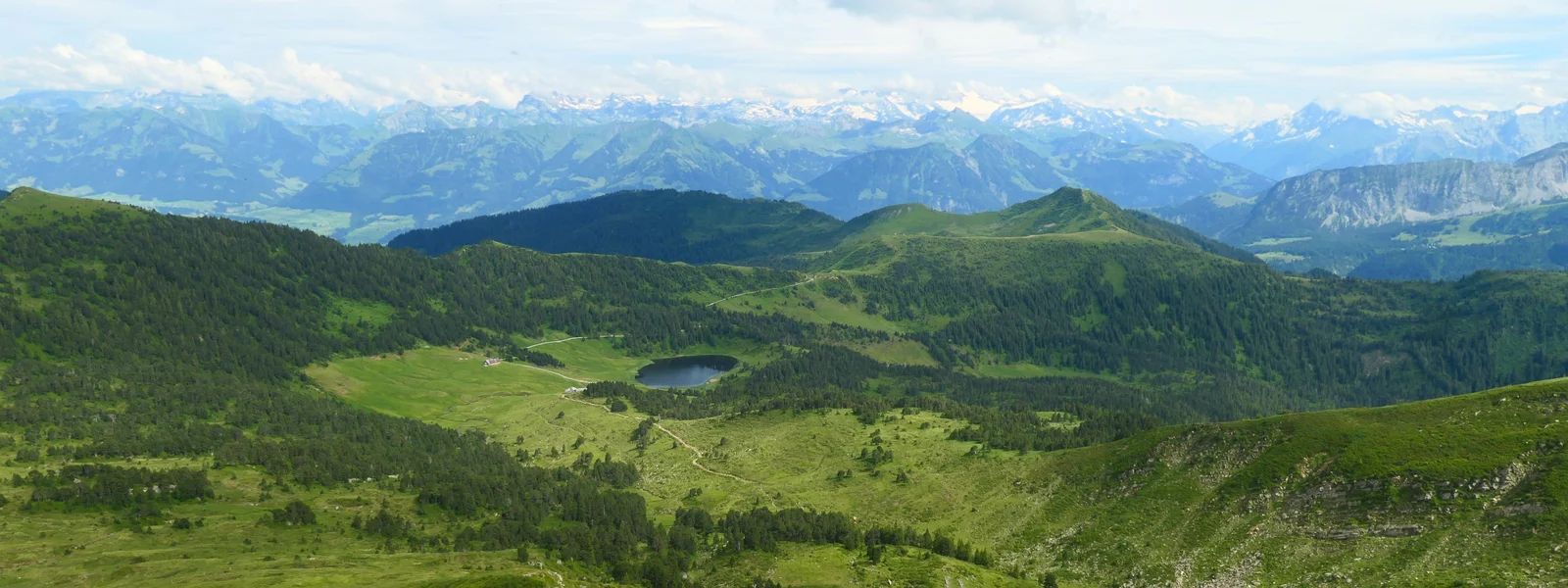
What is striking about Switzerland is how good the coverage is even in the mountains, far better than you might expect given the terrain, because the Swiss have invested heavily in covering their Alpine tourist areas. Famous resorts like Zermatt, St. Moritz, Verbier, Grindelwald, and Interlaken, and many high viewpoints and valley areas, are well covered, so you can often share a photo from a spectacular mountain setting. Even so, the Alpine factor applies at the extremes: the highest peaks, the glaciers, the most remote passes, and the deep back-country can have thin or no signal, because dramatic terrain still blocks towers. For most trips, including most Alpine resort trips, coverage is excellent; only the highest and most remote terrain genuinely outruns the superb Swiss network.
How much data you actually need
Data planning for Switzerland follows the universal logic, with the Alpine note that the very highest and most remote terrain has thin signal, though Swiss coverage reaches impressively far into the mountains, so the gaps are smaller than in some Alpine countries.
A light user who maps, messages, checks email, and posts the occasional photo uses roughly 300 to 500 MB a day, so 3 to 5 GB for a week. A typical user adding social scrolling, music, and a daily video call lands around 700 MB to 1 GB a day, so 5 to 7 GB for a week. A heavy user who streams, tethers a laptop, or works on the road can hit 2 GB or more a day, pointing to a 15 to 20 GB plan or a high-cap one.
My Switzerland advice: size to your honest estimate, since coverage is excellent across the cities, valleys, and most resort areas, so your usage will closely match the theory. Pair it with offline maps if you are heading into the high back-country, where even Switzerland's superb network thins. The crucial point remains the non-EU status: make sure your plan explicitly covers Switzerland, since an EU-focused regional plan may not. The data-planning satellite breaks it down by activity and trip type.
eSIM versus local SIM versus roaming: the non-EU twist
Switzerland's non-EU status changes the usual advice, so read carefully. Unlike EU countries, where EU residents use their home plan, in Switzerland EU residents do not get carrier coverage; their home EU plan treats Switzerland as outside the carrier coverage area, so they may face roaming charges here just as non-EU travelers do, depending on their plan. So in Switzerland, nearly every foreign visitor, EU and non-EU alike, should consider a Switzerland eSIM, which is unusual for a Western European country.
For everyone, the eSIM beats the alternatives. A Switzerland eSIM activates instantly, needs no shop visit, keeps your home number for banking codes, and crucially is far cheaper than Switzerland's notoriously expensive local SIMs and roaming rates. A Swiss local SIM is pricey and involves friction. Roaming, whether on an EU or non-EU home plan, is the expensive default to avoid in costly Switzerland. Turn off data roaming on your home line, keep it active for codes, and run your data on a Switzerland eSIM or a regional plan that explicitly includes Switzerland. The comparison satellites work through the numbers and the all-important non-EU and country-coverage points.
Avoiding the traps, starting with the EU assumption
The biggest Switzerland trap is the EU assumption: many travelers, especially EU residents and those with EU-focused regional eSIMs, assume Switzerland is covered like the rest of Western Europe, then find their plan does not work or charges roaming because Switzerland is outside the EU. Always confirm your plan explicitly covers Switzerland, whether a Switzerland-specific eSIM or a regional one whose country list names Switzerland, since many EU-only regional plans exclude it.
The second trap is the airport SIM kiosk at Zurich, Geneva, or Basel, charging arriving travelers well above what an eSIM costs in pricey Switzerland; a pre-installed eSIM is already working when you land. The third is leaving roaming on, which in expensive Switzerland produces particularly painful bills, so turn off data roaming on your home line and run data on the eSIM. The fourth, minor given Switzerland's excellent coverage, is the high back-country, where even the superb network thins, so download offline maps for serious mountain excursions. Get the non-EU coverage point right and the rest of Switzerland is straightforward and superbly connected.
Why Switzerland is expensive and the eSIM saves most
Switzerland is famously one of the most expensive countries in the world, and that extends to connectivity: Swiss local mobile plans, prepaid SIMs, and especially roaming rates are among the priciest anywhere. A Swiss local SIM can cost far more than a comparable plan elsewhere, and roaming on a home carrier in Switzerland, where even EU plans often charge because the country is outside the EU, can produce eye-watering bills.
This is exactly why a Switzerland eSIM is such good value for a visitor: it gives you Switzerland's superb network coverage at a price set by the competitive international eSIM market rather than the expensive Swiss domestic market, often a small fraction of what a Swiss local SIM or roaming would cost for the same data. For a country where almost everything else, hotels, food, transport, is expensive, the eSIM is one area where a savvy traveler can pay a modest, fair price for excellent connectivity. Make sure the plan explicitly covers Switzerland given the non-EU status, install it before you arrive, and you sidestep both the EU-assumption trap and Switzerland's high local connectivity costs at once.
The Alps, skiing, and hiking
The Swiss Alps are the country's crown jewel, and the connectivity there is better than in most Alpine countries because Switzerland has invested heavily in covering its mountain tourist areas. The famous resorts, Zermatt, St. Moritz, Verbier, Grindelwald, Interlaken, Davos, and the rest, are well covered in the valleys, the resort centers, and often surprisingly high up the mountains, so a ski trip or a visit to a famous viewpoint usually keeps you connected far better than you would expect at altitude.
Still, the highest peaks, the glaciers, the most remote passes, and the deep back-country can have thin or no signal, because even superb infrastructure cannot beat the most extreme terrain. For a ski trip at a major resort, expect good coverage across much of the area, better than in many Alpine countries, with Swisscom the best for reach. For serious back-country hiking, climbing, or glacier travel, expect genuine gaps at the extremes, prepare offline maps and route information, and never rely solely on a phone for safety in high mountain terrain. The Swiss Alps are exceptionally well connected by Alpine standards, but the highest and wildest places still outrun even the best network.
Setting up your Switzerland eSIM and multi-country trips
Setup takes about two minutes and is best done at home before you fly. Confirm your phone is eSIM-capable and carrier-unlocked, buy your Switzerland eSIM or a regional plan that explicitly covers Switzerland, and install by scanning the QR code or using the one-tap link, which adds the eSIM as a second line. Set your home SIM line to handle calls and texts so you keep your number for banking codes, set the new eSIM as your data line, and turn off data roaming on the home line. Favor Swisscom for the best Alpine reach. The country-specific setup satellite walks through the iOS and Android screens step by step.
If Switzerland is your only destination, a Switzerland eSIM is the cleanest choice. But Switzerland sits in the heart of Western Europe, bordered by France, Germany, Italy, Austria, and Liechtenstein, and many trips combine it with these neighbors. Here the non-EU status matters most: a Switzerland-only eSIM does not cover the EU neighbors, and crucially an EU-focused regional eSIM often does not cover Switzerland. For a multi-country trip including Switzerland, you need a regional plan whose country list explicitly includes Switzerland alongside the EU countries, so check carefully, since the common EU-only regional plans will leave you uncovered in Switzerland. This is the single most important planning point for combining Switzerland with its neighbors: confirm Switzerland is on the plan's country list.
The traps that cost travelers in Switzerland
A handful of avoidable mistakes account for nearly all the money and frustration travelers experience in Switzerland, and the first is unique to the country. The biggest trap is the EU assumption: travelers, especially EU residents and those with EU-focused regional eSIMs, assume Switzerland works like the rest of Western Europe, then find their plan does not connect or charges roaming because Switzerland is not in the EU. Always confirm your plan explicitly covers Switzerland, whether a Switzerland-specific eSIM or a regional one that names Switzerland in its country list, since this single oversight strands more travelers in Switzerland than anything else.
The second trap is the airport SIM kiosk at Zurich, Geneva, or Basel, which charges arriving travelers well above the eSIM price in already-expensive Switzerland; walk past it, since a pre-installed eSIM is already working when you land. The third is leaving data roaming on for your home SIM, which in costly Switzerland, where even some EU plans charge because the country is outside the EU, produces particularly painful bills; turn off data roaming on the home line, keep it active only for calls and the SMS codes your bank sends, and set the eSIM as your data line. The fourth, minor given Switzerland's excellent coverage, is the high back-country, the peaks, glaciers, and remote routes, where even the superb network thins, so download offline maps for serious mountain excursions and never rely solely on a phone for safety there. The fifth, for cross-border trips, mirrors the first: a regional plan must explicitly cover Switzerland alongside the EU neighbors, since EU-only plans exclude it. Get the non-EU coverage point right, walk past the kiosk, turn off home roaming, and Switzerland delivers world-class connectivity at a fair price, sidestepping the country's famously high local costs.
Buyer guide
Comparison
Coverage
Operators
Data planning
How-to
Apps
Use case
Region
Swiss Alps eSIM 2026
Staying connected in the Swiss Alps in 2026: surprisingly excellent coverage, the high-peak limits, why Swisscom and offline maps matter, and the best eSIM for
Read the guide →🗺️RegionSwitzerland Road Trip eSIM 2026
Planning a Switzerland road trip in 2026: excellent coverage on roads and passes, the non-EU coverage point for cross-border trips, the best eSIM, and offline m
Read the guide →Networks available by plan
The network depends on the plan you choose. These are the published operators for the first six plans currently sold.
| Plan | Published operators |
|---|---|
| 1 GB · 7 days | Sunrise, Salt Mobile |
| 3 GB · 15 days | Sunrise, Salt Mobile |
| 5 GB · 30 days | Sunrise, Salt Mobile |
| 10 GB · 30 days | Sunrise, Salt Mobile |
| 20 GB · 30 days | Sunrise, Salt Mobile |
| 50 GB · 30 days | Sunrise, Salt Mobile |
Switzerland eSIM FAQ
What coverage and network performance should travelers expect in Switzerland?
Switzerland has world-class mobile infrastructure, with extensive 5G across its cities and impressively good coverage reaching into the Alpine valleys. All three operators run commercial 5G, with Swisscom rated the best for coverage and reliability. In Zurich, Geneva, Bern, Basel, Lausanne, Lucerne, and the other cities you will see genuine fast 5G with excellent download speeds. The lakeside towns, the valley resorts, and the populated areas are very well covered.
Is a travel eSIM better than local SIM or roaming in Switzerland?
Switzerland's non-EU status changes the usual advice, so read carefully. Unlike EU countries, where EU residents use their home plan, in Switzerland EU residents do not get carrier coverage; their home EU plan treats Switzerland as outside the carrier coverage area, so they may face roaming charges here just as non-EU travelers do, depending on their plan. So in Switzerland, nearly every foreign visitor, EU and non-EU alike, should consider a Switzerland eSIM, which is unusual for a Western European country.
How much data you actually need?
Data planning for Switzerland follows the universal logic, with the Alpine note that the very highest and most remote terrain has thin signal, though Swiss coverage reaches impressively far into the mountains, so the gaps are smaller than in some Alpine countries.
How much data and what kind of plan do travelers need in Switzerland?
A handful of avoidable mistakes account for nearly all the money and frustration travelers experience in Switzerland, and the first is unique to the country. The biggest trap is the EU assumption: travelers, especially EU residents and those with EU-focused regional eSIMs, assume Switzerland works like the rest of Western Europe, then find their plan does not connect or charges roaming because Switzerland is not in the EU. Always confirm your plan explicitly covers Switzerland, whether a Switzerland-specific eSIM or a regional one that names Switzerland in its country list, since this single oversight strands more travelers in Switzerland than anything else.
Sort your Switzerland eSIM
Pick the plan that fits your trip, or work out how much data you need first.