Switzerland 5G and 4G Coverage 2026: World-Class, Even in the Alps
Switzerland coverage, told straight
Switzerland has some of the best mobile coverage in the world, and the honest map is overwhelmingly positive. The cities have world-class 5G, and crucially the coverage reaches impressively far into the Alpine valleys and even up many mountains, far better than you would expect in such dramatic terrain, because Switzerland has invested heavily in covering its mountain tourist areas. Only the highest peaks, glaciers, and the most remote back-country reliably outrun the network. This is the honest map: where coverage is excellent, which operator to want, the high-mountain limits, and the crucial non-coverage point that defines Switzerland for visitors, that it is not in the EU, so you must ensure your plan actually covers Switzerland.
The three networks and who to want behind your eSIM
Switzerland has three main mobile network operators. Swisscom, the historic incumbent, is consistently rated the best network in Switzerland, with the widest coverage including the best reach into the high Alpine areas, making it the network to want for any trip into the mountains. Sunrise is strong, with extensive coverage and fast 5G. Salt is competitive, also with good coverage and 5G in the populated areas.
There are budget brands too: Yallo, Lebara, and others ride these networks. For a traveler, all three main networks are excellent in the cities and valleys, so for a city trip any is fine. For a trip high into the Alps, ski areas, mountain railways, high viewpoints, hiking, Swisscom's superior reach makes it the safest pick. Even so, Swiss coverage is so good across all networks that the difference is smaller than in some Alpine countries; Swisscom simply maximizes your coverage at the highest and most remote points. The bigger decision in Switzerland is not which network but ensuring your plan covers Switzerland at all, given the non-EU status.
World-class 5G in the cities
Switzerland has rolled out 5G extensively, and its cities have world-class mobile coverage. In Zurich, Geneva, Bern, Basel, Lausanne, Lucerne, and the other cities you will see genuine fast 5G with excellent download speeds, easily into the hundreds of megabits per second, on networks rated among the best globally. The lakeside towns, the suburbs, and the populated areas are all very well covered.
Swiss network quality is a point of national investment and pride, and it shows: speeds, reliability, and 5G availability in the cities and populated areas are excellent, matching or exceeding the best anywhere in Europe. For a city or lakes trip in Switzerland, connectivity is genuinely a non-issue once you have a plan that covers the country, with fast, reliable data everywhere you go. The Swiss cities are the easy, world-class part of an already well-covered country, and you can rely on a strong plan as your main connection with complete confidence throughout the urban and populated areas.
Coverage reaching into the Alps
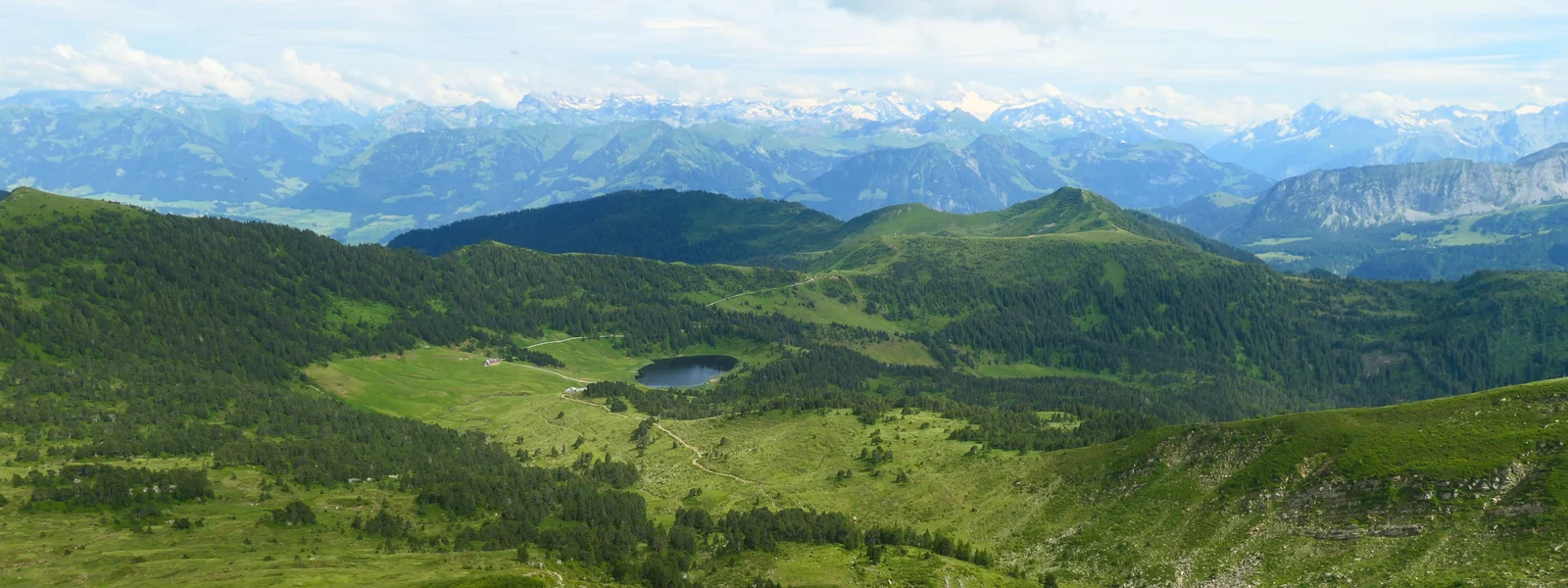
What sets Switzerland apart from most Alpine countries is how good the coverage is in the mountains. The Swiss have invested heavily in covering their Alpine tourist areas, so the famous resorts, Zermatt, St. Moritz, Verbier, Grindelwald, Interlaken, Davos, and the rest, are well covered across the valleys, the resort centers, and often surprisingly high up the mountains. Many high viewpoints, mountain railway stations, and even some high passes have coverage that would be unthinkable in less-developed Alpine terrain.
This means a Switzerland trip into the mountains keeps you connected far more of the time than an equivalent trip in some neighboring Alpine countries, where coverage thins quickly above the valleys. You can often share a photo from a spectacular high mountain setting, check the weather from a viewpoint, or navigate a well-developed trail with live data. Switzerland's Alpine coverage is genuinely impressive, the product of serious investment in the country's mountain tourism infrastructure, and it is one of the things that makes Switzerland such an easy and rewarding place to stay connected even in dramatic terrain, with Swisscom reaching the furthest.
The high-mountain limits that remain
Even Switzerland's superb network has limits at the extremes. The highest peaks, the glaciers, the most remote high passes, and the deep back-country away from the developed tourist areas can have thin or no signal, because even the best infrastructure cannot beat the most extreme and remote Alpine terrain, and there is no commercial reason to cover uninhabited glaciers and wilderness.
So while Switzerland's mountain coverage is excellent by Alpine standards, reaching far into the developed valleys, resorts, and viewpoints, the genuinely high, wild, and remote places, serious back-country hiking and climbing routes, glacier travel, the most isolated passes, can still leave you without signal. For these, download offline maps and route information, favor Swisscom for the best reach, and for serious mountaineering never rely solely on a phone for safety, since the highest and most remote terrain genuinely outruns even the world's best networks. But to be clear, this affects only the extremes; the vast majority of a Switzerland trip, including most resort and valley Alpine experiences, enjoys excellent coverage, with the gaps confined to the truly high and wild places.
The non-EU coverage point
The most important coverage point for Switzerland is not about signal strength at all, where Switzerland excels, but about whether your plan covers Switzerland in the first place. Because Switzerland is not in the EU, two things follow. First, EU residents do not automatically use their home plan here as they do across the EU, so their home plan may charge or not work well. Second, and crucially for eSIM buyers, EU-focused regional eSIMs often do not include Switzerland in their covered-country list, because the country is outside the EU.
So a traveler can have a phone capable of using Switzerland's world-class network but a plan that simply is not authorized to connect to it, because the plan covers the EU and Switzerland is not in the EU. The fix is to ensure your plan explicitly covers Switzerland, whether a Switzerland-specific eSIM or a regional plan whose country list names Switzerland. This is the defining connectivity consideration for Switzerland, more important than network choice, because the best network in the world does you no good if your plan does not cover the country. Confirm Swiss coverage, and the rest is the easy enjoyment of world-class connectivity.
Coverage by trip type
Pulling it together by how you travel, with the coverage point assumed handled. A city or lakes trip to Zurich, Geneva, or Lucerne gives you world-class 5G everywhere; run a strong plan as your main connection with total confidence. A ski or Alpine resort trip enjoys excellent coverage by mountain standards, across the valleys, resorts, and often high up, far better than in many Alpine countries, with Swisscom the best for reach. A trip on the famous scenic mountain railways stays well connected for most of the journey.
A serious back-country, climbing, or glacier trip will hit genuine gaps at the highest and most remote terrain, so prepare offline maps and do not rely solely on a phone for safety. A multi-country trip needs a plan that explicitly covers Switzerland alongside the EU neighbors, since EU-only plans exclude it. Whatever your trip, an eSIM that covers Switzerland, ideally on Swisscom for mountain travel, gives you among the best coverage in the world, with the only real planning point being to ensure the plan covers Switzerland at all, given the non-EU status.
How to think about coverage for your Switzerland trip
The Switzerland coverage guide ends with an unusual conclusion: the thing to plan around is not signal strength, where Switzerland is world-class, but plan coverage, whether your eSIM is authorized to use Switzerland's superb network given the non-EU status. For the vast majority of Switzerland trips, city, lakes, resort, valley, and even much of the high mountains, you can assume excellent coverage and simply not think about signal, because Switzerland's networks rank among the best in the world and reach impressively far into the Alps.
The two real planning points are, first and most important, to ensure your plan explicitly covers Switzerland, since EU-focused regional plans often exclude it and EU residents do not use their home plan in non-EU Switzerland, and second, for serious high back-country, glacier, and remote mountaineering, to prepare offline maps since even the superb network thins at the extremes. For everything else, relax about coverage and focus on confirming Swiss coverage and, for mountain trips, favoring Swisscom. The broader lesson is that Switzerland inverts the usual coverage worry: in most countries you worry about whether the network reaches where you are going, while in Switzerland the network almost certainly reaches there, and the real question is whether your plan is allowed to use it. Get the non-EU coverage point right and Switzerland offers some of the most reliable and far-reaching connectivity in the world, including in the mountains that draw so many visitors, at a fair price via an international eSIM that sidesteps the country's famously high local connectivity costs.
Plans for Switzerland
Switzerland eSIM plans
Prices in USD. Instant QR activation. Pick your data, land connected.
FAQ
What coverage and network performance should travelers expect in Switzerland?
Switzerland has three main mobile network operators. Swisscom, the historic incumbent, is consistently rated the best network in Switzerland, with the widest coverage including the best reach into the high Alpine areas, making it the network to want for any trip into the mountains. Sunrise is strong, with extensive coverage and fast 5G. Salt is competitive, also with good coverage and 5G in the populated areas.
How to think about coverage for your Switzerland trip?
The Switzerland coverage guide ends with an unusual conclusion: the thing to plan around is not signal strength, where Switzerland is world-class, but plan coverage, whether your eSIM is authorized to use Switzerland's superb network given the non-EU status. For the vast majority of Switzerland trips, city, lakes, resort, valley, and even much of the high mountains, you can assume excellent coverage and simply not think about signal, because Switzerland's networks rank among the best in the world and reach impressively far into the Alps.
What should travelers prepare before entering low-coverage areas in Switzerland?
Even Switzerland's superb network has limits at the extremes. The highest peaks, the glaciers, the most remote high passes, and the deep back-country away from the developed tourist areas can have thin or no signal, because even the best infrastructure cannot beat the most extreme and remote Alpine terrain, and there is no commercial reason to cover uninhabited glaciers and wilderness.