Switzerland Digital Nomad eSIM: One Month Connected (2026)
Connectivity for a month of remote work in Switzerland
A month in Switzerland as a remote worker is superbly supported on the connectivity front, because Swiss networks are among the best in the world, with excellent coverage reaching far into the valleys and mountains. The main considerations are not whether you can work, you can, almost anywhere, but two Switzerland-specific points: ensuring your plan actually covers Switzerland given the non-EU status, and Switzerland's famously high cost of living, which makes it an expensive base overall. You are not just maps and messaging; you are video calls, file transfers, tethering a laptop, and an absolute need for reliability, and Switzerland's world-class networks deliver on all of it.
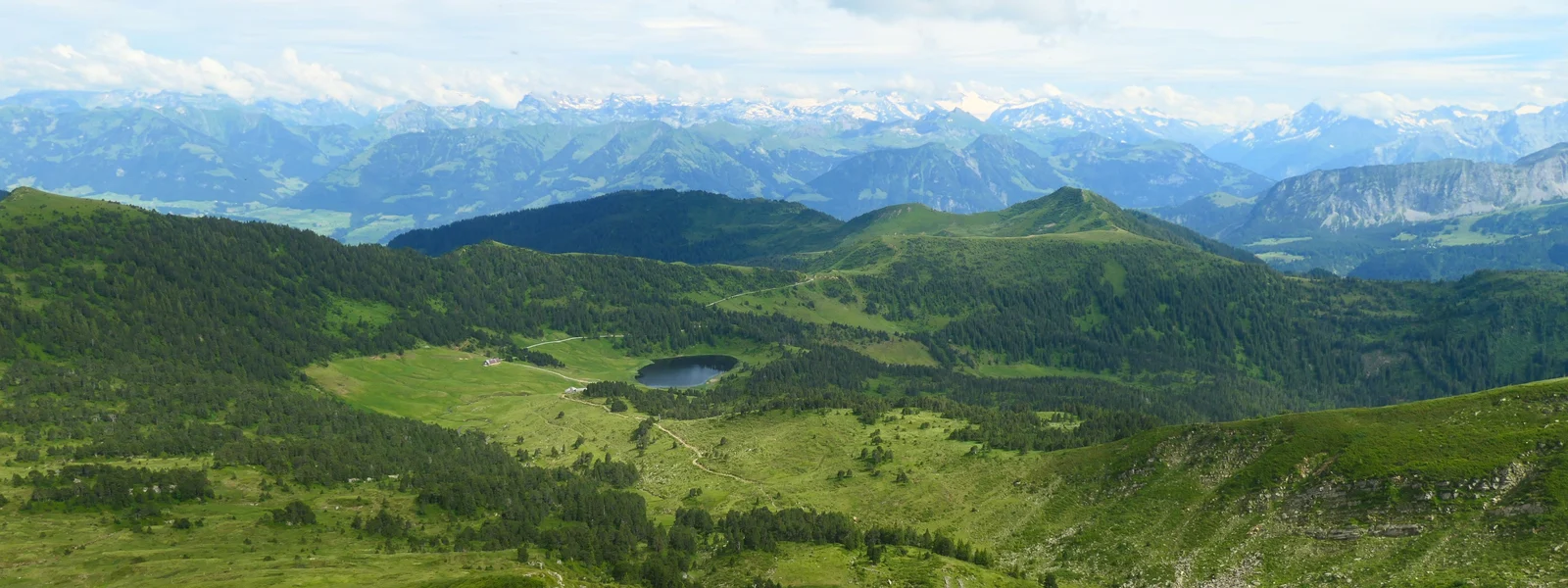
The headline for Switzerland: the connectivity for remote work is excellent essentially everywhere people live and work, in Zurich, Geneva, Bern, Lausanne, the lakeside towns, and even many Alpine valley bases, so unlike some countries you have wide freedom of location, with the cost of living rather than the network being the real constraint on a Swiss working month.
How much data a working month really needs
Remote work data use varies by job, but here are realistic brackets for a month in Switzerland. A light remote worker, mostly text-based work with calls on apartment or coworking wifi, might use 15 to 25 GB of mobile data over a month, treating the eSIM as backup and out-and-about connection. A typical remote worker who takes some video calls on mobile or tethered and uses the eSIM as a primary connection part of the time should plan for 30 to 50 GB. A heavy remote worker who treats mobile data as their main connection will burn 60 GB or more and should look at the largest high-cap plans.
Be honest about which you are. In Switzerland, apartment and coworking wifi is excellent, and the mobile networks are world-class and fully reliable as a backup or primary connection, so a Swiss working month is comfortable for connectivity anywhere you base yourself. Confirm your plan covers Switzerland, and for a working month err generous on data, though the bigger budget consideration in Switzerland is the high cost of accommodation and living rather than the data plan, which is a small line item by comparison.
Best Swiss bases and the cost reality
Where you base yourself in Switzerland is shaped more by cost than by connectivity, since coverage is excellent almost everywhere. Zurich, the largest city, has world-class connectivity, a strong international and coworking scene, and excellent reliability, but is one of the most expensive cities in the world. Geneva is similarly well-connected and expensive, international and home to many global organizations. Bern, Basel, and Lausanne offer the same excellent connectivity, also at high Swiss prices. Even Alpine valley bases like Interlaken or the larger resort towns have good connectivity for remote work, thanks to Switzerland's investment in covering its tourist areas.
So for a Swiss working month, you can base yourself in a city or even a well-covered valley town with confidence in the connectivity, choosing instead on cost, lifestyle, and proximity to the mountains or lakes you came for. The real planning constraint is Switzerland's expense, so many remote workers treat a Swiss month as a premium splurge rather than a budget nomad base. Connectivity-wise, though, Switzerland is a dream: world-class networks, excellent coverage including far into the Alps, and the freedom to work reliably from almost anywhere, provided your plan covers Switzerland.
Single-country Switzerland plan or regional, and the non-EU trap
If you will spend the whole month inside Switzerland, a Switzerland-specific monthly plan is the cleanest choice, giving you world-class coverage at a fair international price far below Swiss local rates.
But Switzerland sits at the heart of Western Europe, bordered by France, Germany, Italy, Austria, and Liechtenstein, so nomads here very commonly take trips across borders. Here the non-EU trap is critical: a Switzerland-only plan does not cover the EU neighbors, and an EU-focused regional plan often does not cover Switzerland. So for a working month that includes cross-border trips, you need a regional plan whose country list explicitly includes both Switzerland and the EU countries you will visit, which not all do. Check this carefully, since the common EU-only regional plans exclude Switzerland precisely because it is not in the EU. Getting this right means seamless data across Switzerland and its neighbors; getting it wrong means your plan works on one side of the border but not the other, the single most common multi-country mistake for trips touching Switzerland.
Reliability and the working setup
Reliability for remote work in Switzerland is world-class, among the best anywhere. The 5G and 4G networks are fast and stable on all three operators, throughout the cities, valleys, and most resort areas, and a strong mobile connection is fully reliable as a primary or backup work connection. The famous scenic train routes are even well covered for most of the journey, so you can work while traveling through spectacular scenery.
Most remote workers tether a laptop, so confirm your eSIM plan allows hotspot use, since a few budget plans restrict it; quality travel eSIMs generally support tethering. For calls, the data-only nature of most eSIMs is rarely a problem, because work calls happen over Zoom, Meet, Teams, and Slack, all over data. Keep your home SIM line active for the occasional SMS code or personal call, set the Switzerland eSIM as your data line, and run your working life over data apps. Build in redundancy by treating eSIM and wifi as mutual backups, though in Switzerland both are so reliable that you are unlikely to need the backup, a luxury that comes with the world-class infrastructure, with the only real gaps being the highest and most remote mountain terrain where you would not be working anyway.
The real monthly cost
Putting numbers on it, the connectivity cost of a Swiss working month is modest even though Switzerland overall is very expensive, precisely because an eSIM bought at international market rates sidesteps Switzerland's steep domestic prices. A 30-day Switzerland data plan in the 30 to 50 GB range, enough for a typical remote worker, costs a fair amount that is a tiny fraction of a month's Swiss accommodation, which is the real expense. Heavier users on the largest plans pay more but still a small fraction of overall costs.
The smart approach is to start with a plan, confirmed to cover Switzerland, sized to your honest estimate, and top up if you run low. The eSIM is one of the few areas where a Switzerland trip is not punishingly expensive, since you pay international rates for world-class coverage rather than Swiss local prices. So while Switzerland is a premium destination overall, its connectivity for a remote worker is excellent and affordable via eSIM: world-class networks, coverage reaching far into the Alps, the freedom to work from almost anywhere, and a data cost that is a rounding error next to Swiss rent. Confirm Swiss coverage, choose a regional plan if you will cross borders, and a working month in Switzerland is superb on the connectivity front, with cost of living the only real constraint.
Managing data and the resilient setup for a working month
A month is long enough that data management becomes a small ongoing practice, though Switzerland's world-class networks make it genuinely low-stress. Track your usage in the first few days to calibrate: if you have used 4 GB in the first three days, you are on track for around 40 GB across the month and should ensure your plan or top-up strategy covers that. Most phones show data usage per line in settings. Topping up is quick, so there is no need to panic-buy a huge plan up front; calibrate from real use, and remember to keep any plan one that covers Switzerland given the non-EU status.
Serious remote workers also build in redundancy, though Switzerland's world-class reliability makes a single point of failure less likely than almost anywhere. The resilient Swiss setup uses your eSIM as either the primary connection or a robust backup to your apartment or coworking wifi. If wifi is your main connection, your eSIM is the failover; if your eSIM is primary, treat available wifi as the backup. The goal is that no single failure can take you fully offline during work, and in Switzerland this is trivially easy because both the wifi and the mobile networks are excellent, with the mobile networks reliable enough to carry your work entirely if needed, almost anywhere including on the scenic trains and in many Alpine bases. The combination of world-class infrastructure, coverage reaching far into the Alps, the freedom to work reliably from almost anywhere, and a data cost that is a rounding error next to Swiss accommodation makes Switzerland a superb remote-work destination on the connectivity front, with the country's high cost of living the only real constraint. Confirm your plan covers Switzerland, choose a regional plan that includes Switzerland if you will cross borders, size it to your work style, and a productive Swiss working month is essentially guaranteed on the connectivity side, leaving cost of living as the thing to budget for.
Plans for Switzerland
Switzerland eSIM plans
Prices in USD. Instant QR activation. Pick your data, land connected.
FAQ
How much data and what kind of plan do travelers need in Switzerland?
A month is long enough that data management becomes a small ongoing practice, though Switzerland's world-class networks make it genuinely low-stress. Track your usage in the first few days to calibrate: if you have used 4 GB in the first three days, you are on track for around 40 GB across the month and should ensure your plan or top-up strategy covers that. Most phones show data usage per line in settings. Topping up is quick, so there is no need to panic-buy a huge plan up front; calibrate from real use, and remember to keep any plan one that covers Switzerland given the non-EU status.
How much data a working month really needs?
Remote work data use varies by job, but here are realistic brackets for a month in Switzerland. A light remote worker, mostly text-based work with calls on apartment or coworking wifi, might use 15 to 25 GB of mobile data over a month, treating the eSIM as backup and out-and-about connection. A typical remote worker who takes some video calls on mobile or tethered and uses the eSIM as a primary connection part of the time should plan for 30 to 50 GB. A heavy remote worker who treats mobile data as their main connection will burn 60 GB or more and should look at the largest high-cap plans.
How should travelers set up and activate an eSIM for Switzerland?
Reliability for remote work in Switzerland is world-class, among the best anywhere. The 5G and 4G networks are fast and stable on all three operators, throughout the cities, valleys, and most resort areas, and a strong mobile connection is fully reliable as a primary or backup work connection. The famous scenic train routes are even well covered for most of the journey, so you can work while traveling through spectacular scenery.
What is the connectivity picture in Switzerland?
A month in Switzerland as a remote worker is superbly supported on the connectivity front, because Swiss networks are among the best in the world, with excellent coverage reaching far into the valleys and mountains. The main considerations are not whether you can work, you can, almost anywhere, but two Switzerland-specific points: ensuring your plan actually covers Switzerland given the non-EU status, and Switzerland's famously high cost of living, which makes it an expensive base overall. You are not just maps and messaging; you are video calls, file transfers, tethering a laptop, and an absolute need for reliability, and Switzerland's world-class networks deliver on all of it.
Can I cancel an eSIM purchase if I do not use it?
Yes. An unused eSIM can be cancelled within 30 days as long as it has not been used on the destination network. Once it has connected and been used, this condition no longer applies.