Ireland Road Trip eSIM 2026: Connected Across the Island
Connectivity for an Ireland road trip
An Ireland road trip is one of the great driving holidays, from Dublin and the historic east across to the wild Atlantic west, taking in castles, coast, mountains, and the famous green countryside. Driving means relying on your phone for navigation, music, and finding the next stop, so connectivity is core to the trip, and Ireland's coverage varies along the way: good on the main roads and in the towns, thin in the rural west. There is also the all-island question, since a road trip may cross into Northern Ireland, a separate jurisdiction. This guide covers what to expect on the route and how to set up an eSIM that keeps an Irish road trip smooth, with the essential emphasis on offline maps for the rural-west gaps.
The defining features of Irish road-trip connectivity are the rural-west thin spots and the Republic-versus-Northern-Ireland border, both easily handled with the right plan and preparation.
Main road and town coverage: good
Ireland's main roads and towns are well covered. The motorways and national roads connecting Dublin, Cork, Galway, Limerick, and the major towns have good, consistent coverage, so driving these you will have reliable data for live navigation, traffic updates, and music streaming throughout, on a strong network. The towns and the populated east and south are well served.
This means the backbone of an Irish road trip, the main roads connecting the cities and larger towns, is connectivity you can count on. Live navigation works, your route stays current, and passengers can stream without the connection dropping. For a road trip that sticks to the main roads and towns, connectivity is straightforward. It is when you head into the rural west, off the main routes into Connemara, the peninsulas, and the remote coast, that the picture changes and a little planning comes in, which is exactly where many Irish road trips are headed for the scenery.
The rural west: thin signal, offline maps essential
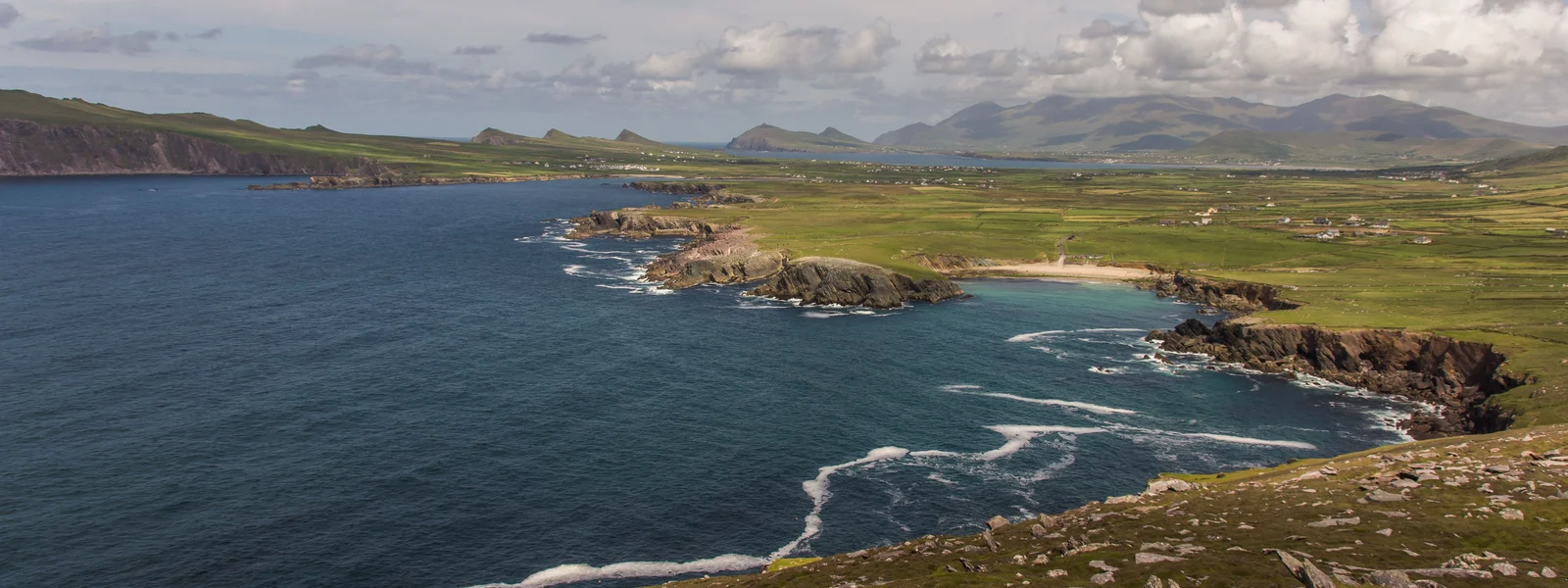
The moment your road trip leaves the main roads for the rural west, you encounter Ireland's genuine coverage gaps. Connemara, the remote Donegal coast, the Kerry and west Cork peninsulas, and the wilder stretches of the Wild Atlantic Way, covered in detail in this hub's dedicated satellite, have thin or absent signal on their remote roads, so a drive through them takes you through no-signal stretches.
This is where Irish road-trip connectivity differs from a drive through flat, dense countries where rural coverage is more uniform. In the Irish west you must plan for thin-signal driving, which makes offline maps essential rather than optional. Choose Vodafone or Three for the best coverage in the towns and covered sections, and download comprehensive offline maps for your entire route so your navigation survives the gaps. Without offline maps, a wrong turn on a remote western road with no signal to re-route can leave you lost in beautiful but empty country. With them, the rural-west gaps become a non-issue for navigation, and you can enjoy the spectacular scenery that is the whole reason for heading west.
The all-island and Northern Ireland question
A distinctive feature of an Ireland road trip is that it may cross into Northern Ireland, which is a separate jurisdiction for mobile purposes. Many road trips combine the Republic with Northern Ireland, for the Giant's Causeway, the Antrim coast, Belfast, and Derry, crossing the open, invisible border. But your phone notices: an Ireland eSIM covers the Republic, not Northern Ireland, which is part of the UK, so your Republic plan stops working when you cross north.
For an all-island road trip taking in both the Republic and Northern Ireland, the clean solution is a Europe regional eSIM that covers both the Republic and the UK, including Northern Ireland, so you stay connected across the whole island with no gap at the border. A Republic-only Ireland plan is fine for a road trip confined to the Republic, but the moment Northern Ireland enters your route, the regional plan is the answer. The same applies if your trip combines Ireland with a leg in Britain. Knowing this before you set out spares you the confusion of a phone that silently loses coverage at an invisible border crossing.
Why offline maps are essential for an Irish road trip
More than for a road trip through flat, dense countries, offline maps are essential for driving Ireland, because of the genuine thin-signal areas in the rural west. Before you set out, download comprehensive offline maps for your entire route, including every rural-west section, and test them in airplane mode to confirm they work without signal. This is the single most important preparation for an Irish road trip that ventures beyond the main roads.
With offline maps as your foundation, your navigation keeps working no matter what the signal does, which transforms the rural-west gaps from potential frustrations into non-events. Your live eSIM data is then free to handle the things that need it, live traffic, finding an open pub or petrol station, checking opening hours, when you are in covered areas. Because navigation no longer depends on a live connection, a signal drop on a remote western road is harmless. This is how experienced travelers drive Ireland: offline maps for the whole route, live data for the dynamic features in covered areas, a strong Vodafone or Three plan, and no assumption that the network will be there in the wild west.
The best eSIM and setup for an Ireland road trip
For an Ireland road trip, the priorities are a strong network and thorough offline maps, plus the right plan for your jurisdictions. If you stay in the Republic, choose an Ireland eSIM on Vodafone or Three for the best rural reach, sized around 10 to 15 GB for a week or two of driving, understanding that the rural-west portions will use little data because the signal is thin. If your route crosses into Northern Ireland or Britain, choose a Europe regional eSIM covering both the Republic and the UK so you stay connected across the border.
The essential setup is offline maps for your entire route, tested in airplane mode, covering every rural-west section. Install your eSIM before you leave, set it as your data line, and keep your home SIM active for codes. Mount your phone where the driver can see it, carry the essentials for remote driving, fuel, water, layers, since stations are sparse in the rural west, and let someone know your route if you are exploring genuinely remote terrain. With a strong-network eSIM, comprehensive offline maps, and the right plan for an all-island trip, an Ireland road trip is a magnificent journey across one of Europe's most beautiful landscapes, from the historic east to the wild Atlantic west, where being beyond the network on the remote stretches is part of the adventure. Ireland plans start from around $4, with a Vodafone or Three plan and offline maps the essential combination, and a regional plan the answer if Northern Ireland is on your route.
The offline-first mindset for driving Ireland
The single most valuable habit for an Irish road trip, more than for a drive through flat, dense countries, is to adopt an offline-first mindset for navigation, treating live data as an enhancement rather than a dependency, because Ireland's rural-west thin spots are genuine. Before you set out, download comprehensive offline maps for your entire route, including every rural-west section, and test them in airplane mode. This means your navigation keeps working no matter what the signal does, which transforms the rural-west gaps from potential frustrations into non-events.
With offline maps as your foundation, your live eSIM data is free to handle the dynamic things in covered areas: live traffic, finding an open pub or petrol station, checking opening hours. Because navigation no longer depends on a live connection, a signal drop on a remote western road is harmless, which matters when the alternative is being lost in beautiful but empty country with no way to re-route. This is how experienced travelers drive Ireland: offline maps for the whole route, live data for the dynamic features where there is signal, a strong Vodafone or Three plan for the best coverage in the patches that have it, the practical essentials for remote driving, and route-sharing for genuinely remote terrain. The preparation takes a little longer than for a flat, dense-country road trip because the rural-west gaps are real, but it removes the connectivity concern that an Irish road trip into the west presents, leaving you free to enjoy one of Europe's most beautiful driving landscapes, from the historic east to the wild Atlantic coast. And handle the jurisdiction split with a regional plan if your route crosses into Northern Ireland, so your connectivity does not silently stop at the invisible border. Ireland plans start from around $4, with a Vodafone or Three plan and thorough offline maps the essential combination.
Plans for Ireland
Ireland eSIM plans
Prices in USD. Instant QR activation. Pick your data, land connected.
FAQ
How should travelers set up and activate an eSIM for Ireland?
For an Ireland road trip, the priorities are a strong network and thorough offline maps, plus the right plan for your jurisdictions. If you stay in the Republic, choose an Ireland eSIM on Vodafone or Three for the best rural reach, sized around 10 to 15 GB for a week or two of driving, understanding that the rural-west portions will use little data because the signal is thin. If your route crosses into Northern Ireland or Britain, choose a Europe regional eSIM covering both the Republic and the UK so you stay connected across the border.
What coverage and network performance should travelers expect in Ireland?
The moment your road trip leaves the main roads for the rural west, you encounter Ireland's genuine coverage gaps. Connemara, the remote Donegal coast, the Kerry and west Cork peninsulas, and the wilder stretches of the Wild Atlantic Way, covered in detail in this hub's dedicated satellite, have thin or absent signal on their remote roads, so a drive through them takes you through no-signal stretches.
What should travelers prepare before entering low-coverage areas in Ireland?
The single most valuable habit for an Irish road trip, more than for a drive through flat, dense countries, is to adopt an offline-first mindset for navigation, treating live data as an enhancement rather than a dependency, because Ireland's rural-west thin spots are genuine. Before you set out, download comprehensive offline maps for your entire route, including every rural-west section, and test them in airplane mode. This means your navigation keeps working no matter what the signal does, which transforms the rural-west gaps from potential frustrations into non-events.
Why offline maps are essential for an Irish road trip?
More than for a road trip through flat, dense countries, offline maps are essential for driving Ireland, because of the genuine thin-signal areas in the rural west. Before you set out, download comprehensive offline maps for your entire route, including every rural-west section, and test them in airplane mode to confirm they work without signal. This is the single most important preparation for an Irish road trip that ventures beyond the main roads.