Ireland 5G and 4G Coverage 2026: The Honest Map
Ireland coverage, told straight
Ireland's coverage is good in the cities, towns, and along the main roads, but genuinely patchy in the rural west, southwest, and the remote Atlantic regions. The east and south, where most of the population lives, are well served; the wild Atlantic edge is where the network struggles. This is the honest map: where 5G is fast, where coverage thins, which operator to want, and the Ireland-specific factors of the rural-west gaps and the Republic-versus-UK jurisdiction split. Understand the pattern and you can enjoy good connectivity in the cities while preparing for the genuine gaps in the rural west.
The three networks and who to want behind your eSIM
The Republic of Ireland has three main mobile network operators, and they differ for a traveler. Vodafone is a major network, generally regarded as having strong overall and rural coverage, and is a good choice to want behind your eSIM for any trip beyond the cities. Three Ireland is also strong, competitive in cities and with good coverage, and another solid pick for rural reach. Eir, the historic incumbent, is competitive in populated areas, with budget brand GoMo riding on it.
There are budget brands too: GoMo on Eir, 48 on Three, and others. For a traveler, the practical takeaway is to favor Vodafone or Three for the best blend of city speed and rural reach, especially if your trip includes the rural west, Connemara, Donegal, Kerry, or the wilder Wild Atlantic Way. For a city-only trip, any of the three is fine. Network choice matters more in Ireland than in flat, dense countries because of the genuine rural Atlantic gaps, so for a rural trip a strong network is worth seeking out.
5G and the well-covered cities and towns
Ireland has rolled out 5G across its cities and larger towns, with all three operators running commercial 5G. In Dublin, Cork, Galway, Limerick, Waterford, and the other urban centers you will see genuine 5G with fast download speeds well into the hundreds of megabits per second on a good network. The towns, the main motorways and national roads, and the populated east and south are well covered with fast 4G and increasingly 5G.
Suburbs and larger towns across the country increasingly get 5G too. The honest framing: in any Irish city or sizable town, expect good 5G and reliable connectivity; on the main roads connecting them, expect solid coverage. Ireland's urban and main-route coverage is good, competitive with much of Western Europe. The gaps are not about cities versus towns but about the populated east and the main routes versus the genuinely rural and remote Atlantic west, which is where Ireland's coverage reputation for patchiness comes from.
The rural west and the Atlantic gaps
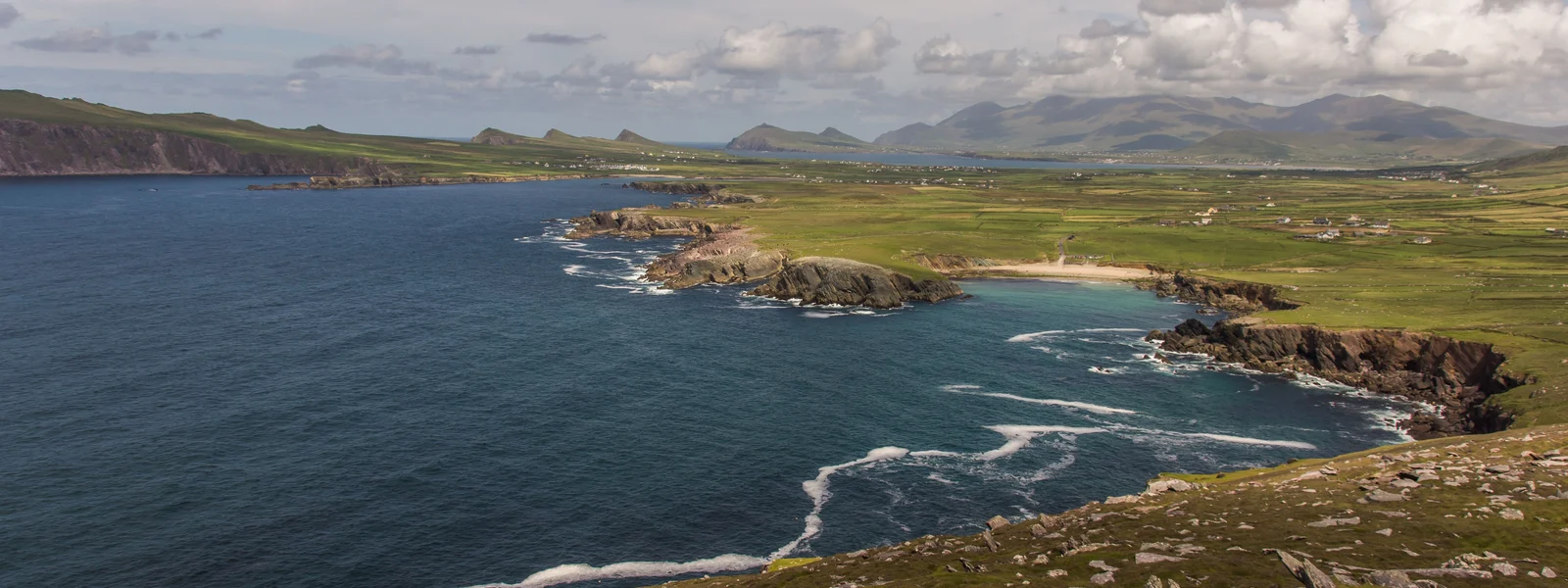
The rural west and southwest are where Ireland's coverage genuinely thins, and this is the key thing for a traveler to understand. Connemara, the wild region west of Galway, the hills and remote coast of Donegal in the northwest, the Kerry peninsulas like the Dingle and Iveragh, and west Cork all have thin or absent coverage on their remote mountain and coastal roads. A drive through these areas, or along the wilder stretches of the Wild Atlantic Way, will take you through genuine no-signal sections, sometimes for a good while.
This is partly a matter of choosing the right network, Vodafone and Three reach furthest, but even they cannot cover the emptiest Atlantic areas, where coverage is thin from any network. For a rural-west trip, the essential preparation is offline maps for navigation and, if you are walking in genuinely remote terrain, awareness that you cannot always rely on a phone. Ireland's Atlantic edge is spectacular precisely because it is wild and sparsely populated, and that same emptiness means the network does not fully reach. Plan for thin signal in the remote west, with coverage in the towns and villages, and you will be properly prepared.
The Republic versus Northern Ireland on coverage
A coverage point unique to Ireland is the jurisdiction split. The island contains the Republic of Ireland, an EU country, and Northern Ireland, part of the UK. They have separate mobile networks: the Republic has Vodafone, Three, and Eir; Northern Ireland, as part of the UK, has the UK networks EE, Vodafone UK, O2, and Three UK. An Ireland eSIM connects to the Republic's networks and covers the Republic; it does not cover Northern Ireland. A UK eSIM covers Northern Ireland but not the Republic.
The border is open and invisible as you drive, but your phone switches, or fails to, when you cross. So coverage planning on the island of Ireland means knowing which jurisdiction you are in: an Ireland plan for the Republic, a UK plan for Northern Ireland, or, cleanest of all, a Europe regional plan covering both for an all-island trip. This is not about signal strength but about which country's network your plan can use, and it is the single most common coverage confusion visitors to the island face, so it is worth being clear about before you travel.
The Wild Atlantic Way and coastal driving
The Wild Atlantic Way, the spectacular 2,500-kilometer coastal driving route running the entire western seaboard from Donegal in the north to Cork in the south, is one of the world's great road trips and a perfect illustration of Ireland's coverage pattern. The route passes through the well-covered towns and also through the wildest, most remote rural areas, so coverage along it is mixed: good in the towns and on the busier sections, thin or absent on the remotest stretches through Connemara, the Kerry peninsulas, and the Donegal coast.
Driving the wilder portions, you will be without signal for stretches, so offline maps are essential preparation. The same applies to exploring the peninsulas, the islands off the coast, and the remote coastal roads. For the Wild Atlantic Way and rural-west driving generally, the setup is a strong-network eSIM, Vodafone or Three, for the best coverage in the covered sections, comprehensive offline maps for the no-signal stretches, and an awareness that the remote west is genuinely sparsely covered. The road-trip satellite in this hub details the route; the coverage takeaway is that the Wild Atlantic Way is well covered in its towns and patchy on its wild stretches, exactly as Ireland's overall pattern would suggest.
Coverage by trip type
Pulling it together by how you travel. A city trip to Dublin, Cork, or Galway gives you fast 5G almost everywhere; you can run a strong plan as your main connection confidently. A trip combining cities and main routes is well covered throughout, with gaps only on any rural legs. A rural-west trip, Connemara, Donegal, Kerry, west Cork, or the wilder Wild Atlantic Way, needs planning: expect thin signal on the remote stretches, choose Vodafone or Three for the best reach, and rely on offline maps.
A Wild Atlantic Way road trip combines well-covered towns with long thin-signal stretches, as the road-trip satellite details. An all-island trip taking in both the Republic and Northern Ireland needs to handle the jurisdiction split, best with a Europe regional eSIM covering both. Whatever your trip, an eSIM on Vodafone or Three gives you the best version of Irish coverage, good in the cities and as good as possible in the rural west, where offline preparation handles the genuine gaps, and a regional plan handles the all-island case cleanly.
How to check coverage and what it means for your trip
If you are heading somewhere off the beaten track in Ireland, a cottage in Connemara, a remote spot in Donegal, a base on a Kerry peninsula, it is worth checking coverage for that exact location before you book, more so than in flat, dense countries because Ireland's rural-west gaps are genuine. The Irish operators and the regulator ComReg publish coverage information, and checking Vodafone's or Three's coverage for your destination gives you a realistic picture before you commit, and may save you from a remote base with little signal.
For travelers staying in the cities and on the main routes, this is unnecessary, because coverage there is good. But for anyone basing themselves in the rural west, and especially for remote workers who need reliability, a quick coverage check before booking is genuinely useful. The broader lesson for any Irish trip is to respect the coverage contrasts: assume good connectivity in the cities and on the main roads, but verify and prepare for the rural west, choosing Vodafone or Three for the best chance and downloading offline maps regardless. And always keep the jurisdiction split in mind, since coverage on the island depends on which country's network your plan can use: an Ireland plan for the Republic, a UK plan for Northern Ireland, or a regional plan for both. Ireland rewards this light planning, with the populated parts well covered and only the genuinely rural west and the border distinction calling for the extra preparation.
Plans for Ireland
Ireland eSIM plans
Prices in USD. Instant QR activation. Pick your data, land connected.
FAQ
What coverage and network performance should travelers expect in Ireland?
The Republic of Ireland has three main mobile network operators, and they differ for a traveler. Vodafone is a major network, generally regarded as having strong overall and rural coverage, and is a good choice to want behind your eSIM for any trip beyond the cities. Three Ireland is also strong, competitive in cities and with good coverage, and another solid pick for rural reach. Eir, the historic incumbent, is competitive in populated areas, with budget brand GoMo riding on it.
How to check coverage and what it means for your trip?
If you are heading somewhere off the beaten track in Ireland, a cottage in Connemara, a remote spot in Donegal, a base on a Kerry peninsula, it is worth checking coverage for that exact location before you book, more so than in flat, dense countries because Ireland's rural-west gaps are genuine. The Irish operators and the regulator ComReg publish coverage information, and checking Vodafone's or Three's coverage for your destination gives you a realistic picture before you commit, and may save you from a remote base with little signal.
What should travelers know about the wild atlantic way and coastal driving in Ireland?
The Wild Atlantic Way, the spectacular 2,500-kilometer coastal driving route running the entire western seaboard from Donegal in the north to Cork in the south, is one of the world's great road trips and a perfect illustration of Ireland's coverage pattern. The route passes through the well-covered towns and also through the wildest, most remote rural areas, so coverage along it is mixed: good in the towns and on the busier sections, thin or absent on the remotest stretches through Connemara, the Kerry peninsulas, and the Donegal coast.
What should travelers know about the rural west and the atlantic gaps in Ireland?
The rural west and southwest are where Ireland's coverage genuinely thins, and this is the key thing for a traveler to understand. Connemara, the wild region west of Galway, the hills and remote coast of Donegal in the northwest, the Kerry peninsulas like the Dingle and Iveragh, and west Cork all have thin or absent coverage on their remote mountain and coastal roads. A drive through these areas, or along the wilder stretches of the Wild Atlantic Way, will take you through genuine no-signal sections, sometimes for a good while.