Stockholm and Gothenburg eSIM: Staying Connected in Sweden's Cities
Why southern Sweden is effortless connectivity
Stockholm and Gothenburg, Sweden's two largest cities, anchor the populated south where most Swedish trips happen, and the good news is that this is about as effortless a connectivity environment as exists in Europe. Both cities have superb mobile coverage, ubiquitous free wifi and a thoroughly digital, cashless daily life, from app based transport to contactless everything. You will have fast, reliable 4G and widespread 5G across both cities and their surroundings, and you genuinely never need to think about whether you will have signal. Stockholm, spread beautifully across fourteen islands where lake meets sea, and Gothenburg, the friendly west coast port, are both models of seamless urban connectivity. This regional satellite covers the cities and the populated south in detail, but the headline could not be simpler: in and around Stockholm and Gothenburg, connectivity is flawless, and your main decisions are about data size and whether your trip will cross the Øresund bridge into Denmark, rather than about coverage.
Stockholm: a digital capital across the water
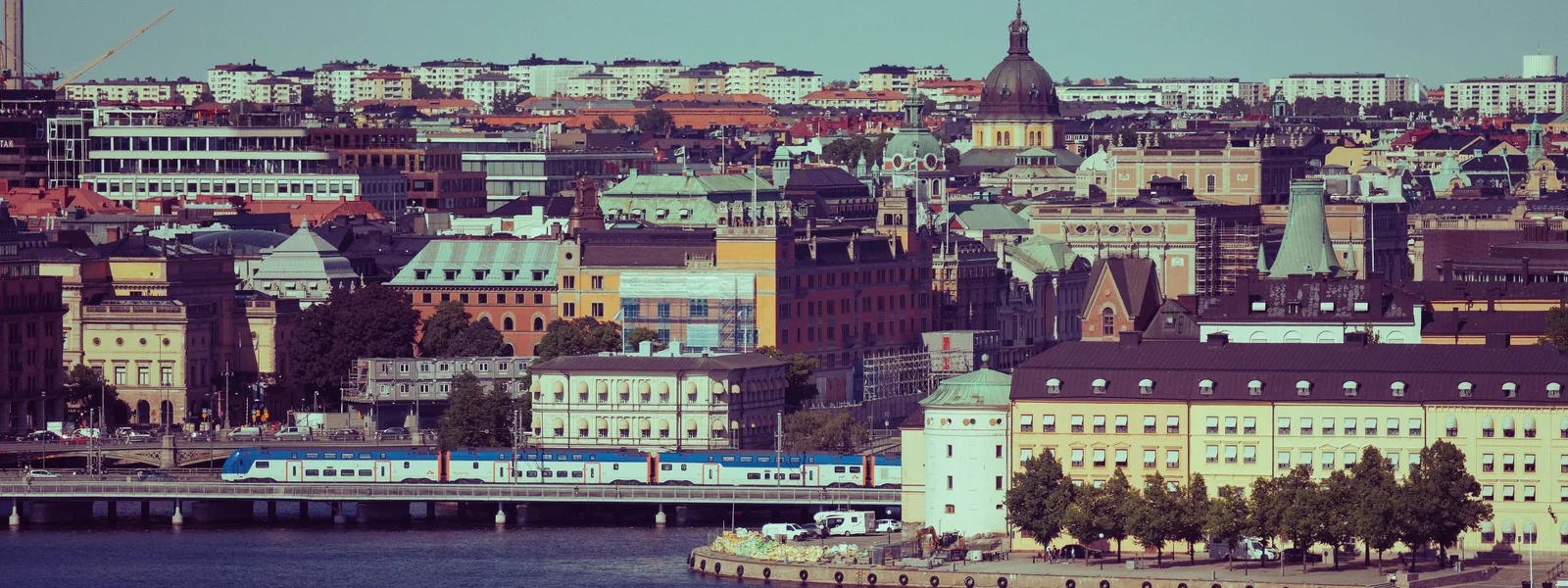
Stockholm runs on digital infrastructure, and your phone is your key to the city. The metro, famous for its art filled stations, the buses, the commuter trains and the ferries that stitch the island city together all lean on apps for tickets and timetables, the cashless culture means you pay by card or phone almost everywhere, and route apps help you navigate the archipelago of neighbourhoods. All of this assumes connectivity, and Stockholm delivers it comprehensively: strong signal underground in the metro, across every island and district from Gamla Stan to the southern heights of Sodermalm, and out to the inner archipelago. Free wifi is abundant, so much of your data use can happen on wifi while you save your eSIM bundle for navigation and quick lookups on the move. For a city break here, a modest data plan goes a long way precisely because you are rarely far from a fast wifi connection, and your eSIM mainly fills the gaps as you move between them across this beautiful waterborne capital.
Gothenburg and the west coast
Gothenburg, Sweden's second city on the west coast, is equally well connected and offers a friendlier, more laid back complement to Stockholm. Its trams, the heart of the city's transport, run on app based ticketing, its harbour and canals are easily navigated with a connected phone, and the cashless digital culture is as pervasive here as in the capital. Coverage across the city and its surroundings is fast and reliable. Beyond Gothenburg, the rugged west coast and the Bohuslan archipelago of rocky islands and fishing villages stretching north toward Norway are popular and well covered in their towns and main areas, with the usual caveat that the most remote outer islands and skerries can have thinner signal. The southern province of Skane around Malmo, the lakes and forests of the interior south, and the university city of Uppsala north of Stockholm are all comprehensively connected, so day trips and touring across the populated south keep you online throughout, with offline maps a sensible backup only for the remotest coastal islands.
The Oresund bridge and the Denmark question
The single most important connectivity consideration for a southern Sweden trip is the Øresund bridge to Denmark, because Malmo in Sweden's far south connects to Copenhagen across the bridge in under an hour, and the two cities function almost as a single cross border region. Many visitors to southern Sweden include Copenhagen, or base in one city and visit the other, and the crossing is one of the busiest in Scandinavia. The catch is that the moment you cross into Denmark, your phone hands over to a Danish network. For an EU resident on carrier coverage, this is seamless and your plan simply works on both sides. But if you are on a Sweden only travel eSIM, your data may stop once you are in Denmark unless your plan covers Denmark or you use a regional Scandinavia or Europe plan. If a Copenhagen visit or a wider Scandinavian tour is on your agenda, choose a regional plan from the start so your connectivity follows you across the bridge without interruption, which is the single most important plan decision for a trip based in Malmo or southern Sweden.
The smart setup for the cities and the south
Pulling it together, a connected trip to Stockholm, Gothenburg and the south is genuinely simple to set up. Buy a Sweden eSIM before you arrive, sized modestly since the cities' abundant free wifi will carry much of your usage, perhaps three to five gigabytes for a city break or more if you stream or tour widely. If your plans include crossing to Copenhagen over the Øresund bridge or touring Scandinavia, choose a regional Europe or Scandinavia plan instead so your data works on both sides of the bridge. Do not agonise over which network your eSIM uses, because all the Swedish networks cover the populated south excellently, unlike the north where network choice matters. Install and test the eSIM on home wifi before you fly, keep your home number alive for the verification codes that cashless Sweden relies on with its data roaming off, and you will step off the plane at Arlanda or Landvetter ready to tap straight onto the transport into the city. Download an offline map of central Stockholm or Gothenburg as a backup, though you will rarely need it given the flawless coverage. Do that and the cities and the south, the easiest connectivity environment in Sweden, simply work from your first minute to your last.
A connected southern itinerary, start to finish
To see how all of this works across a real trip, follow a connected southern Sweden itinerary from arrival to departure. You land at Stockholm Arlanda with your eSIM already installed and tested from home, so you walk out, buy an Arlanda Express or bus ticket in the app, and ride into the city already online, navigating to your hotel without hunting for wifi. You spend your days exploring Stockholm across its islands, using the art filled metro and the ferries on app based tickets, paying by phone everywhere in this cashless city, and leaning on the abundant free wifi in cafes and museums so your eSIM data barely depletes. You take a ferry out into the inner archipelago for a day, staying connected on the popular islands throughout. Then you take the train across to Gothenburg on the west coast, connected the whole way, exploring its trams and canals and harbour with your phone as your guide. Perhaps you finish with the train south to Malmo and a day trip across the Øresund bridge to Copenhagen. Because you anticipated this when buying, you are on a regional Scandinavia plan rather than a Sweden only one, so as your train crosses the bridge and your phone hands over to a Danish network, your data simply keeps working, and you explore Copenhagen as easily as Stockholm. Throughout, you do not worry about which network your eSIM uses, because all of them cover the populated south excellently, and you keep your home number alive for the verification codes cashless Sweden and Denmark send, with its data roaming off. That single worked example captures the theme of this satellite: southern Sweden is effortless connectivity, asking only that you size your data sensibly, choose a regional plan if Denmark is on the agenda, and keep your home number for codes, leaving you free to enjoy two of Scandinavia's most beautiful cities and the easy crossing between countries that defines this connected corner of the north.
Beyond the cities: making the most of the connected south
Beyond the headline of flawless city coverage and the Denmark crossing, it is worth noting how the connected south rewards a traveller who makes the most of its digital conveniences, because these are cities and a region designed around a connected daily life. Stockholm and Gothenburg are joys to navigate with a working connection: the metro, trams, buses, commuter trains and ferries all run on app based ticketing, the cashless culture means you pay by card or phone for everything from a coffee to a museum, route apps stitch the island geography of Stockholm into an easy network, and the whole experience assumes the connectivity that the south delivers comprehensively, including underground and across the water. The food scene, from the New Nordic restaurants to the cafes where fika is an institution, is best navigated with reviews and bookings on your phone, and the archipelago ferries, the day trips and the seasonal events are easiest to find and book digitally. Free wifi is so widespread that a light data plan stretches a long way, with your eSIM mainly filling the gaps as you move between wifi spots. The broader point is that southern Sweden is built around a seamless digital daily life, and arriving with a working eSIM lets you slot straight into that rhythm from the airport train onward. Pair that with the simple regional plan decision if you are crossing to Copenhagen, keep your home number for the codes that cashless Sweden constantly requests, and the connected south delivers not just easy connectivity but a genuinely enhanced trip, where your phone is the key that unlocks two of Scandinavia's most liveable cities and the beautiful, easily explored region around them, from the first tap onto the Arlanda Express to the last ferry back from the archipelago.
Plans for Sweden
Sweden eSIM plans
Prices in USD. Instant QR activation. Pick your data, land connected.
FAQ
How should travelers set up and activate an eSIM for Sweden?
Pulling it together, a connected trip to Stockholm, Gothenburg and the south is genuinely simple to set up. Buy a Sweden eSIM before you arrive, sized modestly since the cities' abundant free wifi will carry much of your usage, perhaps three to five gigabytes for a city break or more if you stream or tour widely. If your plans include crossing to Copenhagen over the Øresund bridge or touring Scandinavia, choose a regional Europe or Scandinavia plan instead so your data works on both sides of the bridge. Do not agonise over which network your eSIM uses, because all the Swedish networks cover the populated south excellently, unlike the north where network choice matters.
What is the connectivity picture in Sweden?
Stockholm and Gothenburg, Sweden's two largest cities, anchor the populated south where most Swedish trips happen, and the good news is that this is about as effortless a connectivity environment as exists in Europe. Both cities have superb mobile coverage, ubiquitous free wifi and a thoroughly digital, cashless daily life, from app based transport to contactless everything. You will have fast, reliable 4G and widespread 5G across both cities and their surroundings, and you genuinely never need to think about whether you will have signal. Stockholm, spread beautifully across fourteen islands where lake meets sea, and Gothenburg, the friendly west coast port, are both models of seamless urban connectivity.
What should travelers know about stockholm: a digital capital across the water in Sweden?
Stockholm runs on digital infrastructure, and your phone is your key to the city. The metro, famous for its art filled stations, the buses, the commuter trains and the ferries that stitch the island city together all lean on apps for tickets and timetables, the cashless culture means you pay by card or phone almost everywhere, and route apps help you navigate the archipelago of neighbourhoods. All of this assumes connectivity, and Stockholm delivers it comprehensively: strong signal underground in the metro, across every island and district from Gamla Stan to the southern heights of Sodermalm, and out to the inner archipelago.
What should travelers know about gothenburg and the west coast in Sweden?
Gothenburg, Sweden's second city on the west coast, is equally well connected and offers a friendlier, more laid back complement to Stockholm. Its trams, the heart of the city's transport, run on app based ticketing, its harbour and canals are easily navigated with a connected phone, and the cashless digital culture is as pervasive here as in the capital. Coverage across the city and its surroundings is fast and reliable. Beyond Gothenburg, the rugged west coast and the Bohuslan archipelago of rocky islands and fishing villages stretching north toward Norway are popular and well covered in their towns and main areas, with the usual caveat that the most remote outer islands and skerries can have thinner signal.