Slovenia eSIM Guide 2026
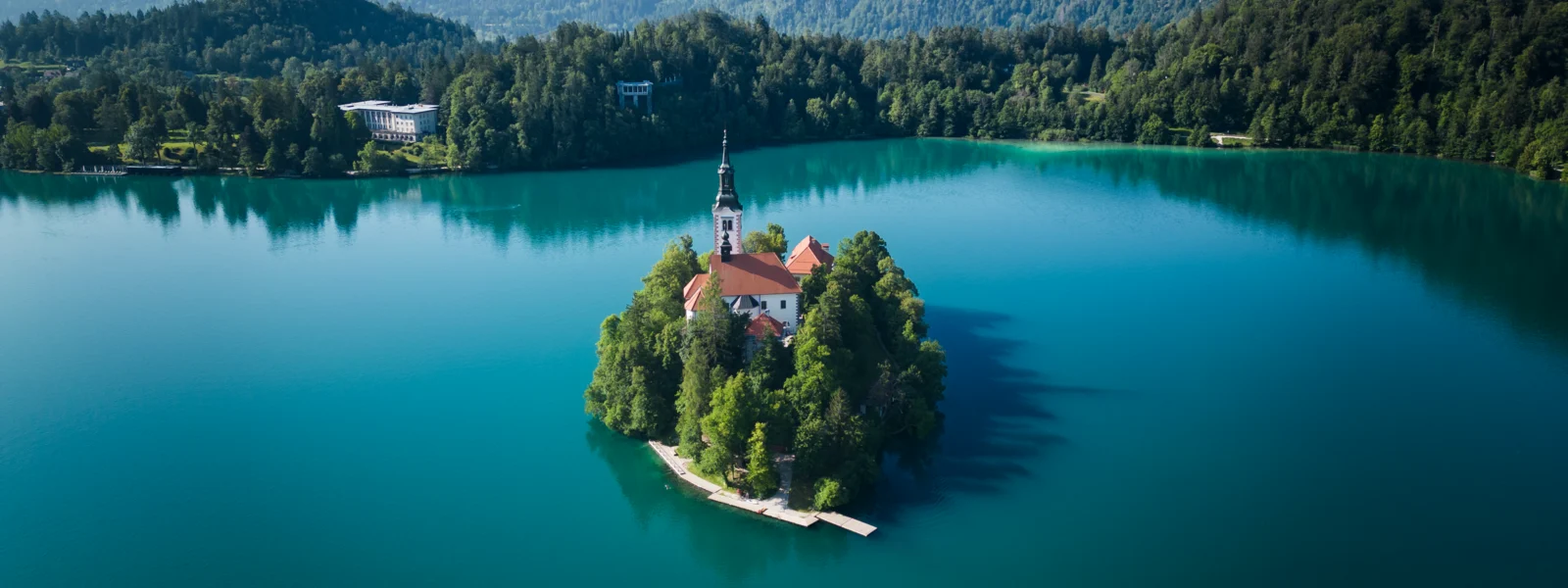
I have spent real time in Slovenia, and the first thing that strikes you is how much variety the country packs into a tiny footprint. You can wake up beside Lake Bled with the Julian Alps reflected in the water, drive ninety minutes through the Soca valley, and be eating fresh seafood on the Adriatic coast at Piran by the afternoon. That compactness shapes how connectivity works here, because in a single day you might move from a dense city centre to a deep mountain valley to a thin coastal strip squeezed between Italy and Croatia. Ljubljana itself is one of the easiest European capitals to navigate, walkable and green, with the castle looking down over the river, and coverage in the city is excellent everywhere you would reasonably go. The questions start once you leave the obvious tourist core. Slovenia is a member of the European Union and uses the euro, which matters a great deal for how you connect, because if you already hold a European plan your home allowance roams here under the carrier terms under EU rules. For everyone arriving from outside the bloc, from the United States, the United Kingdom after Brexit, Australia, or anywhere else, the maths is completely different, and a travel eSIM is almost always the cleaner and cheaper option. I have tested networks in the cities and in the valleys, on the trains between Ljubljana and the coast, and up in the alpine resorts around Kranjska Gora and Bohinj, and the pattern is consistent. Where people live and where roads run, the signal is strong and fast. Where the terrain folds into steep valleys and high passes, it thins out, and you learn to download what you need before you climb. This guide pulls together everything I wish someone had told me before my first trip, written in plain language, with honest costs in US dollars and the practical setup steps that actually matter. The goal is simple. You should land in Slovenia, switch on your phone, and have working data within a couple of minutes, without paying surprise roaming fees or hunting for a shop that sells local SIM cards. Practically speaking, the connectivity story in Slovenia breaks into three zones that you will move between constantly. The cities and the motorway corridors are fast and dependable, the kind of place where you can stream, video call, and tether without a second thought. The alpine valleys and the national parks are good on the floors and along the roads but unpredictable once you climb, so they reward a little offline preparation. The short coastal strip around Koper, Izola, and Piran behaves like the cities, dense and well covered, with the occasional quirk where Italian or Croatian networks try to grab your phone near the borders. Keep those three zones in mind as you read, because almost every recommendation in this guide flows from them, and once you understand them the rest of the planning falls into place quickly.
Why connectivity in Slovenia is easier than people expect
Slovenia is small, prosperous, and heavily invested in its mobile networks, which means the baseline experience is genuinely good. The three national operators cover the populated parts of the country thoroughly, and the motorways that stitch Ljubljana to Maribor, to the coast, and to the Austrian and Italian borders carry solid signal almost the whole way. For a visitor, this is reassuring. You are not arriving somewhere with patchy infrastructure. The challenge is never whether coverage exists, it is whether you are paying a fair price to use it, and that depends entirely on where your phone plan comes from. What surprises many visitors is how recent and dense the network investment is. Fibre backhaul reaches small towns, the motorway network is genuinely modern, and the operators compete hard in a small market, which keeps quality high. For a country of two million people, the infrastructure punches well above its weight. The result is that you can plan your trip around the assumption that you will have a usable signal almost everywhere a tourist goes, and treat the rare dead zones in the high mountains as the exception rather than the rule. That mindset, connected by default and prepared for the occasional gap, is exactly the right one for Slovenia.
The EU carrier terms rule and who it helps
If your mobile plan is from any European Union country, the carrier rules apply in Slovenia, so your domestic allowance works here without surcharges. This is a real advantage for European travellers and removes the need for any extra purchase. The catch is that these rules only cover plans issued inside the bloc. A plan from the United States, the United Kingdom, Canada, or anywhere outside Europe gets no such protection, and the default roaming rates those carriers charge can be brutal, often several dollars per megabyte. That gap is exactly why a travel eSIM exists. It is worth being precise about who benefits, because the rule trips people up. The protection follows the country that issued your plan, not your nationality. An American living in Germany on a German plan roams free in Slovenia. A German living in the United States on an American plan does not. If you are unsure, the simplest test is to look at where your SIM or carrier is based. If it is an EU member state, you are covered. If it is anywhere else, you should plan to buy an eSIM, and you will save a great deal of money by doing so rather than discovering the roaming charges on your bill later.
What a travel eSIM actually costs
For Slovenia, expect to pay only a few US dollars per gigabyte through a travel eSIM, a fraction of standard non-EU carrier terms. Because Slovenia sits inside Europe, you have two sensible routes. A Slovenia-only plan keeps things simple and cheap if your whole trip stays inside the country. A regional Europe plan, covering forty or more countries on one eSIM, makes far more sense if you are looping through neighbouring Austria, Italy, Croatia, or Hungary, which most visitors to this part of Europe end up doing. Either way the price per gigabyte stays low. To put real numbers on it, a few gigabytes covering a week of travel typically costs less than the price of a couple of coffees per day, and a regional Europe plan covering a multi country trip is only marginally more. Compare that to non-EU carrier terms, where the same week could run into three figures, and the value is obvious. Prices have fallen steadily as more providers compete, and topping up mid trip is painless, so there is no need to over commit at the start. Buy a sensible amount, watch your usage in the first couple of days, and add more only if you genuinely need it.
Coverage in the cities versus the mountains
In Ljubljana, Maribor, Celje, and along the coast at Koper, Izola, and Piran, you will find fast and reliable data with strong 4G everywhere and growing 5G in the larger centres. The picture changes as you head into the Julian Alps and the Soca valley. Signal follows the valley floors and the roads, so a village or a trailhead usually has coverage, but the moment you gain altitude onto a ridge or into a side gorge it can drop away. This is normal for alpine terrain and not a fault of any particular network. The practical takeaway is to treat altitude as the variable that matters. A trailhead car park in the Julian Alps usually has signal. The ridge two hours above it may not. Ski resorts like Kranjska Gora and Vogel are well covered at the base and around the lifts, because that is where people gather, but back country routes can go quiet. None of this is a reason to worry, it is simply a reason to download offline maps before you set out and to let someone know your plans. Treat the mountains as offline territory by default and you will never be caught out.
Choosing between a single country and a regional plan
The decision comes down to your itinerary. A traveller flying into Ljubljana, spending a week between the capital, Bled, and the coast, and flying out again is well served by a Slovenia-only eSIM. A traveller doing the classic central European loop, perhaps Venice, then Slovenia, then Zagreb or Vienna, will save effort and money with a single regional Europe eSIM that covers the whole route. Think about borders before you buy, because Slovenia shares them with four countries and crossing one is a matter of a short drive. A useful way to decide is to sketch your route on a map before you buy. If every night is spent inside Slovenia, a single country plan is the efficient choice. If even one leg crosses a border, into Trieste for lunch, up to Klagenfurt, or down to the Istrian coast in Croatia, the regional plan removes a headache. Borders here are casual, often just a sign by the road, and it is easy to cross one without realising. A regional eSIM means you never have to think about which side of the line you are standing on.
Keeping your home number alive while you travel
One of the quiet advantages of an eSIM is that it sits alongside your normal SIM rather than replacing it. Your physical SIM or primary eSIM stays active for calls and texts on your home number, including the verification codes that banks and apps love to send, while the travel eSIM carries your data. You simply set the travel plan as your data line and leave the home line for calls. This dual setup means you never miss a security code and never expose yourself to accidental data roaming on the expensive home plan. Setting this up takes about a minute in your phone settings. You install the travel eSIM, set it as your data line, and make sure your home line stays on for calls and texts but has its data roaming switched off so it never racks up charges in the background. From then on your phone behaves exactly as it does at home, except the data flows through the cheap travel plan. Two factor codes, bank texts, and calls from family all arrive on your normal number, while your browsing, maps, and messaging ride the eSIM. It is the best of both worlds and the reason eSIMs have become the default for frequent travellers.
Offline preparation for the alpine and coastal regions
Before you head into the mountains around Triglav National Park, Bohinj, or the Soca valley, download offline maps of the area to your phone. Coverage on the valley floors is usually fine, but trails climb fast here, and a downloaded map plus an offline copy of your accommodation details removes any stress about a dead zone at the wrong moment. The same habit helps on the coast, where the towns are tiny and you may want walking directions through the maze of old Piran without burning data. A short checklist saves a lot of grief. Before you leave wifi, download the offline map area, save your accommodation address and any booking confirmations, and screenshot key directions or trail notes. If you are hiking in Triglav National Park, download the route in your trail app while you still have signal in the valley. None of this takes more than a few minutes and it turns a potential dead zone into a non issue. The habit is especially worth it in Slovenia precisely because the country tempts you off the beaten track so easily, from a roadside sign pointing to a gorge or a waterfall.
How this guide is organised
The articles linked from this hub go deeper on each practical question. You will find a buyer guide to the best eSIM options for Slovenia, a data planning piece to help you size your purchase, head to head comparisons of eSIM against local SIM cards and against standard roaming, a coverage breakdown of 5G and 4G, a step by step setup walkthrough, a dedicated guide for digital nomads staying a month, a piece on WhatsApp and calling apps, an operator focused explainer, and regional guides to Ljubljana and to the Julian Alps and coast. Read the ones that match your trip and skip the rest. Each linked article is written to stand on its own, so you do not need to read them in order. If you already know you want an eSIM and just need to size it, jump to the data planning piece. If you are weighing your options, start with the comparisons. If you are a remote worker planning a longer stay, the digital nomad guide is written for you. The regional guides to Ljubljana and to the Julian Alps and coast go deeper on the specific places most visitors spend their time. Use this hub as a map, follow the links that match your trip, and you will have everything you need to stay connected in Slovenia.
Buyer guide
Comparison
Coverage
Operators
Data planning
How-to
Apps
Use case
Region
Ljubljana eSIM Guide
Everything you need to stay connected with an eSIM in Ljubljana, Slovenia's compact and walkable capital, from coverage to data tips.
Read the guide →🗺️RegionJulian Alps and Coast eSIM Guide
Staying connected with an eSIM across Slovenia's Julian Alps and short Adriatic coast, from Lake Bled to Piran, with coverage and offline tips.
Read the guide →Networks available by plan
The network depends on the plan you choose. These are the published operators for the first six plans currently sold.
| Plan | Published operators |
|---|---|
| 1 GB · 7 days | Telemach Slovenija, Telekom Slovenije |
| 3 GB · 15 days | Telemach Slovenija, Telekom Slovenije |
| 5 GB · 30 days | Telemach Slovenija, Telekom Slovenije |
| 10 GB · 30 days | Telemach Slovenija, Telekom Slovenije |
| 20 GB · 30 days | Telemach Slovenija, Telekom Slovenije |
Slovenia eSIM FAQ
What coverage and network performance should travelers expect in Slovenia?
In Ljubljana, Maribor, Celje, and along the coast at Koper, Izola, and Piran, you will find fast and reliable data with strong 4G everywhere and growing 5G in the larger centres. The picture changes as you head into the Julian Alps and the Soca valley. Signal follows the valley floors and the roads, so a village or a trailhead usually has coverage, but the moment you gain altitude onto a ridge or into a side gorge it can drop away. This is normal for alpine terrain and not a fault of any particular network. The practical takeaway is to treat altitude as the variable that matters. A trailhead car park in the Julian Alps usually has signal. The ridge two hours above it may not.
What a travel eSIM actually costs?
For Slovenia, expect to pay only a few US dollars per gigabyte through a travel eSIM, a fraction of standard non-EU carrier terms. Because Slovenia sits inside Europe, you have two sensible routes. A Slovenia-only plan keeps things simple and cheap if your whole trip stays inside the country. A regional Europe plan, covering forty or more countries on one eSIM, makes far more sense if you are looping through neighbouring Austria, Italy, Croatia, or Hungary, which most visitors to this part of Europe end up doing. Either way the price per gigabyte stays low.
Is a travel eSIM better than local SIM or roaming in Slovenia?
If your mobile plan is from any European Union country, the carrier rules apply in Slovenia, so your domestic allowance works here without surcharges. This is a real advantage for European travellers and removes the need for any extra purchase. The catch is that these rules only cover plans issued inside the bloc. A plan from the United States, the United Kingdom, Canada, or anywhere outside Europe gets no such protection, and the default roaming rates those carriers charge can be brutal, often several dollars per megabyte. That gap is exactly why a travel eSIM exists. It is worth being precise about who benefits, because the rule trips people up.
How much data and what kind of plan do travelers need in Slovenia?
The decision comes down to your itinerary. A traveller flying into Ljubljana, spending a week between the capital, Bled, and the coast, and flying out again is well served by a Slovenia-only eSIM. A traveller doing the classic central European loop, perhaps Venice, then Slovenia, then Zagreb or Vienna, will save effort and money with a single regional Europe eSIM that covers the whole route. Think about borders before you buy, because Slovenia shares them with four countries and crossing one is a matter of a short drive. A useful way to decide is to sketch your route on a map before you buy. If every night is spent inside Slovenia, a single country plan is the efficient choice.
Sort your Slovenia eSIM
Pick the plan that fits your trip, or work out how much data you need first.