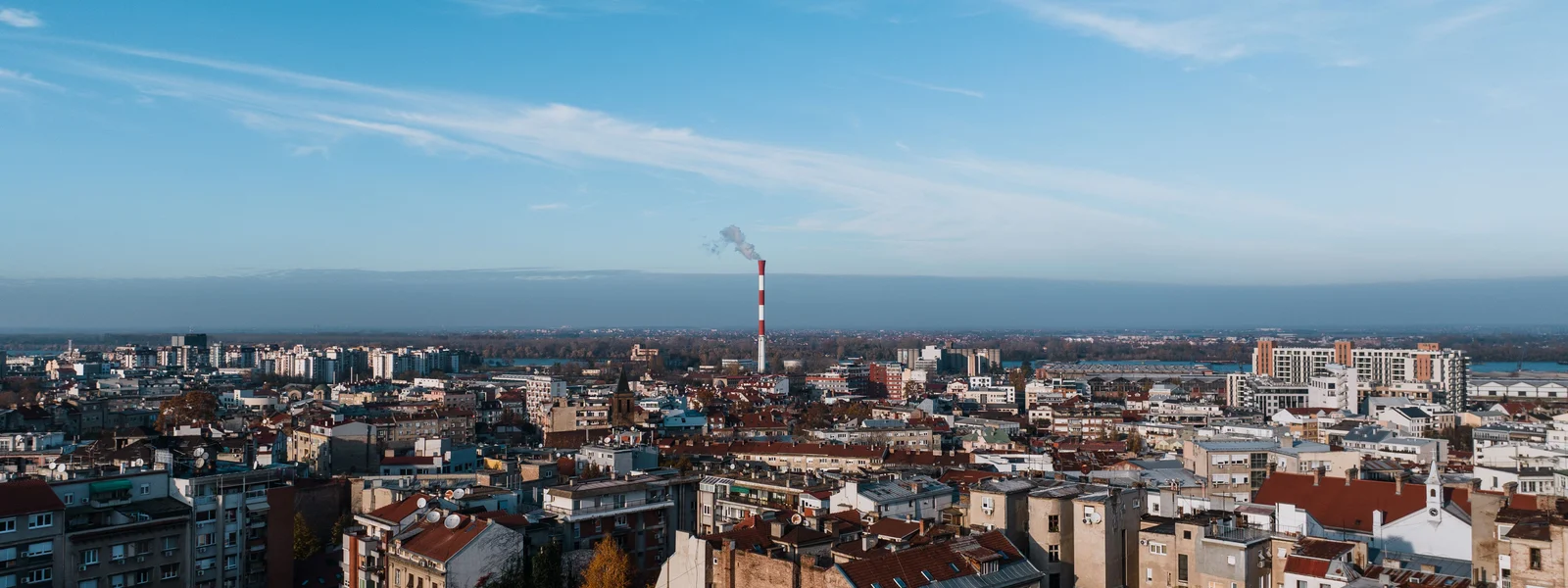
Serbia eSIM Guide 2026
I have spent real time in Serbia, and it is a country where the connectivity itself is good and improving, but where the key fact for every visitor is that Serbia sits outside the carrier coverage area, so the rules many European travellers take for granted do not apply. Serbia is a landlocked Balkan country at the crossroads of central and southeastern Europe, with the lively capital Belgrade at the meeting of the Danube and Sava rivers, the cultural city of Novi Sad to the north, the southern hub of Nis, and mountains in the south and west, the ski resort of Kopaonik and the uplands of Zlatibor and Tara among them. It is a country of energetic city life, river confluences, mountain scenery and a famously warm welcome, increasingly drawing digital nomads to Belgrade. The connectivity backdrop has one dominant feature. Serbia is not a member of the European Union, so the carrier rules that let EU travellers use their domestic allowance for free across the union do not apply here, which means an EU visitor whose phone works for under their carrier terms across the EU will find Serbia treated as a non EU destination, typically triggering expensive roaming. This catches out many European visitors who assume their carrier coverage extends across the continent, when in fact it stops at the EU border. So in Serbia, unlike in EU countries, even EU visitors usually need a travel eSIM or face costly roaming, alongside non EU visitors for whom an eSIM is the standard answer everywhere. Serbia uses the dinar, not the euro, so a pre bought eSIM also spares you local top ups in a less familiar currency. The country is served by three established mobile operators with good coverage in the cities and main areas, thinning in the mountains. Serbian is written in both Cyrillic and Latin scripts, so a translation app helps with Cyrillic signage. A regional Balkans or Europe eSIM is available as an option if Serbia is one stop on a wider trip. The aim is to help you arrive online, understand why Serbia non EU status makes an eSIM valuable even for EU visitors, and stay connected affordably across this welcoming Balkan country.
Why Serbia non EU status changes everything
The single most important thing to understand about connectivity in Serbia is that the country is not a member of the European Union, because this fact changes the rules for the large number of European visitors who would otherwise assume their phones work for free. Across the European Union, the carrier rules let travellers from any EU country use their domestic allowance in any other under the carrier terms, so an EU resident is used to their phone simply working as they move around the continent. The trap is that these rules stop at the EU border, and Serbia, as a Balkan country outside the union, is firmly beyond it, so the moment an EU visitor enters Serbia, their carrier treats it as a non EU international destination and typically applies expensive roaming charges. This catches out many European visitors, who arrive expecting their carrier coverage to continue and instead face a large bill or disabled data. The implication distinguishes Serbia from EU destinations. In an EU country, EU visitors can rely on their existing allowance and only non EU visitors need an eSIM, but in Serbia, even EU visitors usually need a travel eSIM or must accept costly roaming, putting them in the same position as visitors from the United States, the Gulf, Asia or elsewhere, for whom an eSIM is the standard answer across Europe. So the first and most important step for any Serbia visitor, including the many from the EU who assume otherwise, is to recognise that the non EU status means their phone does not work for free here, and to plan for a travel eSIM. This single fact, more than any detail of coverage or networks, shapes the connectivity decision, and getting it right before you travel separates a smoothly connected visit from a surprise bill.
Who needs an eSIM in Serbia
Because Serbia sits outside the carrier coverage area, the answer to who needs a travel eSIM is broader here than in EU countries, encompassing essentially every visitor who wants affordable data. For visitors from outside the European Union, from the United States, the United Kingdom, the Gulf, Asia, Australia or elsewhere, the situation is the familiar one that applies across all of Europe, namely that standard international roaming is expensive and a travel eSIM is the sensible cheap alternative, so these visitors should plan for an eSIM as they would anywhere. For visitors from within the European Union, Serbia is different from the EU countries they may be used to, because the carrier rules do not extend here, so their EU carrier coverage does not work and they face the same expensive international roaming as anyone else unless they take an alternative. This means EU visitors, who in an EU country could simply use their existing allowance, in Serbia usually need a travel eSIM too, or must accept costly roaming. The British visitor is a particular case, since the UK is itself now outside the EU, so British visitors have already lost their EU carrier terms and face non EU carrier terms across Europe including Serbia, making them clear candidates for an eSIM. The upshot is that in Serbia, almost everyone benefits from a travel eSIM, EU and non EU visitors alike, a key difference from EU destinations where EU visitors can rely on carrier coverage. The only travellers who might not need one are those staying very briefly with minimal data needs content to rely on wifi, available in hotels and cafes in the cities, but for anyone wanting reliable data while out, a travel eSIM is the sensible choice, turning expensive roaming into a modest, predictable cost regardless of origin.
What data costs in Serbia
Data costs for a traveller in Serbia are determined by your travel eSIM or your roaming rate rather than by local retail prices, and the contrast between the two is stark, which is exactly why an eSIM matters so much here. If you rely on roaming, whether as a non EU visitor or as an EU visitor who has discovered that their carrier coverage does not extend to Serbia, the cost can be high, since Serbia is a non EU carrier terms destination where per megabyte charges add up quickly, and even modest data use over a trip can produce an alarming bill. A travel eSIM transforms this. A Serbia eSIM costs a modest sum for a generous data allowance, far below what the equivalent data would cost on roaming, so for any visitor using more than a trivial amount of data, the eSIM saves a great deal and removes the risk of a shock bill. The saving is genuine for everyone, but particularly striking for EU visitors accustomed to carrier coverage elsewhere in Europe who would otherwise face an unexpected non EU charge in Serbia. The local currency is the Serbian dinar, not the euro, so buying a local SIM or topping up locally involves a less familiar currency, which a travel eSIM bought in advance and paid for in your own currency conveniently sidesteps. If Serbia is one stop on a wider regional trip taking in other Balkan countries, a regional Balkans eSIM is available as an option, covering Serbia and several neighbours on one profile, though for a Serbia only trip a single country Serbia eSIM is the natural choice. The bottom line is that staying connected in Serbia is cheap with a travel eSIM and potentially expensive on roaming, and because the non EU status means even EU visitors face that expense, the eSIM is the sensible choice for essentially every visitor.
Coverage across the country
Serbia mobile coverage is good and improving across the populated areas, with the familiar pattern of strong coverage in the cities and main regions and thinning in the mountains. The cities and main towns, the lively capital Belgrade at the confluence of the Danube and Sava, the cultural centre of Novi Sad to the north, the southern hub of Nis, and the other urban areas, are well covered, with widespread 4G and growing 5G, so in urban Serbia you find fast, reliable data for navigating, sharing and staying in touch. The northern plains of Vojvodina around Novi Sad are well covered too, being populous and developed, and the main roads and inhabited areas generally enjoy good coverage. The coverage thins, as everywhere, in the mountainous south and west, where the terrain rises into the scenic uplands and ranges that draw hikers and skiers, the ski resort of Kopaonik, the plateaus of Zlatibor and the Tara national park among them. In these mountain areas, coverage is generally present near the towns, resorts and main roads, but thins on the higher slopes, the remote trails and the deeper valleys, the normal mountain pattern. For the visitor heading into the Serbian mountains to ski or hike, the standard response applies, downloading offline maps before venturing into the high country. For the typical trip centred on Belgrade and the cities, coverage is good throughout, so you stay connected across the urban areas, with the mountain thinning affecting mainly the high and remote spots that offline maps cover. Overall, Serbia coverage is solid and improving, comparable to many European countries in the populated areas, so the connectivity concern is far less about whether you will have a signal, which in the cities and main areas you will, and far more about the cost of using it given the non EU carrier terms situation, which a travel eSIM resolves.
The mobile operators
Serbia is served by three established mobile operators, and knowing them helps you understand the network behind your eSIM, though for most visitors the choice is handled by the eSIM provider. The three are Telekom Srbija, which operates its mobile service under the mts brand and is the established national operator with the most extensive network and strong coverage across the country including rural and mountain areas, A1 Serbia, part of the international A1 group active across central and eastern Europe, with strong coverage particularly in the cities, and Yettel, another major operator with good coverage. Together they cover Serbia well, competing across the market and investing in their networks, so whichever one your travel eSIM uses, you get good coverage across the cities and main areas, with the differences mattering mainly in the mountains where the incumbent Telekom Srbija mts network tends to have the most extensive rural reach. For a traveller, when you buy a travel eSIM for Serbia, the provider has arranged which operator the eSIM uses, so you do not choose yourself, and for the typical city trip, any of them gives good coverage. If your trip involves significant time in the mountains, an eSIM using the mts network may hold a signal better in the high country, though offline maps remain the main measure regardless of network. So the operator landscape is a healthy three operator market with good coverage, and the visitor real decision is not which operator to choose but simply to use a travel eSIM rather than expensive roaming.
Setting up and staying connected
Setting up connectivity for Serbia is straightforward once you understand that, because of the non EU status, you should plan for a travel eSIM regardless of where you come from. The first step is to confirm your phone supports eSIM, which almost all recent iPhones and flagship Android phones do, and that it is not network locked, which your operator can check. The second step is to buy and install the Serbia eSIM before travelling, scanning the supplied QR code over wifi at home so the profile is ready, leaving it switched off until you arrive. The third step is to activate the eSIM when you land, enabling the eSIM line for data while keeping your home line available for calls and verification texts. The crucial fourth step, particularly important in Serbia and especially for EU visitors, is to disable data roaming on your home line, so it cannot connect to the Serbian networks and charge you at expensive non EU rates in the background. This matters more in Serbia than in EU countries precisely because EU visitors are accustomed to leaving roaming on for free EU use, a habit that would be costly in non EU Serbia, so disabling home roaming is the key protective step. With the eSIM handling data and home roaming off, you have cheap, plentiful data while your home number stays reachable for codes. For staying connected day to day, wifi is widely available in hotels, cafes and public spaces in the cities, so lean on it for heavy tasks. The dual Cyrillic and Latin script means a translation app is useful for Cyrillic signage, running over your eSIM data. For the mountains, offline maps cover the areas where coverage thins. With these steps, a Serbia visit is smoothly and affordably connected, sidestepping the non EU carrier terms trap that catches the unprepared.
Belgrade, the cities and the digital nomad scene
Serbia cities, above all the capital Belgrade, are where most visitors spend their time, and they are well connected, increasingly drawing digital nomads who value the combination of good connectivity, low costs and vibrant city life. Belgrade, at the dramatic meeting of the Danube and Sava rivers, is an energetic, characterful capital known for its riverside nightlife, its historic Kalemegdan fortress, its mix of architectural styles, its cafe culture and its sociable atmosphere, and it is comprehensively covered with fast data, so navigating the city, finding the floating river clubs and staying in touch are effortless. Novi Sad, the cultural city to the north known for its Petrovaradin fortress and the EXIT festival, and Nis in the south are similarly well covered. The good urban connectivity, combined with Serbia low cost of living, central location and welcoming attitude, has made Belgrade a growing hub for digital nomads, who find fast internet, abundant cafes and coworking spaces, and an affordable base. For these longer staying visitors as much as for tourists, the non EU status means a travel eSIM is the sensible way to stay connected affordably, supplementing the good wifi, and for a working stay a generous eSIM allowance or careful wifi reliance handles the heavier demands. Whether you are in Serbia for a few days exploring Belgrade or a longer remote working stay, the cities offer good, fast connectivity, so your real decision is simply to use a travel eSIM rather than expensive roaming.
A connected trip across Serbia
Put together, the connectivity story for Serbia is one of good and improving coverage where the dominant consideration is not signal but cost, because Serbia non EU status means even EU visitors face expensive roaming unless they use a travel eSIM. A typical trip centres on Belgrade, the lively capital at the river confluence, perhaps adding Novi Sad to the north, Nis in the south, and for some the mountains of Kopaonik, Zlatibor or Tara. Across the cities and populated areas, coverage is good with fast data, while the mountains thin as mountains do everywhere, covered by offline maps. The three operators, Telekom Srbija under its mts brand, A1 Serbia and Yettel, provide good coverage, though the eSIM provider chooses the network for you. The defining fact, which every visitor must grasp, is that Serbia is outside the carrier coverage area, so the carrier coverage EU visitors enjoy across the union does not apply, and even EU visitors usually need a travel eSIM or face costly roaming. The essential protective step is to disable home roaming and run data through the eSIM, which provides cheap, plentiful data while the home line stays reachable for codes. A regional Balkans or Europe eSIM is available if Serbia is one stop on a wider trip. For the great majority, the recipe is simple, buy a Serbia eSIM before travelling, disable home roaming, lean on wifi for heavy tasks, and use offline maps for the mountains, and the result is a smoothly and affordably connected trip across this welcoming, energetic Balkan country, free of the roaming bills that catch those who wrongly assume their EU carrier terms extends beyond the union border.
Buyer guide
Comparison
Coverage
Operators
Data planning
How-to
Apps
Use case
Region
Belgrade eSIM Guide
Everything you need to stay connected in Belgrade with an eSIM, from coverage and the nomad scene to data needs for exploring the capital.
Read the guide →🗺️RegionNovi Sad eSIM Guide
How to stay connected in Novi Sad and northern Serbia with an eSIM, from the Petrovaradin fortress to the EXIT festival and the Vojvodina plains.
Read the guide →Networks available by plan
The network depends on the plan you choose. These are the published operators for the first six plans currently sold.
| Plan | Published operators |
|---|---|
| 1 GB · 7 days | Yettel |
| 3 GB · 15 days | Yettel |
| 5 GB · 30 days | Yettel |
| 10 GB · 30 days | Yettel |
| 20 GB · 30 days | Yettel |
Serbia eSIM FAQ
What data costs in Serbia?
Data costs for a traveller in Serbia are determined by your travel eSIM or your roaming rate rather than by local retail prices, and the contrast between the two is stark, which is exactly why an eSIM matters so much here. If you rely on roaming, whether as a non EU visitor or as an EU visitor who has discovered that their carrier coverage does not extend to Serbia, the cost can be high, since Serbia is a non EU carrier terms destination where per megabyte charges add up quickly, and even modest data use over a trip can produce an alarming bill. A travel eSIM transforms this.
What coverage and network performance should travelers expect in Serbia?
Serbia mobile coverage is good and improving across the populated areas, with the familiar pattern of strong coverage in the cities and main regions and thinning in the mountains. The cities and main towns, the lively capital Belgrade at the confluence of the Danube and Sava, the cultural centre of Novi Sad to the north, the southern hub of Nis, and the other urban areas, are well covered, with widespread 4G and growing 5G, so in urban Serbia you find fast, reliable data for navigating, sharing and staying in touch. The northern plains of Vojvodina around Novi Sad are well covered too, being populous and developed, and the main roads and inhabited areas generally enjoy good coverage.
Is a travel eSIM better than local SIM or roaming in Serbia?
Because Serbia sits outside the carrier coverage area, the answer to who needs a travel eSIM is broader here than in EU countries, encompassing essentially every visitor who wants affordable data. For visitors from outside the European Union, from the United States, the United Kingdom, the Gulf, Asia, Australia or elsewhere, the situation is the familiar one that applies across all of Europe, namely that standard international roaming is expensive and a travel eSIM is the sensible cheap alternative, so these visitors should plan for an eSIM as they would anywhere.
What should travelers know about setting up and staying connected in Serbia?
Setting up connectivity for Serbia is straightforward once you understand that, because of the non EU status, you should plan for a travel eSIM regardless of where you come from. The first step is to confirm your phone supports eSIM, which almost all recent iPhones and flagship Android phones do, and that it is not network locked, which your operator can check. The second step is to buy and install the Serbia eSIM before travelling, scanning the supplied QR code over wifi at home so the profile is ready, leaving it switched off until you arrive. The third step is to activate the eSIM when you land, enabling the eSIM line for data while keeping your home line available for calls and verification texts.
Sort your Serbia eSIM
Pick the plan that fits your trip, or work out how much data you need first.