North Macedonia eSIM Guide 2026
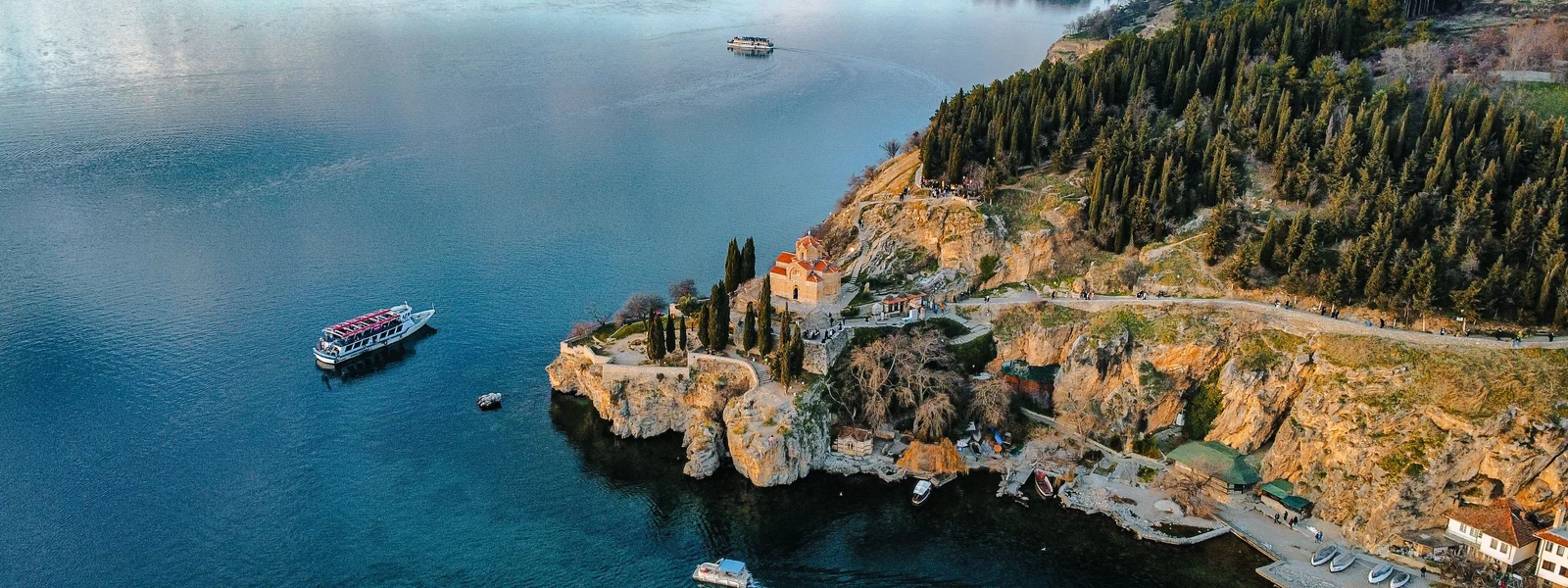
I have spent real time in North Macedonia, a landlocked Balkan country of lakes, mountains and history where connectivity is good in the cities and main centres but where the dominant fact for every visitor is that it sits outside the carrier coverage area, so the carrier coverage many European travellers rely on does not apply. North Macedonia is a small, mountainous country in the heart of the Balkans, bordered by Kosovo, Serbia, Bulgaria, Greece and Albania, built around the lively capital Skopje, the stunning Lake Ohrid with its UNESCO listed old town, the city of Bitola, and a mountainous interior of national parks. It is a country of natural beauty, ancient history and warm hospitality, increasingly drawing visitors with its lakes, mountains and value. The connectivity backdrop has one dominant feature. North Macedonia is not in the European Union, so the carrier rules that let EU travellers use their allowance for free across the union do not apply here, which means an EU visitor whose phone works for under their carrier terms across the EU will find it treated as a non EU destination, triggering expensive roaming. So in North Macedonia, unlike in EU countries, even EU visitors usually need a travel eSIM or face costly roaming, alongside non EU visitors for whom an eSIM is standard everywhere. The country uses its own currency, the denar, so unlike some Balkan countries there is no euro to falsely suggest EU rules apply, the different currency serving as a clear reminder that you are outside the EU. One North Macedonia specific consideration is that the country uses the Cyrillic alphabet alongside Latin, so while Latin appears in tourist areas, signs, menus and addresses often appear in Cyrillic, making reliable data for navigation and translation especially valuable. The country is served by mobile operators with good coverage in the cities and the main centres, thinning in the rugged mountainous interior. A regional Balkans or Europe eSIM is available as an option if North Macedonia is one stop on a wider trip. The aim of this guide is to help you arrive online, understand why the non EU status makes an eSIM valuable even for EU visitors, and stay connected affordably across this scenic and welcoming country.
Why North Macedonia non EU status changes everything
The single most important thing to understand about connectivity in North Macedonia is that the country is not a member of the European Union, because this fact changes the rules for the many European visitors who would otherwise assume their phones work for free. Across the European Union, the carrier rules let travellers from any EU country use their domestic allowance in any other under the carrier terms, so an EU resident is used to their phone working as they move around the continent. The trap is that these rules stop at the EU border, and North Macedonia, as a Balkan country outside the union, is firmly beyond it, so the moment an EU visitor enters North Macedonia, their carrier treats it as a non EU international destination and typically applies expensive roaming charges. This catches out many European visitors, who arrive expecting carrier coverage and face a large bill or disabled data. The country uses its own currency, the denar, so unlike euro using Balkan destinations the different currency is a visible reminder that you have left the EU, though many visitors will still assume wrongly that their European roaming covers the whole continent. The implication distinguishes North Macedonia from EU destinations. In an EU country, only non EU visitors need an eSIM, but here, even EU visitors usually need a travel eSIM or must accept costly roaming, like visitors from the United States, the Gulf, Asia or elsewhere. So the first and most important step for any North Macedonia visitor, including the many from the EU who assume otherwise, is to recognise that the non EU status means their phone does not work for free here, and plan for an eSIM. This single fact, more than any detail of coverage or networks, shapes the connectivity decision, and getting it right before you travel separates a smoothly connected visit from a surprise bill.
Who needs an eSIM in North Macedonia
Because North Macedonia sits outside the carrier coverage area, the answer to who needs a travel eSIM is broader here than in EU countries, taking in essentially every visitor who wants affordable data. For visitors from outside the European Union, from the United States, the UK, the Gulf, Asia, Australia or elsewhere, the situation is the familiar one across all of Europe, that standard roaming is expensive and a travel eSIM is the sensible cheap alternative, so these visitors should plan for an eSIM as they would anywhere. For visitors from within the European Union, North Macedonia is different from the EU countries they may be used to, because the carrier rules do not extend here, so their EU carrier coverage does not work and they face the same expensive roaming as anyone else. This means EU visitors, who in an EU country could simply use their existing allowance, in North Macedonia usually need a travel eSIM too, or must accept costly roaming. The British visitor is a particular case, since the UK is now outside the EU, so British visitors already face non EU carrier terms across Europe including North Macedonia. The upshot is that in North Macedonia, almost everyone benefits from a travel eSIM, EU and non EU alike, a key difference from EU destinations where EU visitors can rely on carrier coverage. A North Macedonia specific reason an eSIM is valuable is that the country uses the Cyrillic alphabet alongside Latin, so reliable data for translation and navigation apps, which can translate Cyrillic signs, menus and addresses, is especially useful here. The only travellers who might not need one are those staying very briefly with minimal needs content to rely on wifi, available in hotels, cafes and public spaces in the cities, but for anyone wanting reliable data while out, a travel eSIM is the sensible choice, turning expensive roaming into a modest, predictable cost.
What data costs in North Macedonia
Data costs for a traveller in North Macedonia are set by your travel eSIM or roaming rate rather than local retail prices, and the contrast is stark, which is exactly why an eSIM matters so much here. If you rely on roaming, whether as a non EU visitor or as an EU visitor who has discovered that their carrier coverage does not extend to North Macedonia, the cost can be high, since per megabyte charges add up quickly and even modest use over a trip can produce an alarming bill. A travel eSIM transforms this. A North Macedonia eSIM costs a modest sum for a generous allowance, far below the equivalent data on roaming, so for any visitor using more than a trivial amount, the eSIM saves a great deal and removes the risk of a shock bill. The saving is genuine for everyone, but particularly striking for EU visitors accustomed to carrier coverage elsewhere in Europe who would face an unexpected non EU charge. The local currency is the denar, so a local SIM is paid in denar, and unlike in euro using destinations the different currency makes clear you are outside the EU, though a travel eSIM is typically priced in your own currency or dollars when bought online in advance. If North Macedonia is one stop on a wider Balkan trip, a regional Balkans eSIM is available as an option, covering North Macedonia and several neighbours on one profile, though for a single country trip a single country plan is the natural choice. The bottom line on cost is that staying connected in North Macedonia is cheap with a travel eSIM and potentially expensive on roaming, and because the non EU status means even EU visitors face that roaming expense, the eSIM is the sensible money saving choice for essentially every visitor, with the added benefit that reliable data aids translation and navigation in a country that uses the Cyrillic alphabet.
Coverage across the country
North Macedonia mobile coverage is good in the cities and the main centres, with the familiar pattern of thinning in the rugged mountainous interior, so coverage tracks the country geography closely. The populated areas are well covered, from the capital Skopje, through Lake Ohrid and its town, the city of Bitola, and the main towns and roads, so where most visitors spend their time you find good, reliable data for navigating, translating the Cyrillic signs, and staying in touch. The coverage thins, as everywhere, in the rugged interior, where the terrain rises into the mountains that cover much of this landlocked country, including the national parks of Mavrovo, Pelister and Galichica, where the peaks challenge the signal. In these areas, coverage is generally present near the towns, the villages and the main roads, but thins on the higher slopes, the remote trails and the back country, the normal mountain pattern, pronounced here because North Macedonia is a notably mountainous country. For the visitor heading into the mountains and the national parks to hike or explore, the standard response applies, downloading offline maps before venturing into the high country. For the typical trip taking in Skopje, Lake Ohrid and the main sights, though, coverage is good, so you stay connected in the cities and the main centres, with the mountain thinning affecting mainly the rugged interior that offline maps cover. Overall, North Macedonia coverage is good where visitors mostly go, so the connectivity concern is far less about signal and far more about the cost of using it given the non EU carrier terms situation, which a travel eSIM resolves, with the added value that data also powers translation in a country that uses Cyrillic.
The mobile operators
North Macedonia is served by a small number of mobile operators, and knowing them helps you understand the network behind your eSIM, though for most visitors the choice is handled by the eSIM provider. The two main operators are A1 Makedonija, part of the international A1 group active across Central and Eastern Europe, and Makedonski Telekom, part of the Deutsche Telekom group, both major operators with good coverage. Together they cover North Macedonia well in the cities and the main centres, competing and investing in their networks including 5G in the main areas, so whichever one your travel eSIM uses, you get good coverage across the populated areas, with the differences mattering mainly in the rugged interior where coverage thins for both. For a traveller, the practical point is that when you buy a travel eSIM, the provider has arranged which operator it uses, so you do not choose yourself, and for the typical trip taking in the cities and the main sights, either gives good coverage. If your trip involves time in the rugged interior, the mountains or the national parks, neither operator fully covers the remote high country, so offline maps remain the main measure regardless of network. So the operator landscape in North Macedonia is a market of good coverage in the cities and main centres, and the visitor real decision is not which operator to choose but to use a travel eSIM rather than expensive roaming, with offline maps handling the rugged interior.
Setting up and staying connected
Setting up connectivity for North Macedonia is straightforward once you understand that, because of the non EU status, you should plan for a travel eSIM regardless of where you come from. The first step is to confirm your phone supports eSIM, which almost all recent iPhones and flagship Android phones do, and that it is not network locked. The second step is to buy and install the North Macedonia eSIM before travelling, scanning the QR code over wifi at home so the profile is ready, leaving it off until you arrive. The third step is to activate the eSIM when you land, enabling the eSIM line for data while keeping your home line for calls and verification texts. The crucial fourth step, particularly important in North Macedonia, is to disable data roaming on your home line, so it cannot connect to the local networks and charge you at expensive non EU rates in the background. This matters more in North Macedonia than in EU countries because EU visitors are accustomed to leaving roaming on for free EU use, a habit costly here, so disabling home roaming is the key protective step, the denar being a clue you have left the EU but not a guarantee you will remember. With the eSIM handling data and home roaming off, you have cheap, plentiful data while your home number stays reachable for codes. For staying connected day to day, wifi is widely available in hotels, cafes and restaurants in the cities and main centres, so lean on it for heavy tasks. For the mountains and the national parks, offline maps cover the areas where coverage thins. A particular North Macedonia benefit is that reliable data powers translation and navigation apps, useful in a country that uses the Cyrillic alphabet, helping you read signs, menus and addresses. With these steps, a North Macedonia visit is smoothly connected, sidestepping the non EU carrier terms trap that catches the unprepared.
Skopje, Lake Ohrid and the mountains
North Macedonia packs remarkable variety into a compact, affordable package, from the capital to the lake and the mountains, and the connectivity differs between them, which shapes how you plan. The cities and the main centres are where most visitors spend their time, and they are well covered, so in the lively capital Skopje with its eclectic architecture, statues and old bazaar, around the stunning Lake Ohrid with its UNESCO listed old town, churches and waterfront, and in the city of Bitola, you enjoy good, fast data, making navigation, translating the Cyrillic signs, and sharing the scenery effortless. The picture changes in the rugged interior and the mountains, where the terrain thins the signal. The national parks, Mavrovo, Pelister and Galichica, the mountainous interior generally, and the remote rural areas, are beautiful but rugged, so coverage there is present near the towns and main roads but thins in the high country and the remote trails. For the visitor exploring these areas, the standard mountain response applies, downloading offline maps before heading in, so navigation continues regardless of signal. This contrast, good coverage in the cities and around the lake and patchy coverage in the rugged mountains, defines North Macedonia connectivity geography, so enjoy the good coverage through your travel eSIM and prepare offline maps for any foray into the mountains.
A connected trip across North Macedonia
Put together, the connectivity story for North Macedonia is one of good coverage in the cities and main centres with a rugged, patchier mountainous interior, where the dominant consideration is cost, because the non EU status means even EU visitors face expensive roaming unless they use a travel eSIM. A typical trip centres on the capital Skopje and Lake Ohrid, perhaps adding Bitola, the national parks and the mountains for the adventurous. In the cities and around the lake, coverage is good with fast data, while the rugged interior thins as everywhere, covered by offline maps. The operators, A1 Makedonija and Makedonski Telekom, provide good coverage in the cities and main centres, though the eSIM provider chooses the network for you. The defining fact, which every visitor must grasp, is that North Macedonia is outside the carrier coverage area, so the carrier coverage EU visitors enjoy across the union does not apply, and even EU visitors usually need a travel eSIM or face costly roaming, though the denar currency at least serves as a clear reminder of being outside the EU. The essential protective step is to disable home roaming and run data through the eSIM, giving cheap, plentiful data while the home line stays reachable for codes. A regional Balkans or Europe eSIM is available if North Macedonia is one stop on a wider trip. For the great majority, the recipe is simple, buy a North Macedonia eSIM before travelling, disable home roaming, lean on wifi for heavy tasks, and use offline maps for the mountains, and the result is a smoothly connected trip across this scenic country, free of the roaming bills that catch those who wrongly assume their EU carrier terms extends beyond the union border.
Buyer guide
Comparison
Coverage
Operators
Data planning
How-to
Apps
Use case
Region
Lake Ohrid eSIM Guide
How to stay connected around Lake Ohrid with an eSIM, where coverage is good in the town and along the popular shore.
Read the guide →🗺️RegionSkopje eSIM Guide
How to stay connected in Skopje with an eSIM, where coverage is good across the capital and the nearby Matka Canyon.
Read the guide →Networks available by plan
The network depends on the plan you choose. These are the published operators for the first six plans currently sold.
| Plan | Published operators |
|---|---|
| 1 GB · 7 days | Telekom MK |
| 3 GB · 15 days | Telekom MK |
| 5 GB · 30 days | Telekom MK |
| 10 GB · 30 days | Telekom MK |
| 20 GB · 30 days | Telekom MK |
North Macedonia eSIM FAQ
What data costs in North Macedonia?
Data costs for a traveller in North Macedonia are set by your travel eSIM or roaming rate rather than local retail prices, and the contrast is stark, which is exactly why an eSIM matters so much here. If you rely on roaming, whether as a non EU visitor or as an EU visitor who has discovered that their carrier coverage does not extend to North Macedonia, the cost can be high, since per megabyte charges add up quickly and even modest use over a trip can produce an alarming bill. A travel eSIM transforms this.
What coverage and network performance should travelers expect in North Macedonia?
North Macedonia mobile coverage is good in the cities and the main centres, with the familiar pattern of thinning in the rugged mountainous interior, so coverage tracks the country geography closely. The populated areas are well covered, from the capital Skopje, through Lake Ohrid and its town, the city of Bitola, and the main towns and roads, so where most visitors spend their time you find good, reliable data for navigating, translating the Cyrillic signs, and staying in touch.
Is a travel eSIM better than local SIM or roaming in North Macedonia?
Because North Macedonia sits outside the carrier coverage area, the answer to who needs a travel eSIM is broader here than in EU countries, taking in essentially every visitor who wants affordable data. For visitors from outside the European Union, from the United States, the UK, the Gulf, Asia, Australia or elsewhere, the situation is the familiar one across all of Europe, that standard roaming is expensive and a travel eSIM is the sensible cheap alternative, so these visitors should plan for an eSIM as they would anywhere.
What should travelers prepare before entering low-coverage areas in North Macedonia?
North Macedonia packs remarkable variety into a compact, affordable package, from the capital to the lake and the mountains, and the connectivity differs between them, which shapes how you plan. The cities and the main centres are where most visitors spend their time, and they are well covered, so in the lively capital Skopje with its eclectic architecture, statues and old bazaar, around the stunning Lake Ohrid with its UNESCO listed old town, churches and waterfront, and in the city of Bitola, you enjoy good, fast data, making navigation, translating the Cyrillic signs, and sharing the scenery effortless. The picture changes in the rugged interior and the mountains, where the terrain thins the signal.
Sort your North Macedonia eSIM
Pick the plan that fits your trip, or work out how much data you need first.