North Macedonia 5G and 4G Coverage in 2026: What to Expect
How good is North Macedonia coverage, really
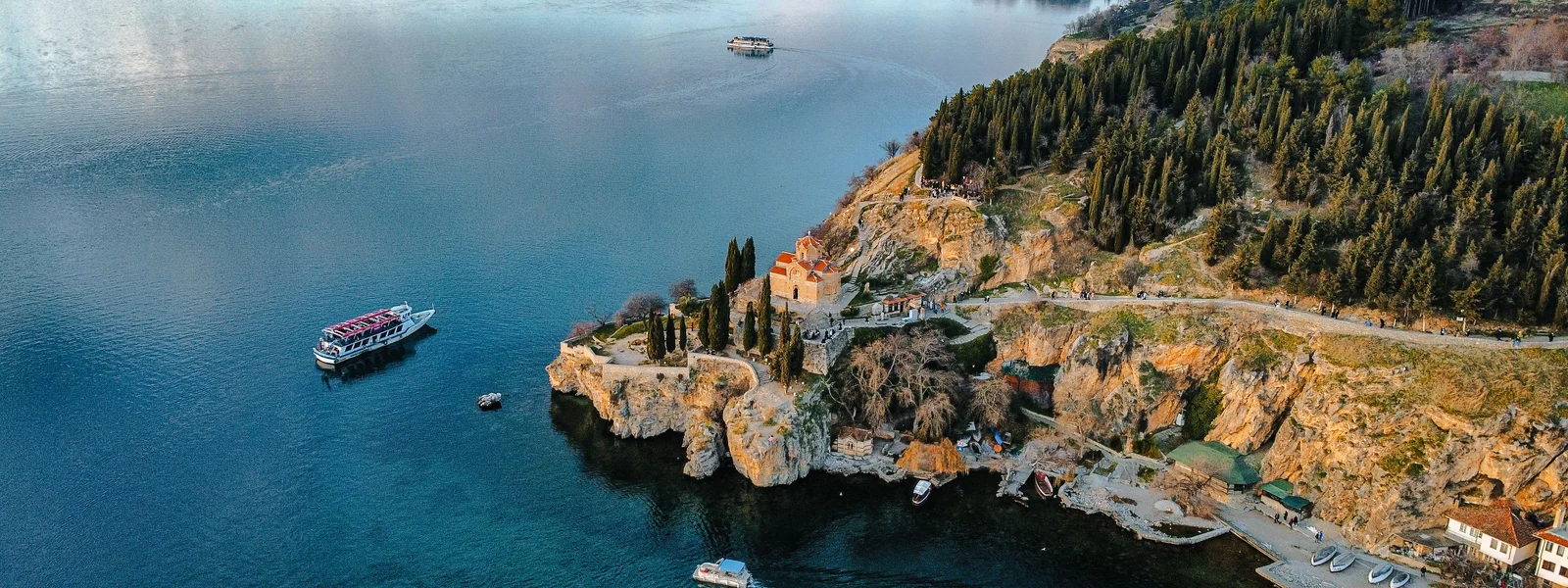
North Macedonia mobile coverage is good in the cities and the main centres, where most visitors spend their time, with the familiar pattern of thinning in the rugged mountainous interior. The populated areas are well covered, from the lively capital Skopje, through the stunning Lake Ohrid and its town, the city of Bitola, and the main towns and roads, so in the places most visitors go you find good, reliable data for everything from navigation to translating the Cyrillic signs to sharing the scenery. For a traveller, the practical effect is that in the cities and the main centres, where the typical North Macedonia trip unfolds, connectivity is good and reliable, so the worry about whether you will have a signal is largely absent there. The coverage has been improving as the operators invest in their networks, including 5G in the main areas, so the trajectory is positive. The one area where coverage thins, addressed below, is the rugged interior, the mountains and the national parks, pronounced here because North Macedonia is a notably mountainous, landlocked country. But for the typical trip taking in Skopje, Lake Ohrid and the main sights, North Macedonia coverage is good. The key point for North Macedonia, though, is that the connectivity concern is far less about coverage, which is good where visitors mostly go, and far more about cost, because the country non EU status means roaming is expensive for everyone including EU visitors, so the real issue is using a travel eSIM to access that good coverage affordably rather than paying expensive roaming rates. With an eSIM, the good city and main centre coverage of North Macedonia is yours at a modest cost, powering navigation, translation in a country using the Cyrillic alphabet, and sharing, with only the rugged interior calling for the offline map preparation that mountainous areas need everywhere.
5G in the main areas
5G deployment in North Macedonia is growing, concentrated in the capital and the main cities, so a traveller with a capable phone and a plan that allows it can increasingly expect genuine 5G speeds in the main areas. In Skopje and the larger towns, 5G has been rolling out and is increasingly available, delivering fast downloads where present, while 4G remains the widespread standard across the country, providing reliable data well suited to all normal travel tasks. The operators, A1 Makedonija and Makedonski Telekom, have been deploying 5G in the main areas, so in the capital and the main centres you may well find 5G, with fast 4G elsewhere. For most visitors, the distinction between 5G and a strong 4G signal is academic, because both comfortably handle everything from maps, messaging and translation to video calls and streaming, so you need not chase 5G specifically, and a good 4G connection, which North Macedonia provides widely in the cities and main centres, is more than enough for a typical trip. The growing 5G in the main areas is a welcome bonus where available, useful for anyone doing heavy data tasks, but it is not essential for ordinary travel use. When you buy a travel eSIM for North Macedonia, many plans include 4G and 5G access where available, so you benefit from 5G in the main areas where it has been deployed and fall back to the widespread fast 4G elsewhere. The practical point is that North Macedonia city and main centre connectivity, whether 5G or strong 4G, is good and fast, handling everything a traveller needs including the translation that helps with the Cyrillic alphabet, so the network generation is not something to worry about, the more important consideration being simply to access that good coverage through a travel eSIM rather than expensive roaming, given the non EU status.
Coverage in the rugged interior
The one area where coverage thins in North Macedonia is the rugged mountainous interior, where the terrain rises into the mountains that cover much of this landlocked country, and here the familiar mountain pattern applies, pronounced because North Macedonia is so mountainous. The interior includes the national parks, Mavrovo with its mountains and ski area, Pelister with its peaks and lakes, and Galichica between Lake Ohrid and Lake Prespa, and the mountainous heart of the country generally, all beautiful and drawing a growing number of visitors for the scenery, the hiking and the nature. For coverage, the pattern is the familiar mountain one. Near the towns, the villages and the main roads, coverage is generally present and usable, since these points are served, so you are not cut off in the North Macedonia interior by any means. But as you climb the higher slopes, hike the back country trails, or venture into the remoter corners of the national parks and the mountains, the signal thins and can drop, as the rugged terrain blocks and attenuates it. This is normal mountain behaviour rather than a failing of the Macedonian networks, the same pattern found in mountain regions across Europe, though North Macedonia rugged geography means the patchy interior is a larger share of the country than in flatter lands. The standard and effective response is to download offline maps of the area before heading in, while you still have a good signal in a town or a city, so your navigation continues regardless of the live signal, letting you find the trails, the villages and the mountain sights even where coverage fades. It is also worth downloading an offline translation pack for the same areas, useful given the Cyrillic alphabet. With offline maps and translation loaded, the interior thinning becomes a manageable quirk rather than a problem, so you can hike the national parks or explore the mountainous interior with navigation always working, returning to good coverage as you reach the cities and the lake.
What this means for your plan
Because North Macedonia coverage is good in the cities and main centres and thins in the rugged interior, the implications for choosing a plan are shaped by your itinerary, with the overriding consideration being the non EU status. For the typical trip centred on Skopje, Lake Ohrid and the main sights, where coverage is good, any reputable North Macedonia eSIM serves you well, so the host network matters less, and the main decision is simply to use a travel eSIM rather than expensive roaming, given that the non EU status makes roaming costly for everyone including EU visitors. For a trip that includes the rugged interior, the mountains or the national parks, the coverage thins for both operators, so no single network solves it, and offline maps remain the main measure for the mountains regardless of which network your eSIM uses. Beyond the network, a sensible data allowance sized for your trip, generous enough given the good wifi will stretch it and that translation use is light, and a validity window covering your stay are the standard considerations. If North Macedonia is one stop on a wider Balkan trip, a regional Balkans eSIM covering North Macedonia and its neighbours is worth considering, sparing a separate arrangement for each non EU country. So the plan implications for North Macedonia are to use a travel eSIM to access the good city and main centre coverage affordably given the non EU status, rely on offline maps in the rugged interior, size the allowance for your use, and consider a regional Balkans plan for a multi country trip. The bottom line is that North Macedonia good city and main centre coverage is yours affordably through a travel eSIM, which also powers the translation useful in a country using the Cyrillic alphabet, with the non EU status making the eSIM the key decision, and the rugged interior the area needing the offline map preparation that mountainous regions require everywhere, more so here given the country dramatic and extensive mountains.
How North Macedonia compares to its neighbours
Placing North Macedonia coverage in its regional context helps set expectations, since the country sits among the Balkan nations, each outside the carrier coverage area and each with its own coverage pattern, and North Macedonia compares reasonably well for a mountainous, landlocked country. North Macedonia, like its neighbours Serbia, Kosovo, Albania, Bulgaria and Greece, faces the regional reality that most of the Western Balkans is outside the European Union, so the non EU carrier terms situation that makes a travel eSIM valuable applies across the region, and a visitor touring several Balkan countries faces the same expensive roaming in each without an eSIM, though Bulgaria and Greece, as EU members, are exceptions where EU visitors keep carrier coverage. North Macedonia distinguishing features in the regional comparison are two. First, it uses its own currency, the denar, rather than the euro, so the different currency serves as a clearer reminder of being outside the EU than in euro using destinations, a small help against the roaming trap. Second, like Serbia it uses the Cyrillic alphabet alongside Latin, so reliable data for translation and navigation is more valuable here than in Latin script countries, strengthening the case for an eSIM. On coverage itself, North Macedonia compares reasonably well for a notably mountainous, landlocked country, with good coverage in its cities and main centres, backed by operators including Makedonski Telekom with its Deutsche Telekom parentage and A1 with its regional group, and growing 5G in the main areas, so the city and main centre coverage that matters to most visitors is solid. The shared regional challenge is the mountainous terrain, since the Balkans are a rugged region and North Macedonia is especially mountainous, so North Macedonia rugged interior, like the mountains of its neighbours, thins coverage in the high country, the national parks being a prime example, so the offline map measure applies across the region mountains. For a visitor, the regional comparison yields a simple lesson, that across the Western Balkans including North Macedonia, coverage is generally good in the populated areas and patchy in the mountains, and the non EU status makes a travel eSIM valuable throughout, so whether visiting North Macedonia alone or touring the region, a travel eSIM, single country or regional Balkans, is the sensible way to access the good populated area coverage affordably, with North Macedonia denar currency a clearer signal than euro using neighbours and its Cyrillic alphabet making the translation an eSIM powers especially useful.
Plans for North Macedonia
North Macedonia eSIM plans
Prices in USD. Instant QR activation. Pick your data, land connected.
FAQ
What coverage and network performance should travelers expect in North Macedonia?
The one area where coverage thins in North Macedonia is the rugged mountainous interior, where the terrain rises into the mountains that cover much of this landlocked country, and here the familiar mountain pattern applies, pronounced because North Macedonia is so mountainous. The interior includes the national parks, Mavrovo with its mountains and ski area, Pelister with its peaks and lakes, and Galichica between Lake Ohrid and Lake Prespa, and the mountainous heart of the country generally, all beautiful and drawing a growing number of visitors for the scenery, the hiking and the nature. For coverage, the pattern is the familiar mountain one.
How good is North Macedonia coverage, really?
North Macedonia mobile coverage is good in the cities and the main centres, where most visitors spend their time, with the familiar pattern of thinning in the rugged mountainous interior. The populated areas are well covered, from the lively capital Skopje, through the stunning Lake Ohrid and its town, the city of Bitola, and the main towns and roads, so in the places most visitors go you find good, reliable data for everything from navigation to translating the Cyrillic signs to sharing the scenery.
What does this mean for choosing a plan in North Macedonia?
Because North Macedonia coverage is good in the cities and main centres and thins in the rugged interior, the implications for choosing a plan are shaped by your itinerary, with the overriding consideration being the non EU status. For the typical trip centred on Skopje, Lake Ohrid and the main sights, where coverage is good, any reputable North Macedonia eSIM serves you well, so the host network matters less, and the main decision is simply to use a travel eSIM rather than expensive roaming, given that the non EU status makes roaming costly for everyone including EU visitors.
How does North Macedonia compare to its neighbours?
Placing North Macedonia coverage in its regional context helps set expectations, since the country sits among the Balkan nations, each outside the carrier coverage area and each with its own coverage pattern, and North Macedonia compares reasonably well for a mountainous, landlocked country.