Iceland eSIM Guide 2026
I have spent real time in Iceland, and not just a layover stopover in Reykjavik between flights. I have driven the full ring road in summer when the light never quite fades, and crossed parts of it in winter when the wind tried to take the car door off its hinges. I have stood in the spray at Gullfoss, watched Strokkur erupt on the Golden Circle, walked the black sand at Reynisfjara, soaked in the Blue Lagoon and in half a dozen nameless hot pots known only to locals, and bumped along an interior F road into the highlands where the map goes blank and so does the phone. I have used Icelandic networks from a guesthouse in the Westfjords, from a campervan parked beside a glacial lagoon, and from a cafe in Akureyri in the north. That is the perspective behind this guide. Iceland is a country where connectivity is genuinely excellent in the places people live and travel, and genuinely absent the moment you leave them, and understanding that split is the single most important thing for a visitor. Here is the honest version. Iceland is not in the European Union, but it is in the European Economic Area, the EEA, which matters enormously for your phone. The EEA membership means the EU carrier rules extends to Iceland, so an EU or EEA SIM roams here for free, exactly as it would in Spain or Germany. This is the same quirk that applies to Norway, and it is the opposite of Switzerland, which sits in neither the EU nor the EEA and where roaming can cost a fortune. Iceland uses its own currency, the krona, not the euro, but that has no bearing on roaming. The country has three mobile networks, Siminn, Vodafone Iceland and Nova, and along the populated coastal ring they deliver fast, reliable data. The decisions that actually matter are how much data to buy, whether a travel eSIM beats a local SIM, how the EEA carrier terms rule applies to you, and above all how to plan for the vast empty interior and the remote corners where no network reaches. No guide that pretends Iceland is wired everywhere is being straight with you, because half the country is uninhabited and unconnected by design. This hub gives you the full picture, and the eleven satellite articles linked here go deep on each piece, from sizing your data to surviving the highlands offline. Read this page first, then dive into whichever satellite matches your question. By the end you will know exactly what to buy, how the EEA rule helps or does not help you, and how to stay safe and oriented in one of Europe's wildest and most beautiful countries.
The two Icelands: connected coast, empty interior
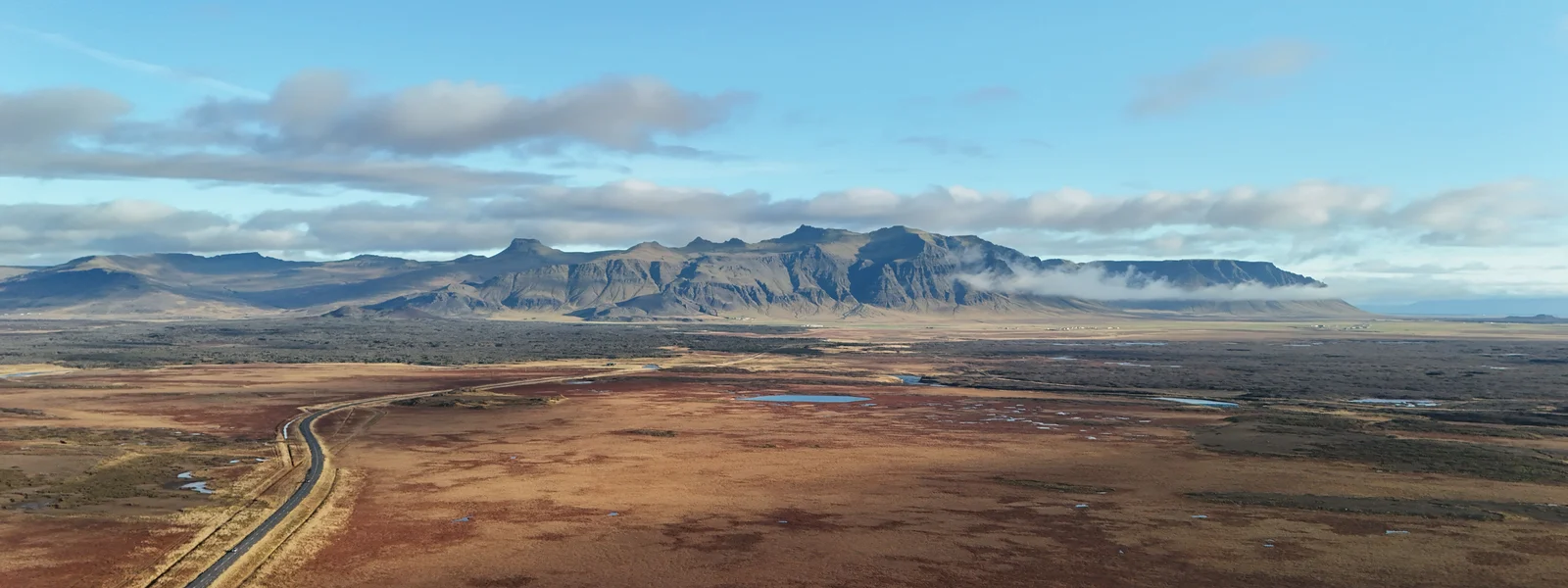
The most useful mental model for connectivity in Iceland is to picture two countries layered on top of each other. The first is the populated coastal ring, where almost everyone lives and where almost every visitor travels, strung along the famous ring road that loops the island. Here the three networks, Siminn, Vodafone and Nova, deliver fast, reliable data, and you will have signal in Reykjavik, in the towns, at the major waterfalls and geysers, and along most of the ring road itself. The second Iceland is the interior, the highlands, a vast volcanic desert of glaciers, lava fields and braided rivers that is uninhabited and almost entirely without coverage. The F roads that cross it, open only in summer and only to suitable vehicles, take you into genuine wilderness where no phone works. Most visitors stay firmly in the first Iceland and rarely lose signal. But the country's greatest adventures, the highland treks, the interior crossings, the remote Westfjords, take you into the second, and that is where preparation matters. This guide is built around that split, and getting it right is the difference between a smooth trip and a dangerous one.
The EEA carrier terms rule and who it helps
Iceland is not in the European Union, which surprises many travelers, but it is in the European Economic Area, the EEA, and that membership is the key to roaming here. The EU's carrier rules extends across the whole EEA, which means an EU or EEA SIM works in Iceland exactly as it does at home, with your normal allowance and no surcharge. If you hold a German, French, Spanish, Norwegian or any other EU or EEA plan, you can land at Keflavik and simply turn your phone on, roaming free. This is the same arrangement that covers Norway, and it is worth stressing because Iceland's non EU status makes people assume the opposite. The contrast to remember is Switzerland, which is in neither the EU nor the EEA, and where roaming therefore is not covered and can be expensive. Iceland, despite being outside the EU, is firmly inside the roaming zone. For everyone else, travelers from the United States, Canada, Australia, the Gulf, Asia, or the United Kingdom after Brexit, your home plan will charge punishing rates, and a travel eSIM is the obvious cheap solution. The krona is not the euro, but that affects only what you pay for a coffee, not your roaming.
How much data you actually need
Most travelers misjudge their data needs, and in Iceland the misjudgment has an extra twist because so much of the country has no coverage at all, which paradoxically can reduce your usage. The how much data satellite has the full breakdown, but the short version is this. Maps, messaging and the occasional photo upload sip data, and a light user can get through a week on a couple of gigabytes. The moment you add streaming, heavy social scrolling of those endless landscape shots, or video calls home, the number climbs. For a typical week long ring road or Golden Circle trip with moderate use, somewhere around five gigabytes is a comfortable cushion. For two weeks circling the island, ten to fifteen gigabytes is sensible. One Iceland specific point: because you will spend hours driving through areas with no signal, you will often be offline whether you like it or not, which can keep your usage lower than expected. But the flip side is that you must download maps and essentials in advance, because you cannot rely on data being there when you need it most.
eSIM versus a local Icelandic SIM
For a non EEA traveler, you have two real options: a travel eSIM bought before you arrive, or a local prepaid SIM from an Icelandic network bought once you land. Both work well on the same networks, and the eSIM versus local SIM satellite compares them in detail. The travel eSIM wins on convenience by a wide margin. You buy it from home, install it before the flight, and step off the plane at Keflavik already online, ready to navigate the drive to Reykjavik. The local SIM can win on value for a long stay with a large allowance, and Icelandic prepaid tourist SIMs are sold at the airport and in shops, sometimes bundled specifically for visitors. But Iceland is an expensive country, and local SIMs are not the bargain they are in, say, Poland. The travel eSIM is usually the better call for a trip of a week or two, especially because of the dual SIM advantage of keeping your home number. For a month or more as a base, the local SIM is worth weighing, which the digital nomad satellite explores.
Choosing a network for the wild places
Iceland has three networks that own infrastructure: Siminn, the former state operator with historically the widest rural reach, Vodafone Iceland, and Nova. The operators satellite covers them in detail, but for a traveler the practical point is that along the populated ring road all three are strong, while in the remote areas coverage diverges, and Siminn has traditionally had the broadest reach into the sparsely populated corners. This matters more in Iceland than in most countries, because the gaps here are not minor inconveniences but genuine wilderness where coverage can be a safety issue. A travel eSIM that uses Siminn or that roams across multiple Icelandic networks gives you the best odds of catching a signal in marginal areas like the Westfjords, the eastern fjords or the highland fringes. You do not need to obsess over this for a standard ring road trip, but if you are venturing into the remote regions, the network choice genuinely matters, and choosing one with strong rural reach is a sensible precaution.
Mono country plan or regional Europe plan
If Iceland is your only stop, which it very often is given its location out in the North Atlantic, an Iceland specific eSIM is the cheapest and simplest choice. Iceland is not a country you casually combine with overland neighbors, because it has none; it is an island, so multi country road trips are not the norm here the way they are in central Europe. That said, many travelers visit Iceland as part of a broader European trip, flying in from elsewhere on the continent, and for those a regional Europe eSIM that covers Iceland alongside the EU and EEA can make sense, keeping one plan across the whole journey. Check that the regional plan explicitly includes Iceland, because some Europe plans cover the EU but exclude or limit the EEA additions like Iceland and Norway. If Iceland is a standalone trip, buy the mono country plan; if it is one leg of a wider European itinerary, buy a regional plan that names Iceland in its coverage. The best eSIM satellite digs into this, and the regional satellites cover the Golden Circle with the south, and the full ring road.
What to do next
If you take only one thing from this hub, take this: Iceland is two countries for your phone, a well connected coast and an empty interior, and your job is to enjoy the first while preparing properly for the second. Work out whether the EEA carrier terms rule covers you, an EU or EEA plan roams free here, everyone else should buy an eSIM. Size your data with headroom, but know you will often be offline in the wilds regardless. Choose a network or eSIM with strong rural reach, ideally Siminn or a multi network plan, if you are heading anywhere remote. Above all, download offline maps, your accommodation details, and any safety information before you drive into areas without coverage, and check road and weather conditions obsessively, because Iceland's weather is genuinely dangerous and conditions change fast. From there, the eleven satellites take each decision deeper, from the setup guide to the coverage map to the ring road regional guide. Iceland is one of the most spectacular places on earth to travel, and getting your connectivity right, especially knowing when you will have none, is part of doing it safely and well.
A final word before you go
Connectivity in Iceland comes down to understanding the split between the connected coast and the empty interior, and preparing for both. First, work out whether the EEA carrier terms rule covers you: an EU or EEA plan roams free here, because Iceland, though outside the EU, is in the European Economic Area, the same quirk that covers Norway and the opposite of Switzerland. If you come from outside the EEA, including the United Kingdom since Brexit reintroduced charges, a travel eSIM is the obvious cheap solution. Second, size your data with sensible headroom but not excess, because the long offline stretches in the wilderness naturally cap your usage, and the data you cannot reach a tower to spend is wasted. Third, if you are heading anywhere remote, choose a network with strong rural reach, Siminn historically being the broadest, or a multi network eSIM that grabs the strongest available signal, and treat this as a safety precaution given Iceland's hazardous conditions. Fourth, and most important of all, download offline maps of your entire route, save your accommodation and booking details offline, and check the official road and weather conditions obsessively, because in Iceland a coverage gap can coincide with genuine danger, and preparation matters more here than almost anywhere. Beyond those, the smaller details, keeping your home number active for verification codes, testing your eSIM at Keflavik, choosing between a mono country and a regional plan, are covered by the eleven satellites linked throughout this hub. Iceland is one of the most spectacular and singular countries on earth, a place of glaciers, volcanoes, waterfalls and vast empty wilderness, and getting your connectivity right, which crucially includes knowing and preparing for when you will have none, is part of experiencing it safely and fully. Enjoy the connected ring, respect the empty interior, and the country will reward you with sights you will never forget.
Buyer guide
Comparison
Coverage
Operators
Data planning
How-to
Apps
Use case
Region
Golden Circle and South Iceland eSIM
The Golden Circle and south coast pack Iceland's greatest hits into a well covered region. Here is how connectivity works across the country's most visited area
Read the guide →🗺️RegionRing Road Iceland eSIM
The ring road circles all of Iceland, through connected coast and emptying east. Here is how to stay online for the full loop and where you will lose signal.
Read the guide →Networks available by plan
The network depends on the plan you choose. These are the published operators for the first six plans currently sold.
| Plan | Published operators |
|---|---|
| 1 GB · 7 days | Nova, Síminn |
| 3 GB · 15 days | Nova, Síminn |
| 5 GB · 30 days | Nova, Síminn |
| 10 GB · 30 days | Nova, Síminn |
| 20 GB · 30 days | Nova, Síminn |
| 50 GB · 30 days | Nova, Síminn |
Iceland eSIM FAQ
What coverage and network performance should travelers expect in Iceland?
Iceland has three networks that own infrastructure: Siminn, the former state operator with historically the widest rural reach, Vodafone Iceland, and Nova. The operators satellite covers them in detail, but for a traveler the practical point is that along the populated ring road all three are strong, while in the remote areas coverage diverges, and Siminn has traditionally had the broadest reach into the sparsely populated corners. This matters more in Iceland than in most countries, because the gaps here are not minor inconveniences but genuine wilderness where coverage can be a safety issue.
Is a travel eSIM better than local SIM or roaming in Iceland?
Iceland is not in the European Union, which surprises many travelers, but it is in the European Economic Area, the EEA, and that membership is the key to roaming here. The EU's carrier rules extends across the whole EEA, which means an EU or EEA SIM works in Iceland exactly as it does at home, with your normal allowance and no surcharge. If you hold a German, French, Spanish, Norwegian or any other EU or EEA plan, you can land at Keflavik and simply turn your phone on, roaming free. This is the same arrangement that covers Norway, and it is worth stressing because Iceland's non EU status makes people assume the opposite.
How much data you actually need?
Most travelers misjudge their data needs, and in Iceland the misjudgment has an extra twist because so much of the country has no coverage at all, which paradoxically can reduce your usage. The how much data satellite has the full breakdown, but the short version is this. Maps, messaging and the occasional photo upload sip data, and a light user can get through a week on a couple of gigabytes. The moment you add streaming, heavy social scrolling of those endless landscape shots, or video calls home, the number climbs. For a typical week long ring road or Golden Circle trip with moderate use, somewhere around five gigabytes is a comfortable cushion.
How much data and what kind of plan do travelers need in Iceland?
If Iceland is your only stop, which it very often is given its location out in the North Atlantic, an Iceland specific eSIM is the cheapest and simplest choice. Iceland is not a country you casually combine with overland neighbors, because it has none; it is an island, so multi country road trips are not the norm here the way they are in central Europe. That said, many travelers visit Iceland as part of a broader European trip, flying in from elsewhere on the continent, and for those a regional Europe eSIM that covers Iceland alongside the EU and EEA can make sense, keeping one plan across the whole journey.
Sort your Iceland eSIM
Pick the plan that fits your trip, or work out how much data you need first.