How Much Data Do You Need in Montenegro? A Practical Guide
Start with how you actually use your phone
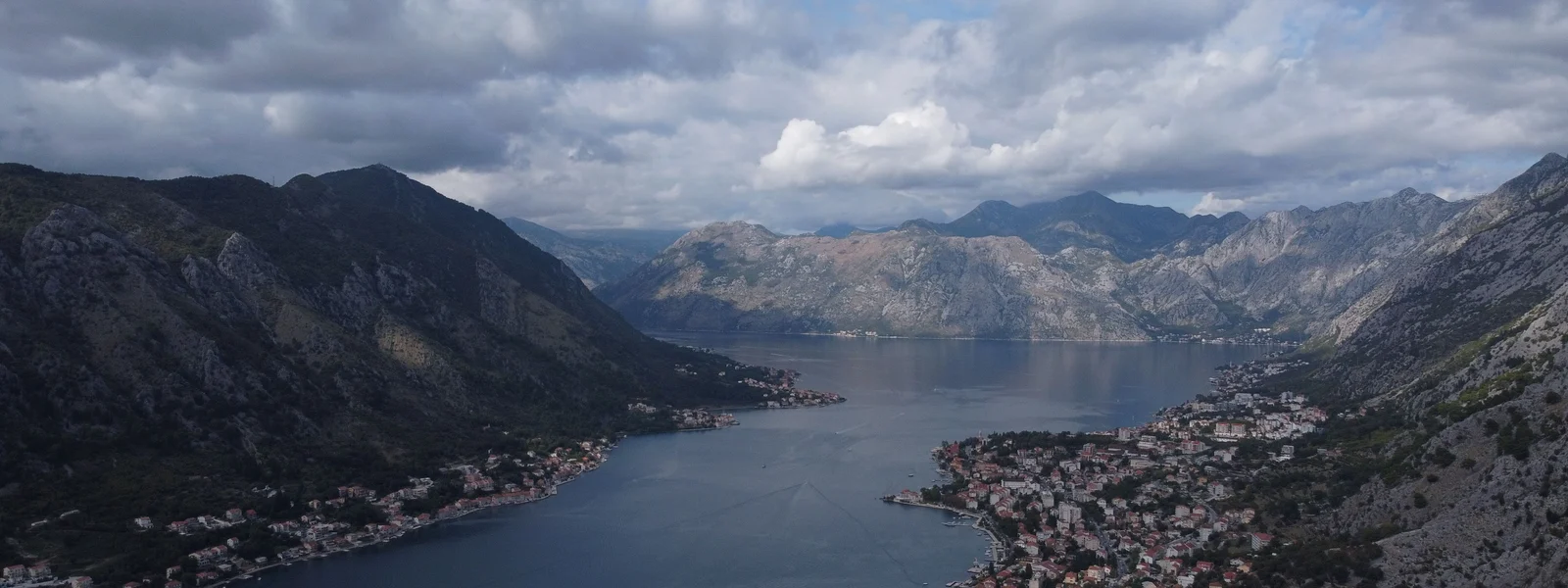
The honest way to size a data plan for Montenegro is to start with how you genuinely use your phone when travelling, because that drives consumption far more than the length of the trip, and Montenegro spectacular scenery shapes the pattern. Think about your real habits. Do you navigate constantly, or tend to know where you are going? Do you stream music and video on the move, or save that for wifi? Do you share photos and videos as you go, scroll social media, take video calls home, or work from a laptop? Each uses data at very different rates, and being honest about which describe you gives a far better estimate than any generic figure. Montenegro adds a particular consideration, namely that it is extraordinarily photogenic, with the fjord like Bay of Kotor, the walled medieval towns, the Adriatic beaches, the dramatic Tara canyon and the mountain peaks, so most visitors capture and share a great deal of photos and videos, which influences the data pattern, though photo sharing itself is light on data as we will see. Most travellers fall into one of three rough patterns. The light user leans on wifi, uses the eSIM mainly for maps and messages, and consumes little. The moderate user navigates, scrolls, shares freely and streams a bit over mobile data, consuming a steady amount. The heavy user streams video, takes video calls, navigates constantly and shares prolifically, consuming a lot. The good news for Montenegro is that the coastal towns and resorts have good wifi in hotels, cafes and restaurants, so you can offload heavy tasks to wifi, keeping eSIM use down. One Montenegro specific point is that any time in the mountains and canyons, hiking the Durmitor, rafting the Tara or exploring the parks, is handled by offline maps rather than extra data, since coverage thins in the rugged interior. The sections that follow break down what common activities use, so you can build a realistic daily figure from your own habits, whether you are on a coastal holiday or a mountain adventure.
Maps, navigation and getting around
Navigation is light on data and works well across Montenegro good coastal and town coverage, so it should not drive your plan sizing for a typical coastal trip, though the rugged interior calls for offline maps. Live turn by turn navigation through a mapping app uses surprisingly little data, a few megabytes to perhaps twenty or thirty for an hour of directions, because the app downloads map tiles and then mostly tracks your position, so even a full day of navigating around the coast or between the towns adds up to a modest figure easily absorbed by any plan. Along the well covered coast and in the towns, the Bay of Kotor, Budva, the historic centres, your live navigation works reliably, so no special measures are needed for the typical coastal trip. Getting around Montenegro involves walking the compact old towns, driving the spectacular coastal roads and mountain passes, and using buses or taxis, all easy to navigate with live maps in the well covered coastal and town areas. The picture changes in the rugged interior, the mountains and canyons of the Durmitor, the Tara river, the Prokletije and the national parks, where the terrain thins the signal, so for a trip into these areas, downloading offline maps before heading into the high country is the sensible measure, letting your navigation continue regardless of signal as you explore the mountain roads, the canyon rims, the park trails and the remote villages. This matters more in Montenegro than in many countries because the interior is rugged relative to the country size, and the spectacular driving routes, the serpentine roads above the Bay of Kotor, the passes into the Durmitor, often climb into areas where coverage thins. Crucially, offline maps use no ongoing data once downloaded, so they are a navigation measure rather than a data sizing one, meaning the Montenegrin mountains do not increase your data needs, just your preparation. So navigation data is modest throughout a Montenegro trip, with the coast and towns well covered and the rugged interior handled by offline maps, an especially worthwhile preparation here given the dramatic mountain driving the country offers.
Photos, social media and streaming
The activities that genuinely drive data consumption in Montenegro are photo and video sharing, social media and streaming, and the country breathtaking scenery means visitors share a great deal. Montenegro is one of the most photogenic countries in Europe for its size, with the fjord like Bay of Kotor, the walled town of Kotor climbing the mountainside, the Budva Riviera beaches, the dramatic Tara canyon, the peaks of the Durmitor and the Adriatic sunsets, so most visitors capture and share plenty of photos and videos. The good news is that sharing photos through messaging apps like WhatsApp or Viber, both used in the region, uses only a fraction of a megabyte per image thanks to compression, so even prolific photo sharing of Montenegro spectacular scenery adds up slowly, perhaps tens of megabytes over a busy day. Video sharing uses more, several megabytes per clip, so sharing video of the canyon or the bay is heavier but still manageable. Social media scrolling is where consumption can climb, because the platforms autoplay video constantly, so an hour of scrolling a video rich feed can use several hundred megabytes, and the most effective control is to turn off video autoplay in the app settings and set videos to play only on wifi. Streaming video is the heaviest activity, with standard definition using around half a gigabyte to a gigabyte an hour and high definition more, so watching shows on the move can dwarf everything else, though most visitors save streaming for wifi in the evening. For Montenegro, the practical approach is to recognise that photo sharing, while a big part of capturing the country extraordinary scenery, is light enough not to worry about, while social media video and streaming are the real consumers to manage by leaning on the coastal towns good wifi for the heavy stuff. Given how photogenic Montenegro is, you will likely capture and share more than usual, but since photo sharing is light, this does not threaten a sensible plan, and saving the heavy uploads, the big video files and the streaming, for the good coastal wifi keeps your eSIM allowance comfortable across a scenery rich Montenegro trip.
A sensible target
Bringing the pieces together into a practical target, a week in Montenegro suits most travellers with a plan somewhere between five and ten gigabytes, with the country good coastal wifi stretching it further. For a light user who uses accommodation and cafe wifi for the heavy tasks and relies on the eSIM mainly for maps, messages and light photo sharing while out, five gigabytes comfortably covers a week, and Montenegro good coastal wifi makes this realistic. For a moderate user who navigates freely, shares plenty of the spectacular coast and the historic towns, scrolls social media and streams a little over mobile data, around ten gigabytes gives a comfortable week with room to spare. For a heavy user who streams a lot or tethers a laptop, more is wiser, though leaning on the good coastal wifi for the heavy tasks keeps the eSIM need reasonable, with a generous plan or easy top up covering the gaps. Because Montenegro coastal towns and resorts have good wifi, most visitors find their mobile data needs moderate, so I would not over buy for a typical coastal holiday. If you genuinely run out, the better providers let you top up instantly from the app. For visits longer than a week, scale proportionally. Two Montenegro reminders. Any time in the mountains and canyons, hiking the Durmitor, rafting the Tara or exploring the parks, needs offline maps rather than extra data, since coverage thins in the rugged interior. And whatever the plan size, the key Montenegro point is to have a travel eSIM at all, given the non EU status that makes roaming expensive for everyone including EU visitors, a status easily missed because the country uses the euro. The simple method, estimate your daily use from honest habits, lean on the good coastal wifi, multiply by the days, and add a buffer, gives a plan that fits you for a Montenegro trip, whether a coastal holiday around Kotor and Budva or an adventure into the mountains and canyons, with the spectacular scenery encouraging more sharing but the light cost of photo sharing keeping it comfortable.
Plans for Montenegro
Montenegro eSIM plans
Prices in USD. Instant QR activation. Pick your data, land connected.
FAQ
What should travelers know about start with how you actually use your phone in Montenegro?
The honest way to size a data plan for Montenegro is to start with how you genuinely use your phone when travelling, because that drives consumption far more than the length of the trip, and Montenegro spectacular scenery shapes the pattern. Think about your real habits. Do you navigate constantly, or tend to know where you are going? Do you stream music and video on the move, or save that for wifi? Do you share photos and videos as you go, scroll social media, take video calls home, or work from a laptop? Each uses data at very different rates, and being honest about which describe you gives a far better estimate than any generic figure.
What should travelers know about maps, navigation and getting around in Montenegro?
Navigation is light on data and works well across Montenegro good coastal and town coverage, so it should not drive your plan sizing for a typical coastal trip, though the rugged interior calls for offline maps. Live turn by turn navigation through a mapping app uses surprisingly little data, a few megabytes to perhaps twenty or thirty for an hour of directions, because the app downloads map tiles and then mostly tracks your position, so even a full day of navigating around the coast or between the towns adds up to a modest figure easily absorbed by any plan.
What should travelers know about a sensible target in Montenegro?
Bringing the pieces together into a practical target, a week in Montenegro suits most travellers with a plan somewhere between five and ten gigabytes, with the country good coastal wifi stretching it further. For a light user who uses accommodation and cafe wifi for the heavy tasks and relies on the eSIM mainly for maps, messages and light photo sharing while out, five gigabytes comfortably covers a week, and Montenegro good coastal wifi makes this realistic. For a moderate user who navigates freely, shares plenty of the spectacular coast and the historic towns, scrolls social media and streams a little over mobile data, around ten gigabytes gives a comfortable week with room to spare.
What should travelers know about photos, social media and streaming in Montenegro?
The activities that genuinely drive data consumption in Montenegro are photo and video sharing, social media and streaming, and the country breathtaking scenery means visitors share a great deal. Montenegro is one of the most photogenic countries in Europe for its size, with the fjord like Bay of Kotor, the walled town of Kotor climbing the mountainside, the Budva Riviera beaches, the dramatic Tara canyon, the peaks of the Durmitor and the Adriatic sunsets, so most visitors capture and share plenty of photos and videos.
Can I cancel an eSIM purchase if I do not use it?
Yes. An unused eSIM can be cancelled within 30 days as long as it has not been used on the destination network. Once it has connected and been used, this condition no longer applies.