Bulgaria for Digital Nomads: One Month of Data and Connectivity
Why Bulgaria works for remote work
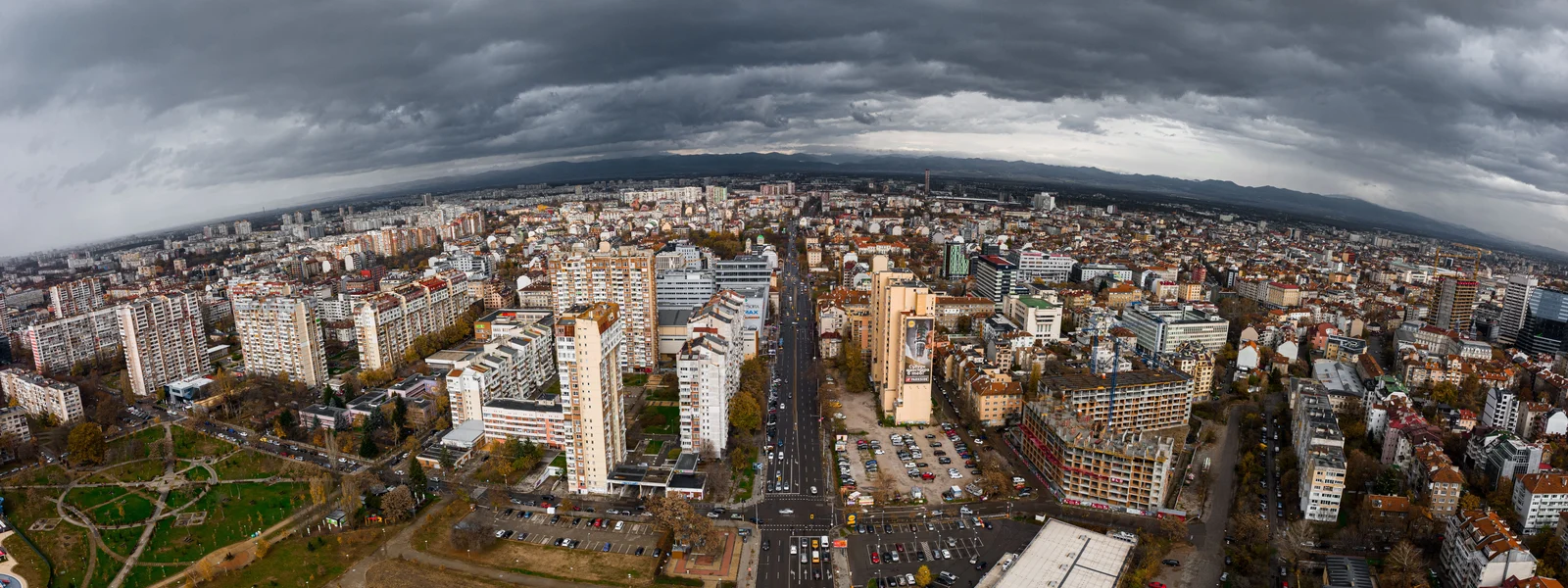
Bulgaria has quietly become one of Europe's better value bases for remote work, and connectivity is a big part of the appeal. The country has fast, cheap mobile data thanks to its competitive three operator market, and good fixed broadband in the cities, so the foundations for working online are solid and inexpensive. Sofia, the capital, has a growing community of remote workers and a healthy supply of coworking spaces and laptop friendly cafes, set against a cost of living well below western European levels, so a month here stretches a budget far further than the same month in Lisbon, Barcelona or Berlin. Plovdiv, with its atmospheric old town and creative scene, is another appealing base, and the Black Sea coast offers a summer option. The mobile network underpins it all. When the apartment wifi falters, when you need to take a call from a cafe or while travelling, or when you are exploring a smaller town for a few days, a Bulgaria eSIM keeps you working without interruption, and at the low prices Bulgarian data commands, a generous plan costs little. For EU citizens, the carrier rules mean their home plan may cover Bulgaria under the carrier terms for the fair use period, though a full month of heavy work could approach the fair use cap, so even some EU nomads find a local eSIM useful as a supplement. The practical upshot is that Bulgaria removes much of the connectivity anxiety that haunts remote work in less developed places, offering fast cheap data and good wifi at a fraction of western European costs, which combined with the low cost of living makes it a genuinely attractive and underrated base for a month of working while exploring a country of mountains, coast and rich history.
How much data a working month needs
Estimating data for a working month is very different from estimating it for a holiday, because work loads are heavier and less forgiving. The biggest consumers are video calls and cloud syncing. An hour of video conferencing can burn anywhere from half a gigabyte to well over a gigabyte depending on quality and how many people have cameras on, and a day with several calls can clear three or four gigabytes by itself. Add the constant background of cloud file synchronisation, software updates, large email attachments and a browser full of tabs, and a working day can quietly use five to eight gigabytes if it all runs over mobile data. Over a month of working days that would point to well over a hundred gigabytes, which is more than any travel eSIM economically provides. The realistic strategy is therefore a hybrid one. You lean on fixed wifi for the heavy lifting, the big uploads, the long video calls and the backups, and you use the eSIM as a reliable supplement and fallback. Bulgarian city wifi is generally good, so the wifi carries most of the load, and the eSIM handles the gaps, the calls taken away from the desk, the days exploring a new town, and the outages when the apartment connection drops mid meeting. Sized that way, a month of remote work in Bulgaria is comfortably served by an eSIM plan in the range of twenty to fifty gigabytes, depending on how much you expect to work away from wifi. I lean toward the higher end for peace of mind, because Bulgarian data is cheap enough that over buying costs little, and the ability to top up instantly means a heavy week need not become a crisis. EU nomads relying on roaming should check their fair use cap, since a working month's data could approach or exceed it, in which case a cheap local eSIM as a supplement makes sense.
Building a reliable connectivity setup
A month of dependable remote work in Bulgaria comes down to layering your connections so that no single failure stops you. The foundation is your accommodation wifi, and when booking a month long stay I treat the internet as a hard requirement, reading reviews for mentions of speed and reliability and, where possible, asking the host to confirm the connection before committing. Bulgarian city internet is generally good, but apartments vary, so this verification is worth the effort. The second layer is the eSIM, which becomes your safety net. When the apartment wifi drops during a call, you switch the phone to its data and tether the laptop, and the meeting continues as if nothing happened, which over a month will save you from at least one awkward moment, and Bulgaria's cheap data makes this fallback affordable. The third layer is knowing your local coworking spaces and laptop friendly cafes, which give you a change of scene and a backup workspace with their own reliable connections, and Sofia in particular has a decent coworking scene. I also keep my home country SIM active for the verification codes that work accounts constantly demand, so that two factor prompts reach me without trouble. The final piece is a habit rather than a tool, I download offline maps and any reference material before heading anywhere remote, so a weekend trip into the Rila or Pirin mountains does not cut me off from navigation even where the signal fails. Layered this way, with verified wifi, an eSIM fallback, known coworking options and a live home number, the connectivity simply works, and the rare failure of any one layer is caught by the others before it can disrupt the work, letting you focus on the job and on enjoying an affordable and varied country.
Practical tips for a month on the ground
Beyond the data and the setup, a few practical habits make a month of remote work in Bulgaria run smoothly. The first is to align your eSIM validity with your stay, ideally buying a plan whose window covers the full month with a couple of days of margin, or choosing a provider that lets you top up and extend easily, so you are not forced to install a fresh eSIM partway through. The second is to manage time zones deliberately. Bulgaria sits in Eastern European Time, two hours ahead of London and seven ahead of New York for much of the year, which is convenient for working with European clients and means early starts or late finishes for those tied to American hours, so I set my calendar to local time on arrival and block my working window clearly. The third is to make the most of the cost advantage by treating the saved money as a buffer, not a temptation to skimp on the things that protect your work, namely good accommodation internet and a generous data plan. The fourth is to explore beyond the obvious. A month is long enough to base yourself in more than one place, perhaps splitting time between buzzy Sofia and the atmospheric old town of Plovdiv, or adding a stretch on the Black Sea coast in summer, and the eSIM makes those moves painless because you stay connected throughout the transition rather than scrambling for a new SIM in each place. Finally, I build in genuine offline time, weekends in the Rila or Pirin mountains, a visit to the Rila Monastery, where coverage is thin and that is precisely the point. Knowing the connectivity is solid Monday to Friday makes it easier to switch off properly at the weekend, and that balance is what makes a working month in Bulgaria genuinely restorative rather than merely productive, all at a cost that makes the country one of Europe's best value remote work bases.
Budgeting connectivity for the month
For anyone planning a working month, it helps to put the connectivity costs in perspective, because in Bulgaria they are refreshingly small relative to the value they deliver, even by the standards of an already affordable country. The eSIM itself, sized generously at twenty to fifty gigabytes for a month of work that leans mainly on wifi, costs a modest sum thanks to Bulgaria's cheap data market, and that figure is trivial against a remote worker's income and against the cost of the accommodation and living that fill out the month, both of which are themselves low in Bulgaria. I treat connectivity as a non negotiable line in the budget and buy comfortably rather than scraping by, because a dropped call or a day offline can cost far more in lost work or missed opportunity than the few dollars saved by under buying data. The accommodation wifi is usually included in the rent, so the marginal cost of staying connected is essentially just the eSIM, and topping up if a heavy week demands it adds only a little more. Compared with western European bases like Lisbon, Barcelona or Berlin, where the cost of living is far higher, Bulgaria delivers comparable connectivity at a fraction of the overall expense, which combined with its low living costs is a large part of its appeal for remote workers seeking value. The sensible budgeting approach is to secure good accommodation internet first, treating it as the foundation, then layer a generous eSIM on top as the reliable fallback, and to view the combined cost as cheap insurance for your livelihood. EU nomads may find their home roaming covers much of the month under the carrier terms, needing only a small supplementary eSIM if they approach the fair use cap. With Bulgarian data so affordable, there is simply no reason to compromise on connectivity, and the small sums involved buy a month of dependable working internet that lets you earn from one of Europe's most underrated and cost effective bases, surrounded by mountains, history and a coast, without the connectivity anxiety that plagues remote work in less developed destinations.
Plans for Bulgaria
Bulgaria eSIM plans
Prices in USD. Instant QR activation. Pick your data, land connected.
FAQ
How much data a working month needs?
Estimating data for a working month is very different from estimating it for a holiday, because work loads are heavier and less forgiving. The biggest consumers are video calls and cloud syncing. An hour of video conferencing can burn anywhere from half a gigabyte to well over a gigabyte depending on quality and how many people have cameras on, and a day with several calls can clear three or four gigabytes by itself. Add the constant background of cloud file synchronisation, software updates, large email attachments and a browser full of tabs, and a working day can quietly use five to eight gigabytes if it all runs over mobile data.
What is the connectivity picture in Bulgaria?
A month of dependable remote work in Bulgaria comes down to layering your connections so that no single failure stops you. The foundation is your accommodation wifi, and when booking a month long stay I treat the internet as a hard requirement, reading reviews for mentions of speed and reliability and, where possible, asking the host to confirm the connection before committing. Bulgarian city internet is generally good, but apartments vary, so this verification is worth the effort. The second layer is the eSIM, which becomes your safety net.
Why Bulgaria works for remote work?
Bulgaria has quietly become one of Europe's better value bases for remote work, and connectivity is a big part of the appeal. The country has fast, cheap mobile data thanks to its competitive three operator market, and good fixed broadband in the cities, so the foundations for working online are solid and inexpensive. Sofia, the capital, has a growing community of remote workers and a healthy supply of coworking spaces and laptop friendly cafes, set against a cost of living well below western European levels, so a month here stretches a budget far further than the same month in Lisbon, Barcelona or Berlin.
What should travelers know about practical tips for a month on the ground in Bulgaria?
Beyond the data and the setup, a few practical habits make a month of remote work in Bulgaria run smoothly. The first is to align your eSIM validity with your stay, ideally buying a plan whose window covers the full month with a couple of days of margin, or choosing a provider that lets you top up and extend easily, so you are not forced to install a fresh eSIM partway through. The second is to manage time zones deliberately.
Can I cancel an eSIM purchase if I do not use it?
Yes. An unused eSIM can be cancelled within 30 days as long as it has not been used on the destination network. Once it has connected and been used, this condition no longer applies.