Poland for Digital Nomads: One Month Connected
Why Poland works as a one month base
Poland has quietly become one of Europe's best value bases for remote workers, and connectivity is a big reason why. The mobile networks are fast and reliable, fixed broadband in apartments is excellent, public wifi in cafes is widespread, and the cost of data is among the lowest in the European Union. Add to that a low cost of living relative to western Europe, a thriving cafe culture in cities like Krakow and Warsaw, good rail and air links across the continent, and a growing community of international remote workers, and Poland makes a compelling month long base. The connectivity question for a nomad is different from a tourist's, because you are working online daily and need reliability and enough data for video calls, file transfers and constant connection. This satellite covers how to set yourself up for a productive month, from sizing your data to picking your base city.
How much data a month of work needs
Working remotely burns far more data than tourist travel, so plan accordingly. Daily video calls are the biggest driver, costing roughly three hundred to five hundred megabytes per hour each, and a few hours of calls a day adds up quickly. File uploads and downloads, cloud syncing, constant messaging and the general background hum of an online work life all contribute. A realistic estimate for a working nomad relying mainly on mobile data is two to four gigabytes a day, which over a month is sixty to one hundred and twenty gigabytes. That sounds like a lot, but Poland's cheap data makes it manageable, and most nomads lean heavily on apartment broadband and cafe wifi for the data heavy work, using mobile data as a reliable backup and for working on the move. If you will use wifi for most calls, a twenty to forty gigabyte monthly mobile plan is plenty; if mobile is your primary connection, look at unlimited or very large local plans.
Best cities to base in
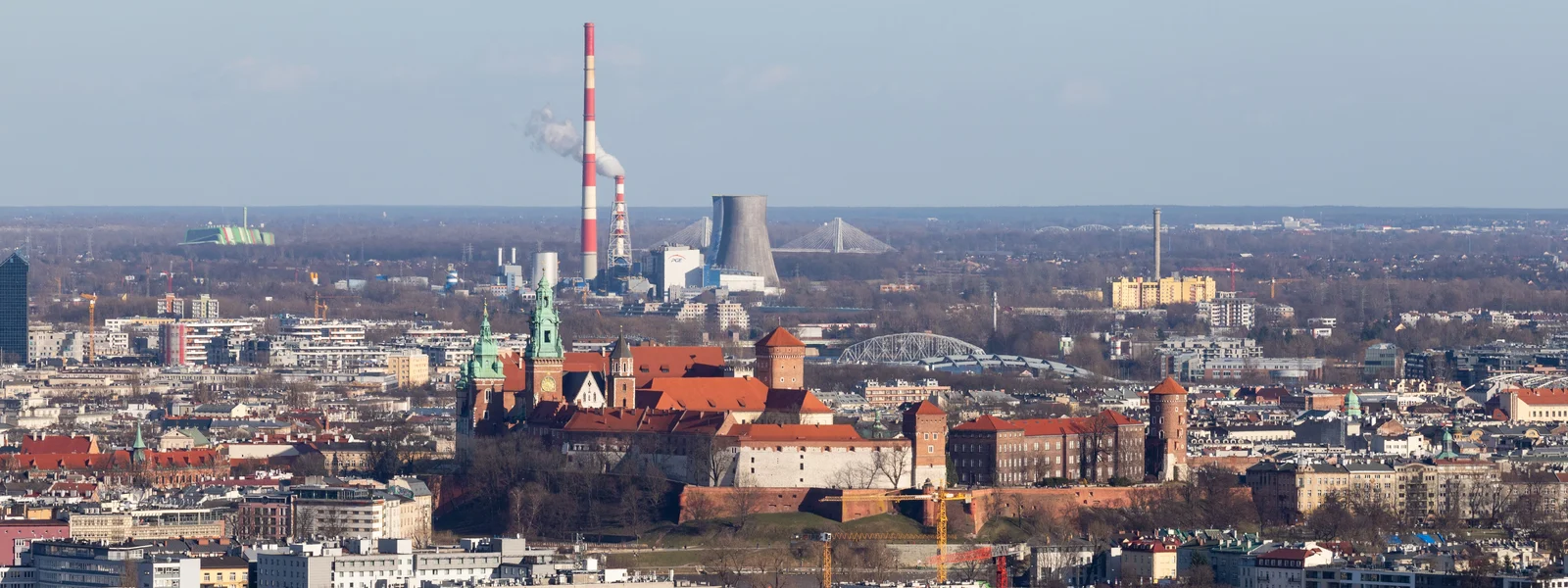
Krakow is the classic nomad choice, with a beautiful old town, a deep cafe scene, a large international community, excellent connectivity and easy access to the mountains for weekend escapes. It can get crowded with tourists in the center, so many nomads base in the surrounding districts. Warsaw is the bigger, more business oriented option, with the best fixed infrastructure, the most coworking spaces, strong transport links and a more local feel away from the tourist core; it is pricier than Krakow but still cheap by western standards. Wroclaw is a rising favorite, a handsome university city with a relaxed pace, good cafes and lower costs. Gdansk and the Tricity on the Baltic coast offer a change of scene with sea air, a historic core and solid connectivity, ideal for a summer month. All of these have the fast networks and good apartments a remote worker needs.
Mono country or regional, and reliability
For a month based in Poland, a local Polish SIM with a large monthly allowance is usually the best value if you will rely on mobile data, because Polish prepaid plans offer huge data buckets cheaply, and the one time registration hassle is worth it over a full month. If you would rather not deal with registration, a long duration travel eSIM for Poland works well too, just at a slightly higher per gigabyte cost. If your month includes hops to neighboring countries, Prague, Berlin, Vienna and the Baltic capitals are all close, then a regional Europe eSIM keeps you connected across borders on one plan, which many nomads prefer for the flexibility. For reliability, the smart setup is layered: apartment broadband as your primary work connection, cafe wifi as backup, and a generous mobile plan as the always available fallback that means a router outage never costs you a meeting. The operators satellite helps you pick a network with strong coverage in your base city.
Real monthly cost and a simple setup
The connectivity cost for a month in Poland is genuinely low. A large local SIM data plan runs the equivalent of a few dollars to maybe fifteen dollars for tens of gigabytes, and even an unlimited mobile plan is affordable. A long duration travel eSIM costs more but is still reasonable, often twenty to forty dollars for a substantial monthly bundle. Compared to the cost of an apartment, coworking membership and daily life, connectivity is a rounding error. The simple setup that works for most nomads: book an apartment with confirmed fast broadband, buy a generous mobile data plan as backup, scout a couple of reliable cafes near your base, and consider a day pass at a coworking space when you need to focus or take important calls. With that stack you have redundant connections, so a single failure never strands you. Poland delivers western European reliability at central European prices, which is exactly what makes it such a strong base for a connected working month.
Building a reliable connectivity stack
The difference between a stressful and a smooth month of remote work in Poland is redundancy, having more than one way to get online so that no single failure costs you a deadline or a meeting. The stack I recommend has three layers. The foundation is your apartment's fixed broadband, which you should confirm before booking, ideally asking the host for the actual speed rather than trusting a vague promise of wifi; in Polish cities, fast fiber is common and cheap, so good broadband is the norm. The second layer is the cafe and coworking scene, which in Krakow, Warsaw and Wroclaw is excellent, giving you reliable backup locations with good wifi and the social energy that helps when working alone gets lonely. The third layer is your mobile data, a generous local SIM or travel eSIM that serves as the always available fallback, the thing that saves you when the apartment router dies an hour before an important call. With all three in place, you are never more than a few minutes from a working connection. For the most important calls, the smart move is to default to whichever connection has proven most stable, often the apartment broadband, while keeping the mobile data ready to switch to instantly if it falters. Many nomads also carry a small mobile hotspot setup, simply using their phone as a hotspot for the laptop, which makes the mobile layer seamless. The seasons matter for lifestyle more than connectivity: summer is glorious and busy, winter is cold and quiet and cheaper, and both work fine for staying online. Build the stack, confirm your broadband before booking, and a working month in Poland is as reliable as working from home, at a fraction of the cost.
The practical month: seasons and escapes
Beyond the connectivity setup, a few practical notes make a month in Poland genuinely enjoyable as a remote worker. The seasons shape the experience: summer brings long warm days, lively outdoor life and busy tourist areas, ideal if you want energy and sunshine but pricier and more crowded; autumn is beautiful and calmer; winter is cold, dark and quiet but also the cheapest time, with cozy cafes perfect for focused work; spring brings the country back to life. All four seasons have the same reliable connectivity, so your choice is about lifestyle, not logistics. One of the great advantages of basing in Poland is how easy it is to take weekend escapes without losing connectivity, because the regional plans and EU carrier terms mean a quick trip to Prague, Berlin, Vienna or the Baltic capitals keeps you online the whole way. A nomad based in Krakow can hop to Slovakia's mountains or Czechia's spa towns for a weekend; one based in Gdansk can ferry to Scandinavia. This combination of a cheap, well connected base with easy access to the rest of Europe is exactly what makes Poland such a strong choice for a month. For the working rhythm itself, the cities offer everything you need: fast apartment broadband, abundant cafes, coworking spaces, and a cost of living that lets your budget stretch far further than it would in western Europe. Add the strong mobile networks as your safety net, and you have a setup that supports serious work while leaving plenty of room for the exploring that made you choose a base abroad in the first place. A month in Poland, properly set up, feels less like roughing it and more like upgrading your working life at a discount. For all these reasons, Poland stands out as one of Europe's best value bases for a connected working month, combining western European reliability with central European prices, abundant cafes and coworking, easy weekend escapes across the continent, and mobile networks fast and cheap enough to serve as a dependable safety net, which together make a productive and enjoyable month abroad genuinely achievable on a modest budget.
Plans for Poland
Poland eSIM plans
Prices in USD. Instant QR activation. Pick your data, land connected.
FAQ
How much data and what kind of plan do travelers need in Poland?
The connectivity cost for a month in Poland is genuinely low. A large local SIM data plan runs the equivalent of a few dollars to maybe fifteen dollars for tens of gigabytes, and even an unlimited mobile plan is affordable. A long duration travel eSIM costs more but is still reasonable, often twenty to forty dollars for a substantial monthly bundle. Compared to the cost of an apartment, coworking membership and daily life, connectivity is a rounding error.
How much data a month of work needs?
Working remotely burns far more data than tourist travel, so plan accordingly. Daily video calls are the biggest driver, costing roughly three hundred to five hundred megabytes per hour each, and a few hours of calls a day adds up quickly. File uploads and downloads, cloud syncing, constant messaging and the general background hum of an online work life all contribute. A realistic estimate for a working nomad relying mainly on mobile data is two to four gigabytes a day, which over a month is sixty to one hundred and twenty gigabytes.
Why Poland works as a one month base?
Poland has quietly become one of Europe's best value bases for remote workers, and connectivity is a big reason why. The mobile networks are fast and reliable, fixed broadband in apartments is excellent, public wifi in cafes is widespread, and the cost of data is among the lowest in the European Union. Add to that a low cost of living relative to western Europe, a thriving cafe culture in cities like Krakow and Warsaw, good rail and air links across the continent, and a growing community of international remote workers, and Poland makes a compelling month long base.
What should travelers know about best cities to base in in Poland?
Krakow is the classic nomad choice, with a beautiful old town, a deep cafe scene, a large international community, excellent connectivity and easy access to the mountains for weekend escapes. It can get crowded with tourists in the center, so many nomads base in the surrounding districts. Warsaw is the bigger, more business oriented option, with the best fixed infrastructure, the most coworking spaces, strong transport links and a more local feel away from the tourist core; it is pricier than Krakow but still cheap by western standards. Wroclaw is a rising favorite, a handsome university city with a relaxed pace, good cafes and lower costs.
Can I cancel an eSIM purchase if I do not use it?
Yes. An unused eSIM can be cancelled within 30 days as long as it has not been used on the destination network. Once it has connected and been used, this condition no longer applies.