Luxembourg for Digital Nomads: One Month of Data and Connectivity
Why Luxembourg works for remote work
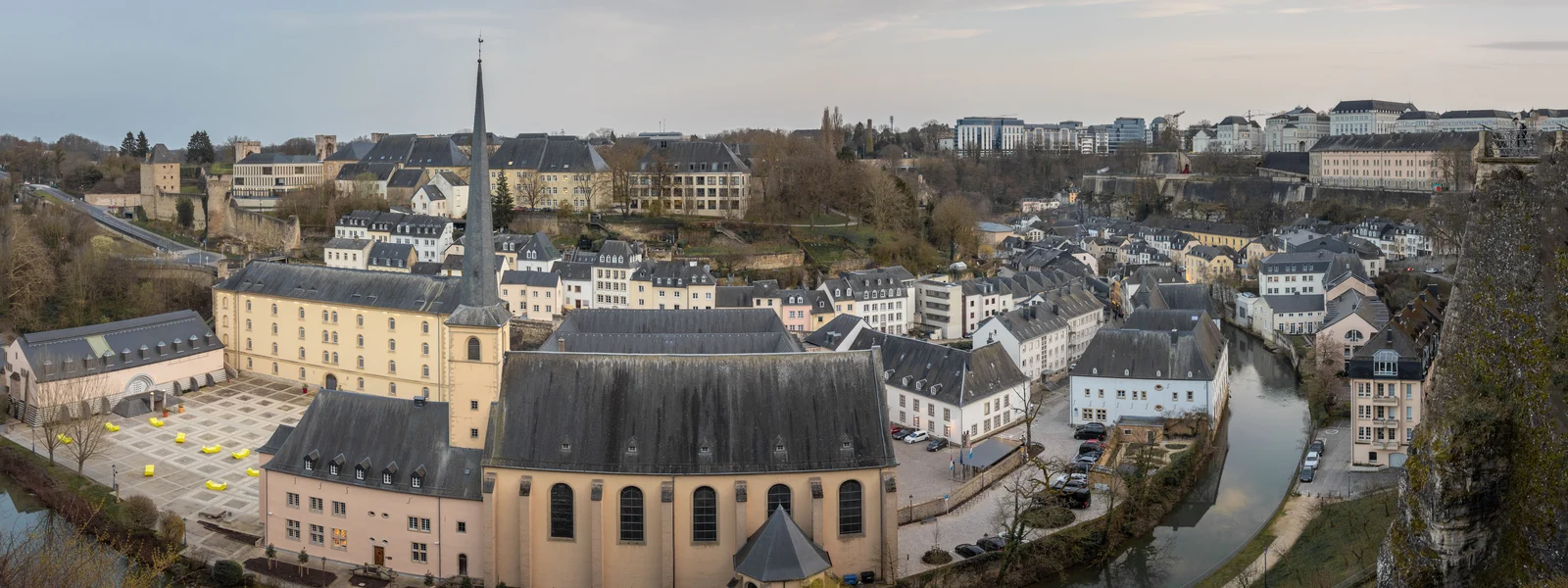
Luxembourg is an unusual choice for a remote work base, expensive but exceptionally well connected and central, and for the right person it offers a high quality, frictionless environment. The connectivity is outstanding, among the best in Europe, with fast, pervasive mobile data and excellent fixed broadband throughout this wealthy country, so the technical foundations for working online are as solid as anywhere on the continent. The capital, Luxembourg City, is an international, multilingual hub, home to EU institutions, major banks and a cosmopolitan workforce, so English is widely spoken alongside French, German and Luxembourgish, and the city has the cafes, coworking spaces and infrastructure that suit remote work. The country central location and tiny size, combined with its famously free public transport and the closeness of France, Belgium and Germany, make it an excellent base for exploring a large slice of western Europe on weekends, with high speed rail and short drives reaching Paris, Brussels, the German Moselle and beyond. The main drawback is cost, since Luxembourg is one of the most expensive countries in Europe for accommodation and dining, so a month here strains a budget far more than a month in Lisbon or a Balkan capital, which is why it suits the higher earning remote worker or someone with a specific reason to be here rather than the budget nomad. But for connectivity specifically, Luxembourg is close to ideal, removing all the technical friction that haunts remote work in less developed places. The mobile network underpins it all, with a regional eSIM keeping you connected not just across Luxembourg but seamlessly into the neighbouring countries you will likely visit, handling the border effect that the small country geography creates. For the remote worker who can absorb the cost, Luxembourg offers a polished, central, beautifully connected base for a productive month.
How much data a working month needs
Estimating data for a working month in Luxembourg follows the same logic as anywhere, with the heaviest consumers being video calls, cloud syncing and laptop work, but with the Luxembourg specific twist that you will almost certainly want a regional plan to handle the border effect and the cross border travel the location invites. An hour of video conferencing can burn half a gigabyte to well over a gigabyte, and a day of several calls plus cloud syncing, software updates and large files can use five to eight gigabytes if it all runs over mobile data, pointing to well over a hundred gigabytes for a month of working days, more than any travel eSIM economically provides. So the realistic strategy is the hybrid one, leaning on fixed wifi for the heavy lifting and using the eSIM as a reliable supplement and fallback. Luxembourg excellent broadband and abundant wifi make this easy, since the wifi in accommodation, cafes, coworking spaces and even much public transport is fast and widespread in this wealthy country, so the wifi carries most of the load and the eSIM handles the gaps, the calls taken away from the desk, the cross border weekend trips, and the outages when a connection drops. Sized that way, a month is comfortably served by a regional eSIM plan of twenty to fifty gigabytes, with the regional scope being the key point for Luxembourg, since it covers not just the country but the neighbours you will visit and handles the border effect that would otherwise interrupt a Luxembourg only plan. I lean toward the higher end of that range for peace of mind. EU nomads may find their home roaming covers Luxembourg and its neighbours under the carrier terms for the fair use period, though a full working month heavy data use could approach the fair use cap, in which case a supplementary regional eSIM helps. The central point for Luxembourg is to choose a regional plan, sized generously, leaning on the superb wifi to stretch it.
Building a reliable connectivity setup
A month of dependable remote work in Luxembourg comes down to layering your connections, and in such a well connected country this is easier than almost anywhere, with the only Luxembourg specific element being the regional eSIM for the border effect. The foundation is your accommodation wifi, and when booking a month long stay I treat the internet as a hard requirement, though in Luxembourg the high quality of fixed broadband means this is rarely a problem, with fast, reliable connections the norm in this wealthy country. The second layer is the eSIM, your safety net, and for Luxembourg this should be a regional Europe eSIM so that it works seamlessly whether your phone is on a Luxembourg network or has connected to a French, Belgian or German one near a border, and so that it covers the cross border weekend trips the location invites. When the apartment wifi drops during a call, you switch to the eSIM and tether the laptop, and the meeting continues, with the regional plan ensuring this works even near the borders. The third layer is the country abundant coworking spaces and laptop friendly cafes, particularly plentiful in the international capital, giving you a change of scene and backup workspaces with their own fast connections. I also keep my home country SIM active for verification codes. The final piece, less critical in well covered Luxembourg than in mountainous countries, is downloading offline maps for any deep forest hikes in the Mullerthal or remote Ardennes trails, a minor precaution given the generally excellent coverage. Layered this way, with superb accommodation wifi, a regional eSIM fallback that handles the borders, abundant coworking, and a live home number, the connectivity in Luxembourg simply works, more reliably than in almost any other base, letting you focus entirely on the work and on enjoying a polished, central country from which much of western Europe is an easy weekend away.
Practical tips for a month on the ground
Beyond the data and the setup, a few practical habits make a month of remote work in Luxembourg run smoothly, some of them specific to this small, central, expensive country. The first is to choose a regional Europe eSIM and align its validity with your stay, so it covers the whole month and the neighbouring countries you will inevitably visit, handling the border effect throughout. The second is to manage time zones, since Luxembourg sits in Central European Time, one hour ahead of London and six ahead of New York for much of the year, convenient for European clients and meaning early starts or late finishes for those tied to American hours, so I set my calendar to local time and block my working window. The third is to make the most of the country central location and free public transport by exploring on weekends, since Luxembourg tiny size and closeness to France, Belgium and Germany, combined with excellent rail links, put Paris, Brussels, Trier, the Moselle and the Ardennes all within easy reach, and a regional eSIM keeps you connected across all those borders without any new arrangement. The fourth is to budget realistically for the high cost of living, treating Luxembourg as a premium base where accommodation and dining are expensive, offset partly by the free transport and the quality of life, so it suits the higher earning remote worker rather than the budget traveller. The fifth is to take advantage of the international, multilingual environment, since English is widely spoken in the capital alongside French and German, making daily life easy for the foreign worker. Finally, build in genuine exploration time, using the superb connectivity and central location to see a remarkable amount of western Europe from a single base, with weekends in the Ardennes, the Mullerthal Little Switzerland, the Moselle vineyards or the nearby capitals, all reachable easily and all covered seamlessly by a regional eSIM, making Luxembourg, for all its expense, a uniquely well connected and central place to spend a productive, exploratory month.
Budgeting connectivity for the month
For anyone planning a working month in Luxembourg, it helps to put the connectivity costs in perspective against the country high overall expense, because while Luxembourg is pricey, connectivity itself is a small and manageable line in the budget. The regional eSIM, sized generously for a month and covering Luxembourg plus its neighbours for the cross border travel the location invites, costs a modest sum, trivial against the substantial accommodation and dining costs that make Luxembourg one of Europe most expensive bases. I treat connectivity as a non negotiable line and buy comfortably rather than scraping by, because a dropped call or a day offline can cost far more in lost work than the small sum saved by under buying data, and in any case the eSIM is a minor expense next to Luxembourg accommodation. The accommodation wifi, included in the rent, carries most of the load given its excellent quality in this wealthy country, so the marginal cost of staying connected is essentially just the eSIM, with topping up adding only a little if a heavy week demands it. The honest budgeting reality for Luxembourg is that connectivity is the easy part, since it is cheap, fast and reliable, while the real budget challenge is the high cost of living, which is why Luxembourg suits the higher earning remote worker rather than the budget nomad. EU nomads may find their home roaming covers Luxembourg and its neighbours under the carrier terms for the fair use period, needing only a supplementary regional eSIM if a heavy working month approaches the cap, further reducing connectivity costs. The sensible approach is to secure good accommodation internet, which in Luxembourg is rarely a problem given the superb broadband, layer a generous regional eSIM on top for mobility and the border effect, and view the combined connectivity cost as a trivial part of a Luxembourg budget dominated by accommodation and living expenses. For the remote worker who can absorb those, Luxembourg offers connectivity as good as anywhere in Europe at a cost that barely registers against the rest.
Plans for Luxembourg
Luxembourg eSIM plans
Prices in USD. Instant QR activation. Pick your data, land connected.
FAQ
How much data a working month needs?
Estimating data for a working month in Luxembourg follows the same logic as anywhere, with the heaviest consumers being video calls, cloud syncing and laptop work, but with the Luxembourg specific twist that you will almost certainly want a regional plan to handle the border effect and the cross border travel the location invites. An hour of video conferencing can burn half a gigabyte to well over a gigabyte, and a day of several calls plus cloud syncing, software updates and large files can use five to eight gigabytes if it all runs over mobile data, pointing to well over a hundred gigabytes for a month of working days, more than any travel eSIM economically provides.
What is the connectivity picture in Luxembourg?
A month of dependable remote work in Luxembourg comes down to layering your connections, and in such a well connected country this is easier than almost anywhere, with the only Luxembourg specific element being the regional eSIM for the border effect. The foundation is your accommodation wifi, and when booking a month long stay I treat the internet as a hard requirement, though in Luxembourg the high quality of fixed broadband means this is rarely a problem, with fast, reliable connections the norm in this wealthy country.
What should travelers know about practical tips for a month on the ground in Luxembourg?
Beyond the data and the setup, a few practical habits make a month of remote work in Luxembourg run smoothly, some of them specific to this small, central, expensive country. The first is to choose a regional Europe eSIM and align its validity with your stay, so it covers the whole month and the neighbouring countries you will inevitably visit, handling the border effect throughout. The second is to manage time zones, since Luxembourg sits in Central European Time, one hour ahead of London and six ahead of New York for much of the year, convenient for European clients and meaning early starts or late finishes for those tied to American hours, so I set my calendar to local time and block my working window.
Why Luxembourg works for remote work?
Luxembourg is an unusual choice for a remote work base, expensive but exceptionally well connected and central, and for the right person it offers a high quality, frictionless environment. The connectivity is outstanding, among the best in Europe, with fast, pervasive mobile data and excellent fixed broadband throughout this wealthy country, so the technical foundations for working online are as solid as anywhere on the continent.
Can I cancel an eSIM purchase if I do not use it?
Yes. An unused eSIM can be cancelled within 30 days as long as it has not been used on the destination network. Once it has connected and been used, this condition no longer applies.