Lithuania 5G and 4G Coverage in 2026: Where Signal Is Strong
The big picture: Lithuania is well covered
Lithuania has built a strong, modern mobile network, and for the traveler that means signal almost everywhere you are likely to go. Four G blankets the populated country, including small towns, villages and the major routes, and 5G has rolled out across Vilnius and Kaunas and is expanding into the larger towns. The three networks, Telia, Bite and Tele2, each maintain solid infrastructure, and competition between them has kept coverage strong and prices low. In practical terms, you will have fast data in Vilnius, the largest Baltic capital after Riga, in the second city of Kaunas, and in towns like Klaipeda, Siauliai and Panevezys without a second thought. The honest framing is that Lithuania is a country where you stop thinking about coverage almost immediately, because the default experience is fast and reliable. The gaps that do exist are real but narrow, mostly tied to the deepest forests and the most remote rural corners, and knowing where they are lets you plan around them rather than be surprised. Notably, even the Curonian Spit, that remote ribbon of dunes and pine, is well covered, which is reassuring for a place that feels so far from anywhere.
Vilnius, Kaunas and the towns
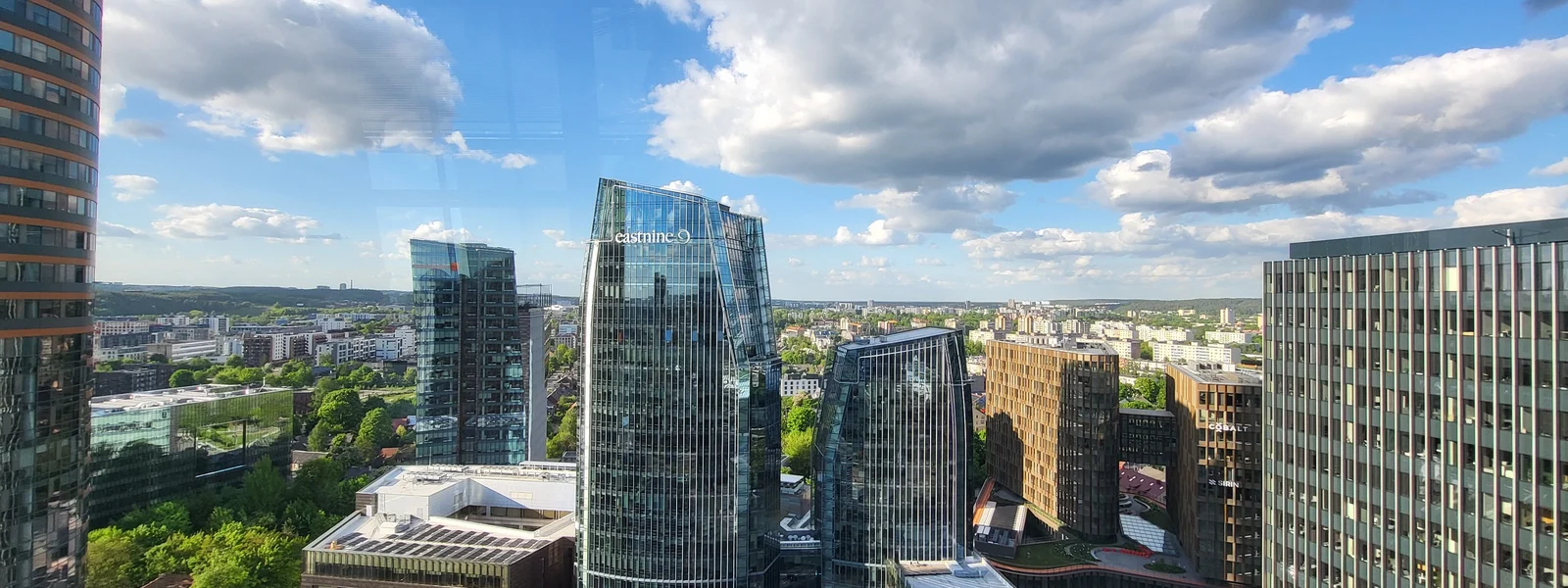
In Vilnius you have nothing to worry about. The vast baroque old town, one of the largest in Europe, the artists' republic of Uzupis, Gediminas hill, and the surrounding areas all have fast 5G and 4G from every network, so maps, mobile payments, video calls and uploads all work instantly. Vilnius is a genuine European capital with strong infrastructure and a lively scene, so connectivity is excellent. Kaunas, the second city, with its interwar modernist architecture and old town, is equally well covered. The other towns, the port city of Klaipeda on the coast, Siauliai near the Hill of Crosses, the spa town of Druskininkai in the south, and the smaller towns scattered across the country, all have solid coverage. The main roads and the routes between cities, including the journeys north toward Latvia and south toward Poland, are well covered, so getting around Lithuania keeps you online throughout. For the urban and town based parts of any Lithuanian trip, which is most of it for most visitors, connectivity is excellent and effortless.
The coast, the Curonian Spit and the forests
Lithuania has a short but special Baltic coast, anchored by the port of Klaipeda and the resort of Palanga, and the extraordinary Curonian Spit, a thin UNESCO listed ribbon of giant sand dunes and pine forest reaching down the coast toward the Russian Kaliningrad exclave. Reassuringly, the coast and the Spit are well covered, with signal in Klaipeda, Palanga, and the Spit villages like Nida and Juodkrante, so even this remote and unusual landscape keeps you connected for navigation and sharing. Inland, Lithuania has extensive forests, and the deepest interiors of the larger woods, away from roads and settlements, can thin out, relevant mainly to hikers and those venturing well off the main routes. The most remote rural corners, particularly in the sparsely populated areas, can have weaker coverage. None of these gaps is severe, and they affect specific outdoor and rural situations rather than normal travel. If your trip stays in cities, towns, the coast and along main roads, you will likely never encounter a dead zone at all.
Special cases: borders, the Spit and the deep woods
A few situations deserve a brief heads up. Lithuania borders Belarus to the east and the Russian Kaliningrad exclave to the southwest, both outside the EU, and as anywhere near a non EU border you should ensure your phone stays on a Lithuanian network rather than latching onto a signal from across the line, which would drop you out of EU carrier terms and could incur charges; keep an eye on which network your phone shows near the eastern Belarus border or the Kaliningrad frontier. The Curonian Spit is unusual: it is a long thin peninsula shared with Russian Kaliningrad at its southern end, and while the Lithuanian part is well covered, be aware near the southern border of the Spit that your phone does not pick up a Kaliningrad signal. Deep forest hikes can take you out of coverage in the densest woods. In all these cases the fix is simple: download offline maps before heading into the deepest woods, watch your network near the Belarus and Kaliningrad borders, and you will stay connected and within EU carrier terms throughout the populated country.
How to plan around the gaps
Staying connected in Lithuania is mostly straightforward, because the coverage across the populated country, including the coast and the Curonian Spit, is good, but for the handful of genuinely remote situations a few habits help. Download offline maps of any deep forest or remote rural area before you head into it, so your navigation works even without data. For hiking in the big woods, cache your trail maps while still on strong signal. Choose a travel eSIM that rides one of the strong networks or roams across several, because in the rare thin spots the ability to grab the strongest available signal closes those gaps; the operators satellite explains how to tell which network you are on. Near the Belarus and Kaliningrad borders, keep an eye on your network to stay Lithuanian and within EU carrier terms. With these minimal precautions, even adventurous travel into Lithuania's forests and the remote Curonian Spit stays connected most of the time, and the brief gaps become a pleasant break rather than a problem. Speeds hold up well year round, and the cold Baltic winters do not meaningfully degrade the network in the populated areas where you will spend your time.
Speed, seasons and what to expect
Beyond the question of where you have signal, it is worth knowing what kind of speeds to expect and whether anything affects them. In Lithuania's cities, especially Vilnius and Kaunas, 5G delivers genuinely fast speeds that handle anything you throw at them, from high definition video calls to large file uploads, with no waiting. Even the 4G that covers the populated country, including the coast and the Curonian Spit, is quick enough that most travelers would not notice the difference for everyday use. Speeds are most affected by congestion in very crowded places, the packed old town of Vilnius during a festival, the beaches of Palanga at the height of summer, where many people share the same towers, but even then Lithuania's well built networks usually cope. Unlike some northern countries with extreme climates, Lithuania's winters, while cold and snowy, do not meaningfully degrade the mobile network; the towers and equipment handle the conditions and you will have the same reliable data in a snowy January as in the long light of a summer evening. The one seasonal effect worth noting is the summer surge of visitors on the coast and the Curonian Spit, which can briefly strain the busiest spots at peak times, but this is minor and temporary. For planning purposes, assume fast reliable data everywhere populated, in every season, and you will rarely be wrong. The only thing that genuinely changes your experience is the deep forest and the most remote countryside, covered above, not the time of year or the weather, which makes Lithuania a pleasantly predictable country to stay connected in throughout the year.
Planning a trip around the coverage map
Putting the coverage picture to practical use in Lithuania is straightforward once you know the pattern. For a trip that stays in Vilnius, Kaunas, the towns, the coast, the Curonian Spit and along the main routes, which describes most visits, you can essentially ignore coverage planning, because you will have fast data everywhere you go, including on the Baltic loop journeys north to Latvia and the routes south to Poland. The planning only matters if your itinerary includes the gap zones: the deep interiors of Lithuania's extensive forests, and the most remote rural corners. For those, the routine is to download offline maps and any guides while you are still on strong signal in the nearest town, so your navigation survives the thin spots. If you are an active traveler whose trip is built around forest hiking, choose a travel eSIM that roams across multiple networks, because in marginal areas the ability to grab whichever network is strongest meaningfully improves your odds of staying connected. Near the Belarus and Kaliningrad borders, including the southern tip of the Curonian Spit, keep a casual eye on your network to stay Lithuanian and within EU carrier terms. Beyond that, there is little to plan, because Lithuania's coverage across the populated country is good enough that the gaps are the exception rather than the rule, and reassuringly even the remote feeling Curonian Spit is well covered. A useful mindset is to treat the few coverage holes as a feature of Lithuania's forested landscape: the places where your phone goes quiet, the deep woods, are the wild corners worth being present in, and a little preparation lets you enjoy them without anxiety. For nearly every traveler, though, including those on a Baltic loop or heading into Poland, Lithuania's coverage map is a reassurance rather than a constraint.
Plans for Lithuania
Lithuania eSIM plans
Prices in USD. Instant QR activation. Pick your data, land connected.
FAQ
What coverage and network performance should travelers expect in Lithuania?
Putting the coverage picture to practical use in Lithuania is straightforward once you know the pattern. For a trip that stays in Vilnius, Kaunas, the towns, the coast, the Curonian Spit and along the main routes, which describes most visits, you can essentially ignore coverage planning, because you will have fast data everywhere you go, including on the Baltic loop journeys north to Latvia and the routes south to Poland. The planning only matters if your itinerary includes the gap zones: the deep interiors of Lithuania's extensive forests, and the most remote rural corners.
How to plan around the gaps?
Staying connected in Lithuania is mostly straightforward, because the coverage across the populated country, including the coast and the Curonian Spit, is good, but for the handful of genuinely remote situations a few habits help. Download offline maps of any deep forest or remote rural area before you head into it, so your navigation works even without data. For hiking in the big woods, cache your trail maps while still on strong signal. Choose a travel eSIM that rides one of the strong networks or roams across several, because in the rare thin spots the ability to grab the strongest available signal closes those gaps; the operators satellite explains how to tell which network you are on.
What should travelers prepare before entering low-coverage areas in Lithuania?
A few situations deserve a brief heads up. Lithuania borders Belarus to the east and the Russian Kaliningrad exclave to the southwest, both outside the EU, and as anywhere near a non EU border you should ensure your phone stays on a Lithuanian network rather than latching onto a signal from across the line, which would drop you out of EU carrier terms and could incur charges; keep an eye on which network your phone shows near the eastern Belarus border or the Kaliningrad frontier.
What should travelers know about the big picture: lithuania is well covered in Lithuania?
Lithuania has built a strong, modern mobile network, and for the traveler that means signal almost everywhere you are likely to go. Four G blankets the populated country, including small towns, villages and the major routes, and 5G has rolled out across Vilnius and Kaunas and is expanding into the larger towns. The three networks, Telia, Bite and Tele2, each maintain solid infrastructure, and competition between them has kept coverage strong and prices low. In practical terms, you will have fast data in Vilnius, the largest Baltic capital after Riga, in the second city of Kaunas, and in towns like Klaipeda, Siauliai and Panevezys without a second thought.