Krakow and Southern Poland eSIM: Staying Connected
Why southern Poland is its own connectivity story
Southern Poland is the country's most visited region, anchored by Krakow, the magnificent former royal capital, and stretching down to the Tatra mountains on the Slovak border. It is a region of contrasts for connectivity: Krakow itself has some of the best mobile coverage in Poland, fast and dense, while an hour's drive south the terrain rises into mountains where signal follows the valleys and fades on the high trails. Add the historic salt mines, the somber memorial at Auschwitz, the spa towns and the alpine resort of Zakopane, and you have a region where most of your time is fully connected but a few signature experiences take you into marginal coverage. Understanding this pattern lets you enjoy the region without ever being unexpectedly cut off, and it is why southern Poland deserves its own connectivity guide rather than being lumped in with the country as a whole.
Krakow and the lowland towns
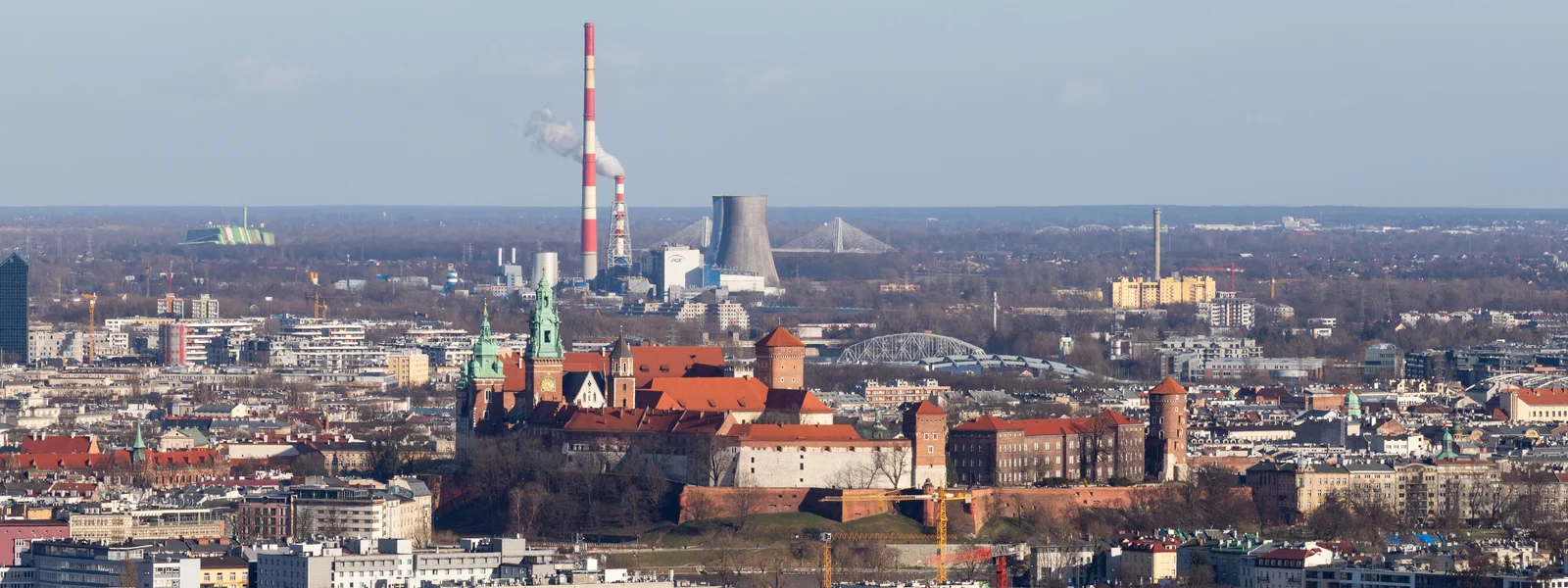
In Krakow you have nothing to worry about. The old town, the Jewish quarter of Kazimierz, the castle hill of Wawel and the surrounding districts all have fast 5G and 4G from every network, so maps, mobile payments, video calls and uploads all work instantly. The cafe scene that makes Krakow such a good base for remote workers comes with reliable wifi on top of the strong mobile coverage. The historic towns of the region, from the salt mine town of Wieliczka to the various market towns dotting the countryside, all have solid coverage. The drive to Auschwitz and the connecting roads are well covered, as is the route south toward the mountains. For the lowland, urban and town based parts of a southern Poland trip, which is most of it, connectivity is excellent and you simply do not think about it.
The Tatra mountains and Zakopane
The mountains are where you need to pay attention. Zakopane, the lively resort town at the foot of the Tatras, has good coverage, so you stay connected in town and at the major trailheads. But as you hike up into the high mountains, the dramatic peaks and deep valleys block signal, and you should expect coverage to fade on the higher trails and around the famous mountain lakes like Morskie Oko once you are deep in. This is normal mountain behavior and not a fault of the networks. The fix is simple: while you are still in Zakopane on strong signal, download offline maps of your hiking route, save any trail guides, and let people know your plans. That way your navigation works even where data does not. On the drive up and in the resort town itself you are connected, and the gaps are confined to the high alpine sections where you would want to be looking at the scenery anyway.
Transport and connectivity across the region
Getting around southern Poland is easy and mostly well connected. The train and bus links between Krakow and the surrounding towns run through covered territory, so you stay online on the journey. The drive south to Zakopane is covered along its length, with signal only thinning as you reach the mountains. If you are renting a car to explore the region, which many do, your phone navigation works throughout the lowlands and the approaches to the mountains, only needing offline backup for the highest sections. The popular day trips from Krakow, to the salt mines, to Auschwitz, to the spa towns, all stay in good coverage. For a region that includes serious mountains, southern Poland is remarkably easy to stay connected in, because the population centers and transport routes are well served and only the high wilderness drops out.
A smart setup for southern Poland
To get the most out of the region, base yourself in Krakow with a Poland eSIM that rides one of the big three networks, sized with enough data for a city stay plus your day trips. Before any mountain excursion, cache your offline maps and trail information while on strong signal in town. If your wider trip continues to Slovakia, which is just over the mountains, or to other countries, consider a regional Europe eSIM so you stay connected across the border without buying a new plan. A connected itinerary for the region might run like this: arrive in Krakow and explore the fully covered old town, take day trips to the salt mines and historic sites on strong signal, then head to Zakopane for the mountains, downloading your maps before you climb. With that setup you are online for the cultural heart of the trip and prepared for the wild edges. Southern Poland rewards a little planning with a seamless mix of connected city life and genuine mountain adventure, and the contrast between the two is part of what makes the region so memorable.
A connected itinerary through the south
To see how it all fits together, picture a week in southern Poland with connectivity handled. You arrive in Krakow and spend the first days exploring the fully covered old town, Wawel castle and the Kazimierz quarter, with fast data for maps, restaurant bookings and photo uploads throughout, working from a cafe in the afternoons if you need to. You take a day trip to the Wieliczka salt mines and another to the memorial at Auschwitz, both reachable on well covered roads and transport, your phone connected the whole way for navigation and information. Midweek you head south toward the mountains, the drive covered along its length, and settle into Zakopane, where the resort town has good signal. Before your big hike up to Morskie Oko or along the high trails, you download offline maps and trail guides while still in town on strong data, so your navigation works even as the mobile signal fades among the peaks. You spend the day in the mountains with cached maps, then return to coverage in the evening to share your photos and check in with home. The contrast between the connected cultural days in Krakow and the deliberately offline mountain day is part of the pleasure, and because you planned for it, the gap never catches you out. For the whole trip a single Poland eSIM riding one of the big three networks, sized for a week of moderate use plus your uploads, covers everything, and if you are continuing across the mountains into Slovakia, a regional plan keeps you connected over the border. Southern Poland rewards this small amount of foresight with a seamless blend of city culture and genuine alpine adventure.
The mindset for the mountains
There is a particular pleasure in southern Poland that comes from the rhythm between connection and disconnection, and embracing it makes the region more rewarding. In Krakow and the lowland towns you are fully plugged in, navigating effortlessly, sharing the spectacular old town as you go, working from a cafe if you need to, all on fast reliable data. Then you climb into the Tatras, and as the signal fades on the high trails you are gently forced into presence, with nothing to do but look at the dramatic peaks, the mountain lakes and the pine forests around you. Far from being a problem, this is one of the region's gifts, provided you have prepared by caching your maps and telling someone your plans. The mountains have always been a place people go to escape the noise, and the natural coverage gap on the high trails simply makes that escape literal. The smart traveler leans into this, treating the mountain days as a deliberate break from the screen rather than a frustrating dead zone, and returning to coverage in the evening to share the photos and reconnect. This is the right mindset for all of Poland's wild corners, the forests and the remote lakes as much as the mountains: prepare so you are never actually lost, then welcome the quiet. Southern Poland, with its seamless connected cities and its deliberately offline peaks, offers this balance better than almost anywhere, and recognizing it transforms the coverage map from a list of limitations into an invitation to be fully present where it matters most. With a single sensible eSIM, a habit of caching maps before the mountains, and the right mindset about the deliberate quiet of the high trails, southern Poland gives you the full sweep of its pleasures, from the golden old town of Krakow to the dramatic peaks of the Tatras, with connectivity that supports you in the cities and steps politely aside in the wilderness where you would rather be looking up at the mountains anyway. Southern Poland, more than almost any region in the country, rewards the traveler who understands its connectivity rhythm, the fully wired cities and the deliberately quiet mountains, and who prepares accordingly with a good eSIM and a handful of cached maps, because that small foresight unlocks the regions full range, from the bustle of Krakow market square to the silence of a high Tatra ridge, without a single moment of being unexpectedly and unwillingly cut off from the world below.
Plans for Poland
Poland eSIM plans
Prices in USD. Instant QR activation. Pick your data, land connected.
FAQ
How should travelers set up and activate an eSIM for Poland?
To get the most out of the region, base yourself in Krakow with a Poland eSIM that rides one of the big three networks, sized with enough data for a city stay plus your day trips. Before any mountain excursion, cache your offline maps and trail information while on strong signal in town. If your wider trip continues to Slovakia, which is just over the mountains, or to other countries, consider a regional Europe eSIM so you stay connected across the border without buying a new plan.
What should travelers prepare before entering low-coverage areas in Poland?
The mountains are where you need to pay attention. Zakopane, the lively resort town at the foot of the Tatras, has good coverage, so you stay connected in town and at the major trailheads. But as you hike up into the high mountains, the dramatic peaks and deep valleys block signal, and you should expect coverage to fade on the higher trails and around the famous mountain lakes like Morskie Oko once you are deep in. This is normal mountain behavior and not a fault of the networks. The fix is simple: while you are still in Zakopane on strong signal, download offline maps of your hiking route, save any trail guides, and let people know your plans. That way your navigation works even where data does not.
What is the connectivity picture in Poland?
Southern Poland is the country's most visited region, anchored by Krakow, the magnificent former royal capital, and stretching down to the Tatra mountains on the Slovak border. It is a region of contrasts for connectivity: Krakow itself has some of the best mobile coverage in Poland, fast and dense, while an hour's drive south the terrain rises into mountains where signal follows the valleys and fades on the high trails. Add the historic salt mines, the somber memorial at Auschwitz, the spa towns and the alpine resort of Zakopane, and you have a region where most of your time is fully connected but a few signature experiences take you into marginal coverage.
What should travelers know about krakow and the lowland towns in Poland?
In Krakow you have nothing to worry about. The old town, the Jewish quarter of Kazimierz, the castle hill of Wawel and the surrounding districts all have fast 5G and 4G from every network, so maps, mobile payments, video calls and uploads all work instantly. The cafe scene that makes Krakow such a good base for remote workers comes with reliable wifi on top of the strong mobile coverage. The historic towns of the region, from the salt mine town of Wieliczka to the various market towns dotting the countryside, all have solid coverage. The drive to Auschwitz and the connecting roads are well covered, as is the route south toward the mountains.