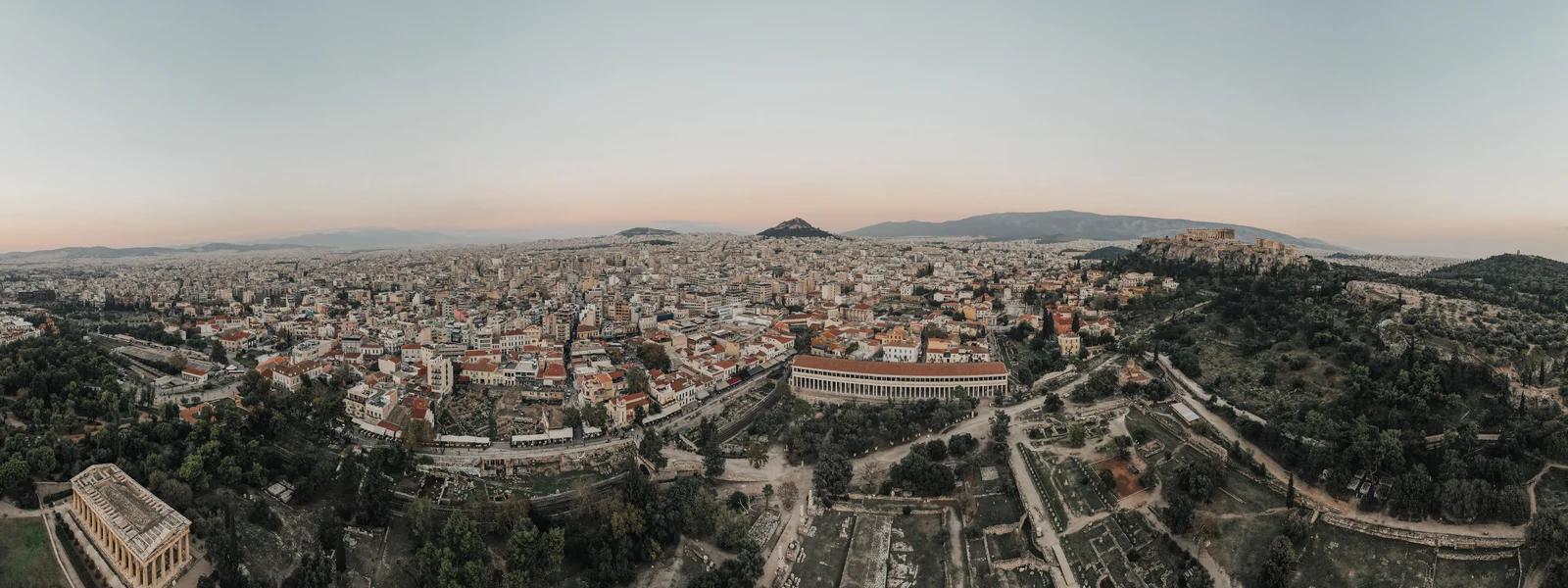
Greece for Digital Nomads: One Month on an eSIM
Greece as a remote work base
Greece has quietly become one of Europe's more appealing bases for remote workers, and its digital nomad visa, generous climate, low cost relative to western Europe and strong cafe culture have pulled in a steady stream of people working from Athens, the islands and the smaller towns. For a month long stay the connectivity calculus is different from a holiday. You are not just checking maps and posting photos, you are joining video calls, pushing files, staying reachable through the working day, and you cannot afford a connection that drops mid meeting. The encouraging news is that Greek networks in the cities and larger towns are entirely up to remote work. The thing to plan carefully is where you base yourself and how much data you buy, because a month of real work uses far more than a holiday and some island idylls have weaker signal than their photos suggest.
How much data a working month needs
A remote worker burns through data faster than a tourist because video calls, cloud syncing and constant connectivity add up. A day of moderate remote work with a couple of video calls, ongoing messaging, browsing and some cloud backup can use one to three gigabytes, and a heavy day of long video meetings can exceed that. Over a month, if you rely mainly on your eSIM rather than fixed wifi, you could need anywhere from thirty to a hundred gigabytes. In practice most nomads work from accommodation or cafes with wifi for the bulk of the day and use mobile data as backup and for being out and about, which keeps the mobile total lower. Even so, plan for a large monthly bundle or an unlimited style plan, and treat your eSIM partly as insurance for the days the apartment wifi fails, which in Greece it occasionally does.
Best bases for working
Athens is the obvious choice for reliability, with fast 5G and 4G, abundant coworking spaces and cafes, and the easiest backup options if one connection fails. It is the safe base for anyone whose work cannot tolerate downtime. Thessaloniki offers similar reliability with a lower cost and a relaxed student city feel. Among the islands, the larger and more developed ones like Crete, Rhodes and Syros offer the best balance of island life and dependable connectivity, with real towns, good coverage and coworking options. The smaller, postcard islands are wonderful for a holiday but riskier for a working month, because a single mast and occasional outages do not mix well with a packed meeting schedule. If you want island life with work security, choose a larger island and a base near its main town, and always verify the wifi before committing to a long stay.
Single country or regional plan, and reliability
For a month based in Greece, a Greece specific eSIM with a large or unlimited allowance is usually the most cost effective choice. But many nomads moving around Europe prefer a regional Europe plan that follows them across borders, which makes sense if Greece is one stop on a longer European circuit. Because Greece is in the EU, a regional plan works here identically. On reliability, the key habit is redundancy: keep your eSIM topped up as a backup to your accommodation wifi, and for important calls choose a base with strong signal and a wired or stable wifi connection rather than relying on mobile data alone. Greek 4G handles video calls well in covered areas, but no mobile network anywhere is as rock solid as good fixed broadband, so the professional move is to have both available.
Realistic monthly cost and managing data
The cost of staying connected for a working month in Greece is modest by western standards. A large data eSIM or an unlimited style plan for a month typically costs a manageable amount that is far below what home carrier roaming would charge and competitive with a local Greek prepaid plan, without the registration hassle. To manage data through the month, lean on wifi for heavy tasks like large uploads, video streaming and backups, reserve mobile data for calls and connectivity on the move, and monitor your usage in your phone's settings so you can top up before you run dry rather than after. Set your most demanding work, big file transfers and long video calls, to happen on the most reliable connection available. Do that and a month in Greece is not just feasible but genuinely pleasant from a connectivity standpoint, which is a large part of why so many remote workers keep choosing it.
The digital nomad visa and longer stays
Greece introduced a digital nomad visa that has made longer remote work stays much more practical, and it is worth understanding if you are considering more than a tourist visit. The visa allows non EU remote workers to live in Greece while working for employers or clients outside the country, typically for up to a year with the possibility of extension, subject to income requirements and the usual paperwork. For connectivity, a stay of this length changes the calculation: while a travel eSIM is ideal for a month, someone settling in for many months may eventually want a local Greek mobile plan or home broadband for the bulk of their data, using the eSIM as a flexible backup or for the initial period before they set up locally. EU citizens, of course, can live and work in Greece freely without a special visa, and can use either carrier coverage from their EU plan or a local Greek plan. The practical point for the one month nomad is that a generous travel eSIM is the right tool, giving you reliable connectivity from day one without the commitment of a local contract, and you can always reassess if a month turns into a longer stay. The visa simply makes Greece a realistic place to extend that month into a season, which a growing number of remote workers do.
Coworking, cafes and connectivity backup
A successful working month in Greece leans on having layers of connectivity rather than depending on any single source, and the country supports this well. Athens and Thessaloniki have a solid coworking scene with reliable business grade internet, and the larger islands and tourist towns increasingly offer coworking spaces aimed at the nomad crowd. Cafes throughout Greece generally offer free wifi, though quality varies and you should not assume a beachside taverna has fast internet. The professional approach is to identify your primary work connection, usually your accommodation wifi or a coworking space, and keep your eSIM topped up as a reliable backup for the days the primary connection fails or you need to work from somewhere new. This layered setup means a wifi outage at your apartment does not derail your day, because you can tether to your phone's eSIM data and carry on. For video heavy work, scout a base with strong signal and stable internet before committing, since the difference between a smooth month and a frustrating one often comes down to the reliability of your main connection. Greece rewards a little planning here: pick your bases for connectivity as well as for the view, keep the eSIM as your safety net, and a remote working month flows easily.
Building a connectivity routine for the working month
A productive month working from Greece comes down to building a connectivity routine in your first few days and then trusting it, so your attention goes to your work and the country rather than to whether you will have signal. In the first days, establish your primary connection, whether that is your accommodation wifi, a nearby coworking space, or a reliable cafe, and test it with the kind of work you actually do, joining a video call and pushing a real file to see how it holds up. Set up your eSIM as the backup layer, topped up and ready, so a wifi failure means tethering to your phone rather than losing the day. Identify a fallback location, a coworking space or a cafe with strong internet, that you can decamp to if your primary connection fails for an extended period. Establish when you do your most demanding work, big uploads and important video meetings, and aim to do those on your most reliable connection at predictable times. Keep an eye on your eSIM data balance so a backup heavy week does not exhaust it unexpectedly. Once this routine is in place, usually within the first three or four days, the rest of the month flows: you know where to work, what your backup is, and how to handle a connection failure, so connectivity becomes invisible infrastructure rather than a daily worry. This is the difference between nomads who find Greece a frustrating place to work and those who extend their month into a season, and it comes down to a few days of deliberate setup at the start, after which the country's good urban connectivity and your layered backup carry you through comfortably.
Plans for Greece
Greece eSIM plans
Prices in USD. Instant QR activation. Pick your data, land connected.
FAQ
How much data and what kind of plan do travelers need in Greece?
The cost of staying connected for a working month in Greece is modest by western standards. A large data eSIM or an unlimited style plan for a month typically costs a manageable amount that is far below what home carrier roaming would charge and competitive with a local Greek prepaid plan, without the registration hassle. To manage data through the month, lean on wifi for heavy tasks like large uploads, video streaming and backups, reserve mobile data for calls and connectivity on the move, and monitor your usage in your phone's settings so you can top up before you run dry rather than after.
How much data a working month needs?
A remote worker burns through data faster than a tourist because video calls, cloud syncing and constant connectivity add up. A day of moderate remote work with a couple of video calls, ongoing messaging, browsing and some cloud backup can use one to three gigabytes, and a heavy day of long video meetings can exceed that. Over a month, if you rely mainly on your eSIM rather than fixed wifi, you could need anywhere from thirty to a hundred gigabytes. In practice most nomads work from accommodation or cafes with wifi for the bulk of the day and use mobile data as backup and for being out and about, which keeps the mobile total lower.
What should travelers know about greece as a remote work base in Greece?
Greece has quietly become one of Europe's more appealing bases for remote workers, and its digital nomad visa, generous climate, low cost relative to western Europe and strong cafe culture have pulled in a steady stream of people working from Athens, the islands and the smaller towns. For a month long stay the connectivity calculus is different from a holiday. You are not just checking maps and posting photos, you are joining video calls, pushing files, staying reachable through the working day, and you cannot afford a connection that drops mid meeting. The encouraging news is that Greek networks in the cities and larger towns are entirely up to remote work.
What should travelers know about best bases for working in Greece?
Athens is the obvious choice for reliability, with fast 5G and 4G, abundant coworking spaces and cafes, and the easiest backup options if one connection fails. It is the safe base for anyone whose work cannot tolerate downtime. Thessaloniki offers similar reliability with a lower cost and a relaxed student city feel. Among the islands, the larger and more developed ones like Crete, Rhodes and Syros offer the best balance of island life and dependable connectivity, with real towns, good coverage and coworking options. The smaller, postcard islands are wonderful for a holiday but riskier for a working month, because a single mast and occasional outages do not mix well with a packed meeting schedule.
Can I cancel an eSIM purchase if I do not use it?
Yes. An unused eSIM can be cancelled within 30 days as long as it has not been used on the destination network. Once it has connected and been used, this condition no longer applies.