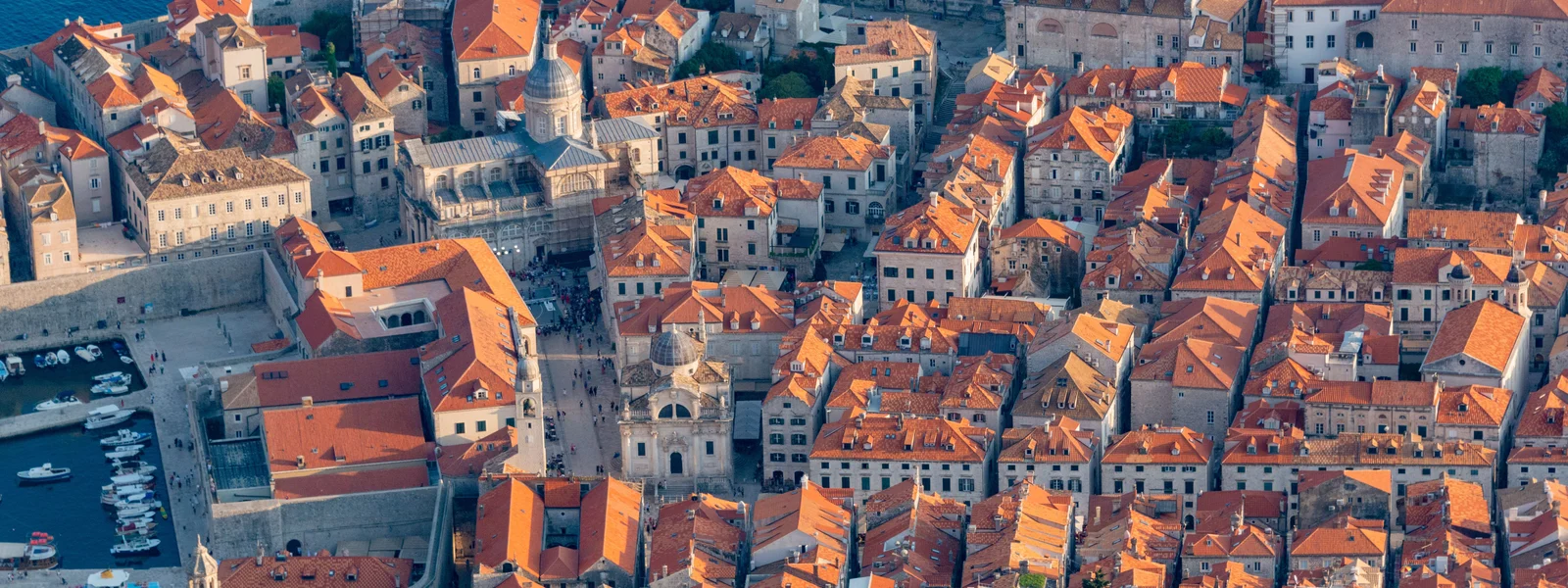
Dalmatian Coast and Islands eSIM: Staying Connected Island to Island
Why Dalmatia is where connectivity planning pays off
Dalmatia is the Croatia most visitors come for: the long sun drenched coast from Zadar through Split down to Dubrovnik, and the string of beautiful islands just offshore, from Brac and Hvar to Korcula, Vis and beyond. It is also where a little connectivity planning makes the biggest difference, because a Dalmatian trip is rarely static. You hop between coastal towns, catch ferries and catamarans to islands, perhaps charter a boat, and rely on your phone for ferry times, bookings, navigation and finding the next konoba for dinner. The coverage here is good overall, better than the rugged geography suggests, but it is not uniform, and the gaps cluster exactly where a moving traveller notices them: on the water, on remote island ends, and in the busy season when networks are congested. This regional deep dive covers what to expect and how to set up so the island life stays connected.
The mainland coast: Split, Zadar, Dubrovnik
The Dalmatian mainland coast is well covered and easy. Split, the region's hub and ferry gateway, has fast, reliable data including 5G in much of the city, as does Zadar to the north and Dubrovnik in the far south. The coastal towns in between, Sibenik, Trogir, Makarska and the rest, all have solid 4G, and the coastal motorway and main coastal road keep you connected as you drive between them with only short dips in the most remote stretches. For the mainland portion of a Dalmatian trip, connectivity is a non issue and any reputable eSIM performs well. The one mainland quirk to remember is the far south, where the coastal road to Dubrovnik crosses the short Bosnian strip at Neum, a non EU pocket where an EU eSIM or roaming can misbehave, covered in the roaming satellite.
The islands: great near towns, thinner at the edges
The Dalmatian islands are the heart of the experience and mostly well connected where it counts. The big, popular islands such as Brac, Hvar and Korcula have good coverage around their main towns, ports and resort areas, so you will rarely lack signal in Hvar town, Bol or Korcula town. The coverage thins as you move to the quieter ends of these islands and onto the smaller, less developed islands like Vis or the tiny ones reached by local ferry, where a single mast may serve a wide area and signal fades on a remote beach or a hilltop. This is not a reason to avoid them, it is the charm, but it does mean downloading offline maps and your ferry tickets before you set off for a quiet cove, and favouring Hrvatski Telekom or A1 for the broadest island reach.
Ferries, catamarans and sailing
Getting between the islands is where signal gets interesting. On Jadrolinija ferries and the fast catamarans that link Split to the islands, you will have signal near the ports and along routes that hug inhabited coast, but expect gaps in open water on longer crossings. For most short hops the gap is brief, but on longer routes you can be offline for a stretch, so download your onward tickets, accommodation details and entertainment before boarding. Sailing, hugely popular in Dalmatia, takes this further: a charter yacht spends real time in open water and in remote anchorages where coverage is patchy or absent. Sailors should treat connectivity as intermittent, download charts, weather and bookings in advance, and rely on the eSIM near coast and harbours rather than expecting constant signal at sea.
Summer congestion and the smart setup
One factor that catches people out in Dalmatia is not coverage but congestion. In July and August the popular towns and islands swell with visitors, and the networks, however good, get busy, so in peak season in a packed Hvar or Dubrovnik you may notice slower speeds at the busiest times even with full signal bars. It is rarely a real problem, but it is worth knowing if a video upload crawls on a August evening in a crowded harbour. The smart setup for a Dalmatian trip ties everything together: buy a generous Croatia eSIM before you arrive, favour Hrvatski Telekom or A1 if you are heading to quieter islands or sailing, download offline maps and tickets for every island and crossing, keep your home number alive for codes with its data roaming off, and disable data roaming through the Neum strip if you drive south. Do that and the islands stay connected without you thinking about it.
A connected Dalmatian itinerary, start to finish
To see how all of this works across a real trip, follow a connected Dalmatian itinerary from arrival to departure. You land in Split with your Croatia eSIM already installed and tested from home, so you walk out of the airport online, order a ride and find your accommodation without hunting for wifi. You spend a few days in Split on strong city coverage, then catch a catamaran to Hvar, downloading your ticket, your Hvar accommodation details and an offline map of the island before you board, so the open water gap on the crossing is a non event. On Hvar you have good signal in town and prepare offline before walking to a remote cove, where the signal naturally fades. You hop onward to Korcula the same way, ticket and map saved in advance, then return to the mainland and pick up a hire car to drive south. On the coastal drive your navigation runs on strong main road coverage, and as you approach Dubrovnik you either take the Peljesac Bridge or disable data roaming through the Neum strip, having read the roaming satellite. Throughout, your home number stays alive for the verification codes your bank and airline send, with its data roaming switched off, and you call home each evening over WhatsApp on the apartment wifi. That single worked example contains every principle in this satellite: install and test early, download offline before every crossing and remote walk, favour the strong networks, mind the Neum quirk, and keep the home number for codes. Repeat that pattern with your own islands and towns and a Dalmatian trip stays seamlessly connected from the first catamaran to the last sunset over the old town walls.
Beyond the headline islands: the quieter Dalmatia
Most visitors stick to the headline Dalmatian names, Split, Hvar, Korcula and Dubrovnik, but a growing number venture to the quieter corners of the region, and connectivity there deserves its own note since it is where the coverage caveats bite hardest and reward the most preparation. Islands like Vis, the furthest of the major Central Dalmatian islands and long restricted as a military base, retain a wonderfully undeveloped feel, and while the main town of Vis and Komiza have coverage, the island's remote bays and the famous Blue Cave excursion to nearby Bisevo can drop signal, so download maps and trip details in advance. The Kornati archipelago, a national park of dozens of largely uninhabited islands beloved by sailors, has very sparse coverage by its nature, so anyone exploring it by boat should treat it as an offline zone, downloading charts and weather before setting out and not relying on a live connection among the islets. Smaller inhabited islands like Lastovo, one of the most remote in the Adriatic, have basic coverage in their villages but little beyond. Even on the well known islands, the inland hill villages and the trails to hidden beaches reach the edges of coverage. The point is not to deter you from these places, which are among the most rewarding in Croatia precisely because they are quiet, but to set expectations and prompt the right preparation: favour Hrvatski Telekom or A1 for their broader reach, download everything you might need offline before you go remote, tell someone your plans if you are heading somewhere genuinely isolated, and embrace the disconnection as part of the appeal rather than fighting it. The headline islands give you the connected, convenient Dalmatia, while the quieter ones give you the wild and beautiful version, and knowing which you are heading into lets you prepare your phone accordingly so that neither the convenience nor the escape catches you off guard. The final thought for Dalmatia is to lean into the contrast rather than resist it: the region offers both a wonderfully connected version, in Split and the main island towns where everything just works, and a wild, quiet version out among the remote bays and uninhabited islets where signal fades and the appeal is precisely the escape. A well set up eSIM with downloaded offline maps lets you move freely between the two without friction, connected when you want to be and unbothered when you are off the grid. Prepare for the gaps, favour the strong networks, and Dalmatia gives you the best of both, the convenience and the wilderness, on a single trip.
Plans for Croatia
Croatia eSIM plans
Prices in USD. Instant QR activation. Pick your data, land connected.
FAQ
How should travelers set up and activate an eSIM for Croatia?
One factor that catches people out in Dalmatia is not coverage but congestion. In July and August the popular towns and islands swell with visitors, and the networks, however good, get busy, so in peak season in a packed Hvar or Dubrovnik you may notice slower speeds at the busiest times even with full signal bars. It is rarely a real problem, but it is worth knowing if a video upload crawls on a August evening in a crowded harbour.
What is the connectivity picture in Croatia?
Dalmatia is the Croatia most visitors come for: the long sun drenched coast from Zadar through Split down to Dubrovnik, and the string of beautiful islands just offshore, from Brac and Hvar to Korcula, Vis and beyond. It is also where a little connectivity planning makes the biggest difference, because a Dalmatian trip is rarely static. You hop between coastal towns, catch ferries and catamarans to islands, perhaps charter a boat, and rely on your phone for ferry times, bookings, navigation and finding the next konoba for dinner.
What should travelers prepare before entering low-coverage areas in Croatia?
The Dalmatian islands are the heart of the experience and mostly well connected where it counts. The big, popular islands such as Brac, Hvar and Korcula have good coverage around their main towns, ports and resort areas, so you will rarely lack signal in Hvar town, Bol or Korcula town. The coverage thins as you move to the quieter ends of these islands and onto the smaller, less developed islands like Vis or the tiny ones reached by local ferry, where a single mast may serve a wide area and signal fades on a remote beach or a hilltop.
What should travelers know about the mainland coast: split, zadar, dubrovnik in Croatia?
The Dalmatian mainland coast is well covered and easy. Split, the region's hub and ferry gateway, has fast, reliable data including 5G in much of the city, as does Zadar to the north and Dubrovnik in the far south. The coastal towns in between, Sibenik, Trogir, Makarska and the rest, all have solid 4G, and the coastal motorway and main coastal road keep you connected as you drive between them with only short dips in the most remote stretches. For the mainland portion of a Dalmatian trip, connectivity is a non issue and any reputable eSIM performs well.