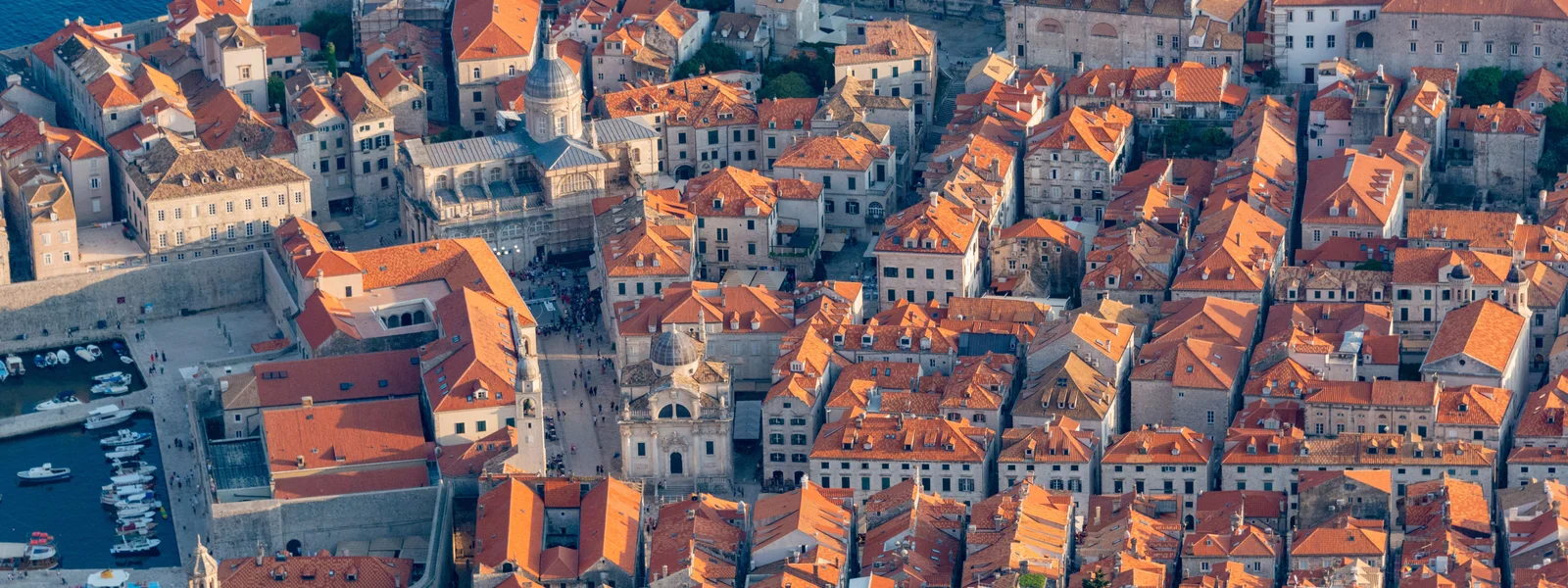
Croatia for Digital Nomads: One Month on an eSIM
Why Croatia works as a one month base
Croatia has quietly become one of Europe's most appealing bases for remote workers, and a month here is a realistic, rewarding stay rather than just a holiday. The appeal is a combination of things: a long beautiful coast, a safe and relaxed pace of life, a cost of living lower than western Europe, a Mediterranean climate, fast and reliable internet in the cities and main coastal towns, and a dedicated digital nomad visa that makes longer stays straightforward for non EU citizens. Split has emerged as the headline nomad hub with a real community, while Zagreb offers a proper year round city with cafes, coworking and culture. For a connected month you want dependable data to back up your accommodation wifi, and this satellite covers how much you need, where to base yourself, and what it realistically costs.
How much data a working month really needs
A remote worker uses far more data than a holidaymaker, mostly because of video calls and cloud tools. A day of video meetings, messaging, email, document syncing and general browsing can easily run one to three gigabytes, and a heavy day of back to back video calls plus some evening streaming can push past that. Over a month, if your accommodation and coworking wifi carry the bulk of your work, your mobile data is a backup and a mobile office for cafe days and trips, which might mean ten to thirty gigabytes across the month. If you intend to rely on mobile data as your primary connection, perhaps because you move around a lot or your apartment wifi is weak, plan for fifty gigabytes or more, or an unlimited style plan. The key insight is that wifi reliability varies, so having a solid eSIM as a fallback keeps a dropped router from costing you a client call.
Best bases: Split, Zagreb and the alternatives
Split is the obvious first choice for a nomad month, with a genuine community, plenty of coworking and cafe options, an airport and ferry hub for weekend island trips, and reliable connectivity. Zagreb suits anyone who wants a real European capital with four season life, museums, restaurants and a less touristy rhythm, plus the best year round infrastructure in the country. Beyond those, Zadar is a smaller, walkable coastal option with good connectivity, Rijeka offers an authentic working port city, and Dubrovnik is stunning but expensive and crowded in season, better for a short stint than a base. The islands are tempting but trickier for a working month, since connectivity and amenities thin out, so most nomads use them for weekends rather than a base. Wherever you settle, the cities and main towns give you the connectivity a working month needs.
Single country or regional, and reliability
For a month based in Croatia, a Croatia specific plan with a large or unlimited allowance is usually the cleanest and most cost effective choice. If you plan to hop to Italy, Slovenia or elsewhere in Europe on weekends, a regional Europe plan that covers many countries can be worth the small premium so one plan follows you across borders, though watch the non EU neighbours like Bosnia and Montenegro which a regional EU plan may not include. On reliability, the practical move for a remote worker is redundancy: rely on your accommodation or coworking wifi as primary, and keep the eSIM ready as an instant backup so a wifi outage during a meeting is a thirty second switch rather than a crisis. Many nomads tether their laptop to the phone's eSIM data when wifi fails, which Croatian 4G and 5G handle comfortably in the cities.
Realistic monthly cost and a simple setup
The connectivity cost of a month in Croatia is modest. A large monthly eSIM data bundle or an unlimited style plan typically costs a manageable amount that is dwarfed by your accommodation, and it buys you the freedom to work from a cafe, a beach town or a ferry without worrying about wifi. Add that to Croatia's generally lower cost of living compared with western Europe and the month works out very reasonably for the quality of life. A simple setup that works well: install a generous Croatia eSIM before you arrive, use your apartment and coworking wifi as your main connection, and keep the eSIM as a tethering backup for calls and deadlines. With the digital nomad visa handling the legal side for longer non EU stays and the connectivity sorted, Croatia is one of the easier and more pleasant places in Europe to spend a productive, well connected month.
Building a reliable connectivity stack for the month
To make a working month genuinely dependable rather than just workable, think in terms of a connectivity stack with layers of redundancy, because a remote income depends on never being unreachable at the wrong moment. The foundation is your accommodation wifi, which in a Croatian city apartment or coworking space is generally fast and reliable and should carry the bulk of your video calls and heavy uploads. The second layer is your Croatia eSIM with a generous or unlimited data allowance, which serves as both your mobile office for cafe and beach working days and your instant backup when the apartment router fails mid meeting, a switch that takes seconds when the eSIM is already installed and ready. The third layer, for the truly cautious or those in weaker spots, is the ability to tether your laptop to your phone's eSIM data, which Croatian 4G and 5G handle comfortably in the cities and which turns a wifi outage into a shrug rather than a crisis. Set this stack up at the start of your month and test each layer once, so you know the eSIM connects, tethering works and you can switch between wifi and mobile data smoothly. Add the practical habits that make remote work pleasant here, choosing Split or Zagreb for their infrastructure and community, downloading large files overnight on wifi, and keeping an eye on time zones for calls home, and a month in Croatia becomes one of the most enjoyable and productive remote working stints available in Europe, with the connectivity quietly handled and your attention free for the work and the coast.
The digital nomad visa and the practical month
For non EU remote workers in particular, Croatia's dedicated digital nomad visa is worth understanding because it is part of what makes a longer stay genuinely viable rather than a visa run scramble, and it shapes how you should think about a connected month. Croatia introduced a digital nomad residence permit that lets eligible non EU citizens stay and work remotely for a foreign employer or their own foreign registered business for up to a year, without it counting as local employment, and the application is relatively straightforward by European standards. This matters for connectivity planning because it changes the time horizon: if you are settling in for several months under the visa rather than a single month on a tourist entry, you might reasonably consider a local Croatian SIM or subscription alongside or instead of a travel eSIM, since over a long stay a local plan's cost per gigabyte and the convenience of a Croatian number for local services can outweigh the eSIM's arrival convenience. For a single month, though, the travel eSIM remains the cleaner choice, install before arrival, generous or unlimited data, ready as a backup to your apartment and coworking wifi. The broader practical picture of a nomad month in Croatia is appealing: choose Split for community and coast or Zagreb for year round city life, find accommodation with verified fast wifi since that is your primary connection, join one of the coworking spaces that have grown up in both cities for reliable infrastructure and a social anchor, and keep your eSIM topped up as the safety net that means a router outage never costs you a client call. Add Croatia's lower cost of living, its safety, its climate and the ease of weekend escapes to the islands, and a connected month here stands out as one of Europe's most rewarding remote working bases, with both the legal framework and the connectivity infrastructure mature enough to take seriously rather than improvise around. To end on the simplest possible summary for a nomad month, the formula that works is this: sort your visa situation if you are staying long enough to need it, choose Split or Zagreb as your base for their infrastructure and community, book accommodation with verified fast wifi as your primary connection, install a generous Croatia eSIM before you arrive as your backup and mobile office, and keep it topped up so a wifi outage never threatens a deadline. Get those few foundations right and the connectivity side of remote working in Croatia quietly takes care of itself, leaving you free to enjoy what actually draws people here, the coast, the climate, the pace and the ease of a productive month in one of Europe's most pleasant and affordable bases.
Plans for Croatia
Croatia eSIM plans
Prices in USD. Instant QR activation. Pick your data, land connected.
FAQ
How much data and what kind of plan do travelers need in Croatia?
The connectivity cost of a month in Croatia is modest. A large monthly eSIM data bundle or an unlimited style plan typically costs a manageable amount that is dwarfed by your accommodation, and it buys you the freedom to work from a cafe, a beach town or a ferry without worrying about wifi. Add that to Croatia's generally lower cost of living compared with western Europe and the month works out very reasonably for the quality of life. A simple setup that works well: install a generous Croatia eSIM before you arrive, use your apartment and coworking wifi as your main connection, and keep the eSIM as a tethering backup for calls and deadlines.
How much data a working month really needs?
A remote worker uses far more data than a holidaymaker, mostly because of video calls and cloud tools. A day of video meetings, messaging, email, document syncing and general browsing can easily run one to three gigabytes, and a heavy day of back to back video calls plus some evening streaming can push past that. Over a month, if your accommodation and coworking wifi carry the bulk of your work, your mobile data is a backup and a mobile office for cafe days and trips, which might mean ten to thirty gigabytes across the month.
Why Croatia works as a one month base?
Croatia has quietly become one of Europe's most appealing bases for remote workers, and a month here is a realistic, rewarding stay rather than just a holiday. The appeal is a combination of things: a long beautiful coast, a safe and relaxed pace of life, a cost of living lower than western Europe, a Mediterranean climate, fast and reliable internet in the cities and main coastal towns, and a dedicated digital nomad visa that makes longer stays straightforward for non EU citizens. Split has emerged as the headline nomad hub with a real community, while Zagreb offers a proper year round city with cafes, coworking and culture.
What should travelers know about best bases: split, zagreb and the alternatives in Croatia?
Split is the obvious first choice for a nomad month, with a genuine community, plenty of coworking and cafe options, an airport and ferry hub for weekend island trips, and reliable connectivity. Zagreb suits anyone who wants a real European capital with four season life, museums, restaurants and a less touristy rhythm, plus the best year round infrastructure in the country. Beyond those, Zadar is a smaller, walkable coastal option with good connectivity, Rijeka offers an authentic working port city, and Dubrovnik is stunning but expensive and crowded in season, better for a short stint than a base.
Can I cancel an eSIM purchase if I do not use it?
Yes. An unused eSIM can be cancelled within 30 days as long as it has not been used on the destination network. Once it has connected and been used, this condition no longer applies.