Coast and Troodos eSIM Guide: Beaches, Mountains and Coverage
Connectivity along the southern coast
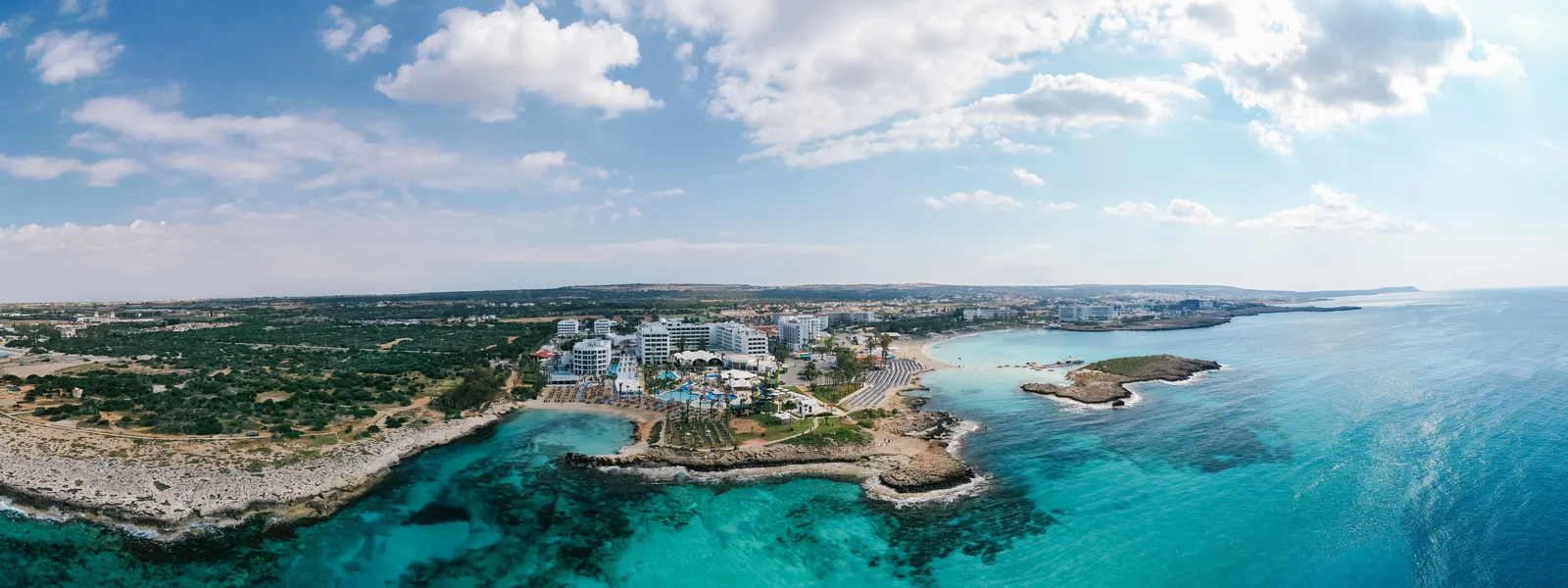
The southern coast of Cyprus, the focus of much of the island tourism, is well covered, so a beach and resort holiday keeps you fully online, with the usual summer capacity consideration in the busiest spots. The coast runs from Paphos in the west, with its historic harbour, mosaics and tombs, through the major resort and business city of Limassol on the south coast, to the Larnaca area with the main airport and the lively Ayia Napa and Protaras resorts in the east, famous for their beaches and nightlife. Along all of this populated, touristed coast, the southern operators, Cyta, Epic and PrimeTel, provide comprehensive coverage with widespread 5G and pervasive 4G, so navigating the coast, sharing the beaches and the turquoise sea, and staying in touch are all effortless, your standard Cyprus eSIM or EU carrier terms working reliably throughout the coastal areas. The one coastal consideration is summer capacity, since the busy resorts, particularly the lively Ayia Napa and the popular beaches of Limassol, Paphos and the east, fill with visitors in peak season, so the networks carry heavy load at the busiest times, which is where a 5G capable plan helps maintain a fast connection in the crowds. Aside from this peak season capacity, the coast is excellently covered, with no gaps to plan around, so a typical beach and resort holiday along the southern Cyprus coast is a seamlessly connected experience, the connection fading into the background while the sun, the sea and the historic coastal towns take centre stage, all easy to enjoy with the very widely spoken English smoothing every interaction. For the coastal trip that most Cyprus visitors take, connectivity is simply not a concern beyond choosing a 5G capable plan for the summer crowds.
Into the Troodos mountains
The Troodos mountains, rising in the centre of the island, are a beautiful contrast to the coast and a popular excursion, but they are where coverage thins, so a Troodos trip calls for the offline map habit and ideally Cyta based coverage. The Troodos are a forested range, home to hill villages, the painted Byzantine churches and monasteries that are a UNESCO recognised cultural highlight, wine villages on the lower slopes, forest trails, and in winter modest skiing around Mount Olympus. For coverage, the pattern is the familiar mountain one. Near the villages, the monasteries, the main roads and the more developed spots, coverage is generally present and usable, so you are not cut off in the Troodos. But as you climb the higher slopes, venture onto the forest trails, or reach the remoter corners and deeper valleys, the signal thins and can drop, as mountainous terrain blocks it everywhere. This is normal mountain behaviour and far less severe than in the great ranges of larger countries, the Troodos being a relatively compact range, but it is real. The standard and effective response is to download offline maps of the Troodos before heading up, while you still have a good signal on the coast or in a town, so your navigation continues regardless of the live signal, letting you find the villages, the painted churches, the monasteries, the viewpoints and the trails and navigate the winding mountain roads even where coverage fades. A plan riding the incumbent Cyta network, with its strong rural and mountain reach, may hold a signal better in the harder to cover Troodos areas, so for serious mountain travel a Cyta based or multi network plan is worth seeking. With offline maps loaded and ideally Cyta based coverage, the Troodos patchy signal becomes a manageable quirk rather than a problem, and you can explore this scenic, culturally rich mountain region with navigation always working, returning to full coverage as you descend toward the coast and towns.
Offline maps and mountain preparation
Because the Troodos mountains are the one part of a typical southern Cyprus trip where coverage genuinely thins, a little preparation makes the difference between smooth navigation and frustration, and offline maps are the key measure. Before heading into the Troodos, while you still have a good signal on the coast or in a town like Limassol or Paphos at the foot of the mountains, open your mapping app and download offline maps of the Troodos area, covering the villages, the roads and the regions you plan to explore. Once downloaded, these maps work without any signal, using the phone GPS to show your position and guide you along the mountain roads and to the villages, churches and viewpoints, so even where the live data signal fades on the higher slopes or in the forests, your navigation continues uninterrupted. This is the single most important preparation for a Troodos trip, and it uses no ongoing data once downloaded, so it does not affect your data plan sizing. Beyond offline maps, a few other measures help. Downloading any information you want about the painted churches, the monasteries or the wine villages while still on a good signal means you have it even where coverage is patchy. If your eSIM plan allows network selection, choosing Cyta for its strong mountain reach may help hold a signal in more places. Carrying a power bank is wise, since searching for a weak signal drains the battery faster, and a long day exploring the mountains can run the phone down. And letting someone know your route is sensible for any mountain excursion where you might be briefly out of signal. With offline maps downloaded, key information saved, ideally Cyta based coverage, a charged power bank and a known route, a Troodos trip is well prepared, and the patchy mountain coverage becomes a non issue, letting you enjoy the forests, the villages, the painted churches and the mountain air with navigation always working, a simple preparation that transforms the one tricky coverage area of a southern Cyprus trip into a smooth experience.
Data planning for coast and mountains
Planning data for a trip combining the southern coast and the Troodos mountains is straightforward, since the coast is well covered and the mountains are handled by offline maps rather than extra data, so a single sensible Cyprus plan covers both. For the coast, where you will likely spend most of your time on a beach and resort holiday, your data use is the usual holiday pattern, navigation, photo sharing of the beaches and historic towns, social media and some streaming, all light to moderate and easily covered by a sensible plan, with the coast excellent coverage ensuring it works throughout, and a 5G capable plan helping in the busy summer resorts. For the Troodos mountains, the key point for data planning is that the offline maps you download for the patchy coverage use no ongoing data once downloaded, so the mountains do not increase your data needs, just your preparation, meaning you size your plan for your coastal use and the mountains add little. So a single Cyprus plan, sized for your overall trip with the coast as the main consideration, covers both the well connected coast and the Troodos, with offline maps bridging the mountain coverage gaps. The general southern Cyprus approach applies, estimate a couple of gigabytes a day for your coastal use, lean on accommodation and resort wifi for heavy tasks, multiply by your stay, add a buffer, and choose a 5G capable plan for the summer crowds, ideally Cyta based if the Troodos feature prominently. Two reminders. The Troodos need offline maps rather than extra data. And remember that all this southern coverage does not extend to the Turkish administered north, so a coast and mountains trip in the south is fully covered by your plan, while any northern excursion is a separate matter. With a single well chosen Cyprus plan, offline maps for the Troodos, and 5G for the summer coast, a trip combining the beaches and the mountains of southern Cyprus is seamlessly connected, the coast keeping you online and the mountains prepared for, letting you enjoy the island striking contrast of sea and forested peaks.
Choosing the right eSIM for coast and mountains
Selecting the right eSIM for a trip combining the southern coast and the Troodos mountains comes down to a single well chosen Cyprus plan, since both are in the Republic of Cyprus in the south and covered by the same plan, with a couple of Cyprus specific priorities. The plan must cover the Republic of Cyprus, which a standard Cyprus or European eSIM does, giving the excellent coastal coverage and the usable village and main road coverage in the Troodos. The first priority is 5G access, worth having for the crowd capacity benefit in the busy summer coastal resorts, so confirm the plan is not restricted to 4G if you are visiting in peak season. The second priority, if the Troodos mountains feature prominently in your trip, is the host network, with a plan riding the incumbent Cyta network, which has the strongest rural and mountain reach, or a multi network plan, preferable for holding a signal better in the harder to cover mountain areas, though offline maps remain the main measure for the Troodos regardless of network. The third consideration is a sensible data allowance sized for your overall trip, with the coast as the main driver since the mountains use offline maps rather than data, and a validity window covering your stay. Because the coast is well covered and the mountains are handled by offline maps, a single Cyprus plan covers both seamlessly, so you do not need separate arrangements for the coast and the mountains, just one plan covering the Republic of Cyprus, ideally with 5G for the summer coast and Cyta based coverage for the Troodos. The one firm understanding, as throughout Cyprus, is that this southern coverage does not extend to the Turkish administered north, so your coast and mountains plan covers the south fully while any northern excursion is a separate matter. With a single well chosen Cyprus eSIM, 5G for the summer coast, Cyta based coverage for the Troodos, and offline maps for the mountains, a trip combining the beaches and the forested peaks of southern Cyprus is seamlessly connected, the one plan following you from the turquoise coast to the painted mountain churches.
Plans for Cyprus
Cyprus eSIM plans
Prices in USD. Instant QR activation. Pick your data, land connected.
FAQ
How much data and what kind of plan do travelers need in Cyprus?
Planning data for a trip combining the southern coast and the Troodos mountains is straightforward, since the coast is well covered and the mountains are handled by offline maps rather than extra data, so a single sensible Cyprus plan covers both. For the coast, where you will likely spend most of your time on a beach and resort holiday, your data use is the usual holiday pattern, navigation, photo sharing of the beaches and historic towns, social media and some streaming, all light to moderate and easily covered by a sensible plan, with the coast excellent coverage ensuring it works throughout, and a 5G capable plan helping in the busy summer resorts.
What should travelers prepare before entering low-coverage areas in Cyprus?
Because the Troodos mountains are the one part of a typical southern Cyprus trip where coverage genuinely thins, a little preparation makes the difference between smooth navigation and frustration, and offline maps are the key measure. Before heading into the Troodos, while you still have a good signal on the coast or in a town like Limassol or Paphos at the foot of the mountains, open your mapping app and download offline maps of the Troodos area, covering the villages, the roads and the regions you plan to explore.
Is a travel eSIM better than local SIM or roaming in Cyprus?
Selecting the right eSIM for a trip combining the southern coast and the Troodos mountains comes down to a single well chosen Cyprus plan, since both are in the Republic of Cyprus in the south and covered by the same plan, with a couple of Cyprus specific priorities. The plan must cover the Republic of Cyprus, which a standard Cyprus or European eSIM does, giving the excellent coastal coverage and the usable village and main road coverage in the Troodos. The first priority is 5G access, worth having for the crowd capacity benefit in the busy summer coastal resorts, so confirm the plan is not restricted to 4G if you are visiting in peak season.
What is the connectivity picture in Cyprus?
The southern coast of Cyprus, the focus of much of the island tourism, is well covered, so a beach and resort holiday keeps you fully online, with the usual summer capacity consideration in the busiest spots. The coast runs from Paphos in the west, with its historic harbour, mosaics and tombs, through the major resort and business city of Limassol on the south coast, to the Larnaca area with the main airport and the lively Ayia Napa and Protaras resorts in the east, famous for their beaches and nightlife.