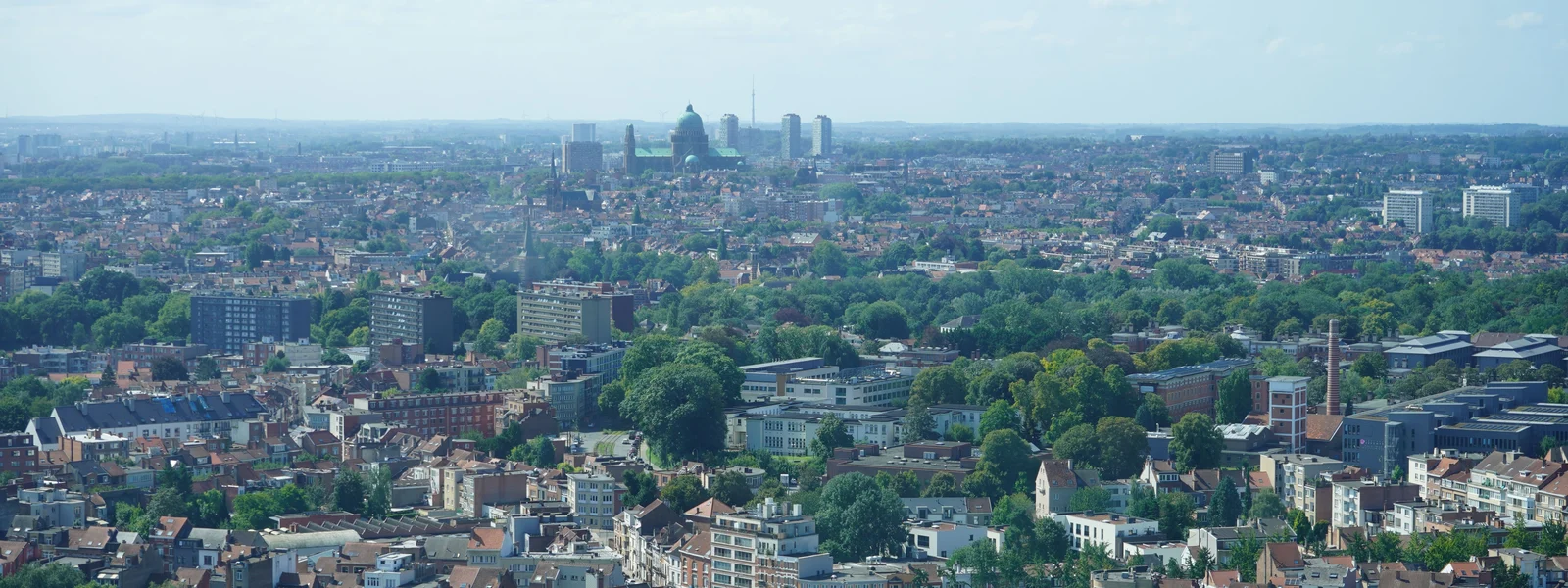
Belgium 5G and 4G Coverage 2026: Excellent and Uniform
Belgium coverage, told straight
Belgium has excellent, uniform mobile coverage, and the honest map is short and positive. The country is small, flat in the north and gently hilly in the south, and densely populated, which makes blanket coverage far easier to achieve than in mountainous or sparsely populated nations. The cities have superb 5G, but unlike most countries, the quality does not fall away outside them: the countryside, the towns, the coast, and even the trains are all well covered, and the more rural Ardennes in the southeast are well served except in their deepest, most forested parts. This is the rare country where coverage is genuinely a non-issue, and the planning effort goes into data sizing, avoiding the airport and roaming traps, and deciding on a Belgium-only or regional plan given the easy border-hopping.
The three networks: all excellent
Belgium has three mobile network operators, and the headline for a traveler is that all three are excellent. Proximus, the historic incumbent, consistently tops independent network quality rankings in Belgium and is regarded as the strongest network in the country. Orange Belgium is very strong, with extensive coverage and fast 5G. BASE, which is run by Telenet, is competitive and also delivers good coverage and speed.
There are also budget brands and virtual operators, Scarlet run by Proximus, Mobile Vikings, and others, that ride these networks. For a traveler, the practical takeaway is that network choice barely matters in Belgium, because all three main networks deliver excellent, uniform coverage across the whole country. This is the opposite of countries like the UK or Germany where the network behind your plan is critical; in Belgium, you can buy a plan on any of the three with complete confidence, which is one of the quiet pleasures of traveling in such a well-connected country.
5G: extensive and uniform
Belgium has rolled out 5G across its cities and is among the better-covered countries in Europe. All three operators run commercial 5G, and population coverage is very high. In Brussels, Antwerp, Ghent, Bruges, Liege, Charleroi, Leuven, and the other cities you will see genuine fast 5G with excellent download speeds, easily into the hundreds of megabits per second.
What sets Belgium apart is the uniformity. In many countries, fast 5G is concentrated in the cities while the countryside drops to 4G or worse. In the densely developed Belgium, the strong coverage extends far more evenly across the whole country, so the smaller towns, the suburbs, and much of the countryside also enjoy good 5G or excellent 4G. There is very little of the country that is genuinely remote, because Belgium is so compact and densely populated, which is precisely why its coverage is so uniformly good. This evenness means you can rely on fast data not just in the cities but throughout your travels, from the Flemish towns to the Walloon countryside to the coast.
Excellent 4G and rural coverage
Even where you are on 4G rather than 5G in Belgium, the coverage and speed are excellent, and the rural areas are well served in a way that surprises travelers used to patchy countryside coverage elsewhere. The Flemish farmland, the Walloon countryside, the small towns, and the spaces between them all have good coverage, because in such a densely developed country there is little truly remote terrain and the infrastructure reaches almost everywhere.
This is a stark contrast to countries like the UK, with its Highland dead zones, or even neighboring Germany, with its rural and eastern gaps. In Belgium, you can drive or take the train through the countryside and stay connected throughout, which makes it one of the most reliably covered countries in Europe for travel beyond the cities. The flat, compact, densely populated geography that defines most of Belgium is exactly what makes its coverage so good everywhere, and for a traveler this means you genuinely do not need to plan around dead zones the way you would in more rugged or sparsely populated countries.
The trains: well covered, unlike some neighbors
Belgium's train network is dense and efficient, connecting the cities quickly, and many visitors and commuters use it, so it matters that it has good mobile coverage along most routes. This is a genuine strength, because train coverage is notoriously poor in some neighboring countries: Germany's rail dead zones are a national joke. Belgium, by contrast, lets you work, stream, and stay connected on the train for most of a journey.
This is especially valuable for the many business travelers who move between Brussels, Antwerp, and other cities by train, and for tourists hopping between Brussels, Bruges, Ghent, and Antwerp, all easy train rides apart. Being able to rely on connectivity throughout these journeys makes the train a productive and pleasant way to travel. The good rail coverage is a real advantage that sets Belgium apart from some of its neighbors, and it means your eSIM is useful and reliable not just when you are stationary in a city but throughout your movements around this compact, train-friendly country.
The coast, the Ardennes, and the few thinner spots
Belgium's coast and the Ardennes round out the coverage picture, both well served. The Belgian coast, the stretch of North Sea beaches and resort towns like Ostend, Knokke, De Panne, and Blankenberge, connected by the famous coastal tram, has good coverage, so a beach trip keeps you connected, with the only caveat being brief congestion possible at the busiest beaches on hot summer weekends, which is about crowds rather than coverage.
The Ardennes, the forested, hilly region in the southeast popular for hiking, cycling, and outdoor activities, is well covered in its towns and across most of the region. The one area where coverage thins slightly is the deepest, most forested and remote parts of the Ardennes, where the terrain and low population mean some gaps, though even here coverage is far better than truly remote areas in more rugged countries. For an Ardennes trip, you will be well connected in the towns and most areas, with only the wildest forest stretches occasionally thinner, where downloading offline maps for a hike is a sensible precaution. Across the whole country, Belgium offers some of the most reliable and uniform coverage in Europe.
Coverage by trip type
Pulling it together by how you travel, and the conclusion is consistently positive. A city trip to Brussels, Bruges, Ghent, or Antwerp gives you fast 5G everywhere, with no real caveats; you can run any plan as your main connection with total confidence. A business trip to Brussels enjoys excellent, reliable coverage for video calls, tethering, and heavy work use. A trip combining cities by train enjoys good coverage throughout, including on the trains, unlike in Germany.
A coastal trip is well covered, with only brief summer congestion at the busiest beaches. An Ardennes trip is well connected in the towns and most areas, with only the deepest forest occasionally thinner, where offline maps help for a hike. A multi-country trip from central Belgium stays covered with a Europe regional plan as you cross into the Netherlands, France, Germany, or Luxembourg. Whatever your trip, an eSIM on any of the three excellent Belgian networks gives you among the best coverage in Europe, and Belgium stands out as a country where the signal is genuinely a non-issue, freeing you to focus on the cities, the food, and the easy border-hopping.
How to think about coverage for your Belgium trip
Unlike most coverage guides, the Belgium one ends with reassurance rather than caution, because there is genuinely little to plan around. For the vast majority of Belgium trips, city, business, countryside, coast, trains, you can assume excellent coverage and simply not think about it, which is a rare and pleasant situation in travel connectivity. There is no need to check coverage maps for your destination, no need to choose your network carefully, and no need to prepare offline maps as a necessity, because Belgium's flat, compact, densely developed geography means the strong networks reach almost everywhere uniformly.
The only minor exception worth a thought is the deepest, most forested parts of the Ardennes, where coverage can thin slightly, and the brief congestion at the busiest summer beaches at peak times, which is about density rather than coverage. For the Ardennes forest, downloading offline maps for a remote hike is a sensible precaution. Otherwise, the broader lesson for any Belgium trip is simply to relax about coverage entirely and focus your planning energy on the things that actually shape a Belgian trip: getting your data size right, sizing up for business travel, and deciding whether a Europe regional plan suits your likely cross-border excursions, which are unusually common given Belgium's central location. Belgium's coverage being a genuine non-issue, among the best and most uniform in Europe, is one of the real pleasures of traveling there, and it sets the country apart from neighbors like Germany where coverage demands more careful planning, particularly on the trains where Belgium is well covered and Germany notoriously is not.
Plans for Belgium
Belgium eSIM plans
Prices in USD. Instant QR activation. Pick your data, land connected.
FAQ
What coverage and network performance should travelers expect in Belgium?
Even where you are on 4G rather than 5G in Belgium, the coverage and speed are excellent, and the rural areas are well served in a way that surprises travelers used to patchy countryside coverage elsewhere. The Flemish farmland, the Walloon countryside, the small towns, and the spaces between them all have good coverage, because in such a densely developed country there is little truly remote terrain and the infrastructure reaches almost everywhere.
How to think about coverage for your Belgium trip?
Unlike most coverage guides, the Belgium one ends with reassurance rather than caution, because there is genuinely little to plan around. For the vast majority of Belgium trips, city, business, countryside, coast, trains, you can assume excellent coverage and simply not think about it, which is a rare and pleasant situation in travel connectivity. There is no need to check coverage maps for your destination, no need to choose your network carefully, and no need to prepare offline maps as a necessity, because Belgium's flat, compact, densely developed geography means the strong networks reach almost everywhere uniformly.
What should travelers know about the trains: well covered, unlike some neighbors in Belgium?
Belgium's train network is dense and efficient, connecting the cities quickly, and many visitors and commuters use it, so it matters that it has good mobile coverage along most routes. This is a genuine strength, because train coverage is notoriously poor in some neighboring countries: Germany's rail dead zones are a national joke. Belgium, by contrast, lets you work, stream, and stay connected on the train for most of a journey.
What should travelers know about the coast, the ardennes, and the few thinner spots in Belgium?
Belgium's coast and the Ardennes round out the coverage picture, both well served. The Belgian coast, the stretch of North Sea beaches and resort towns like Ostend, Knokke, De Panne, and Blankenberge, connected by the famous coastal tram, has good coverage, so a beach trip keeps you connected, with the only caveat being brief congestion possible at the busiest beaches on hot summer weekends, which is about crowds rather than coverage.